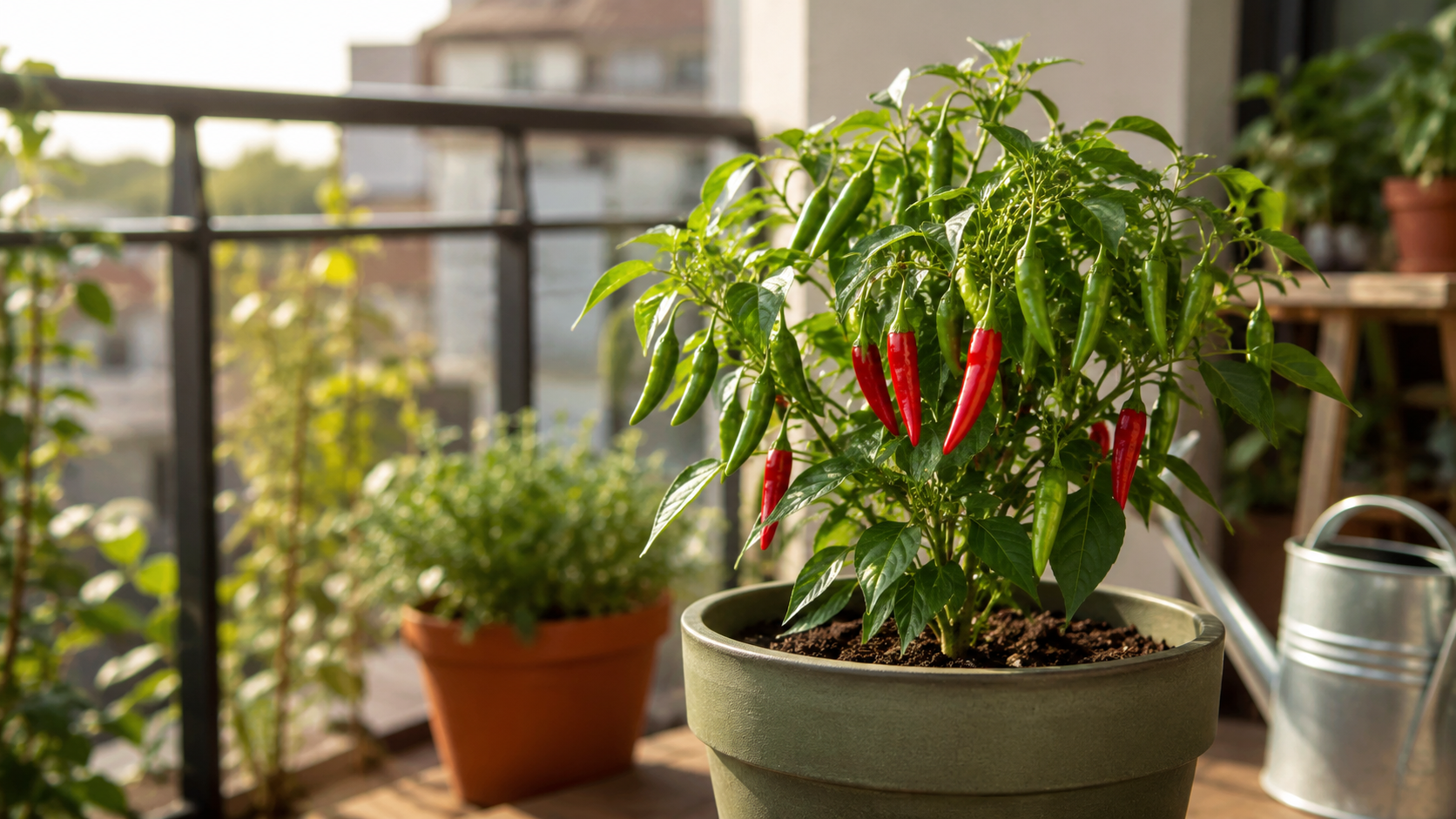
Quick answer: Chillies grow well in pots because they like warmth, good drainage and a relatively compact root space. Start seeds early indoors or buy a young plant, move it into a final pot around 25–30cm wide, give it your sunniest sheltered position and feed with a high-potassium fertiliser once fruits begin to form.
Growing note: Chillies are tender and slow-growing. In the UK they usually perform best on a sunny windowsill, in a greenhouse or in a very warm, sheltered outdoor position after frost risk has passed.
Quick facts
| Best for | Sunny windowsills, greenhouses, sheltered patios and warm balconies |
| Difficulty | Beginner to intermediate |
| Final pot | Around 25–30cm wide for many compact plants |
| Sunlight | As much strong light and warmth as possible |
| Main care needs | Warmth, regular watering, drainage and feeding after fruit set |
Why chillies suit containers
A chilli plant can give a useful crop from one pot and does not need the sprawling space of a courgette or pumpkin. Compact varieties also look attractive, with green foliage, small flowers and fruits that change colour as they ripen.
Containers let you move plants to warmth and shelter. You can start them indoors, place them outside in settled summer weather and bring them back under cover if nights turn cold.
Choosing a chilli variety
For a first container crop, choose a compact, early and relatively mild variety. Extremely hot chillies can take longer to ripen and may need more consistent heat. Check the expected plant size as well as the heat rating.
| Variety feature | Why it matters |
| Compact habit | Fits a windowsill, balcony or small patio |
| Early cropping | More likely to ripen in a shorter UK season |
| Mild to medium heat | Often more versatile in the kitchen |
| Small fruits | Usually ripen more readily than very large fruits |
Growing from seed or buying a plant
Seeds give you more variety choice, but chillies need an early start, steady warmth and strong light. If you are beginning late or do not have a propagator and bright windowsill, buying a healthy young plant is easier.
When raising from seed, follow the packet temperature and timing. Once seedlings emerge, give them strong light so they do not become thin and stretched.
Choosing a pot
Pot chillies up gradually rather than moving a tiny seedling straight into a huge wet container. For the final pot, around 25–30cm wide suits many compact plants. Larger varieties may need more room.
The pot must drain freely. A container full of cold, wet compost can stall growth or damage roots. Terracotta dries more quickly; plastic and glazed pots retain moisture longer.
How to plant a chilli in its final pot
- Water the plant before repotting.
- Choose a clean pot with drainage holes and fill the base with peat-free multi-purpose compost.
- Remove the plant carefully without pulling the stem.
- Set it at roughly the same depth it was growing previously.
- Fill around the root ball, firm gently and water thoroughly.
- Add a small support if the plant is tall or the balcony is windy.
- Keep it warm and sheltered while it settles.
Where to put container chillies
Give chillies the warmest, brightest position you can provide. A sunny greenhouse, conservatory or south-facing windowsill is ideal. Outdoors, choose a sheltered patio or balcony after all danger of frost has passed.
Wind can snap stems and cool the plant. Use a stable pot, secure taller growth and move the container against a warm wall if your balcony is exposed.
Watering chillies in pots
Water when the upper compost begins to dry, then water thoroughly and let excess moisture drain. Avoid both prolonged drought and constantly saturated compost. Small pots may need frequent checks in summer.
- Water at the base rather than repeatedly wetting the leaves.
- Do not leave the pot standing in water.
- Check indoor plants carefully because warm windowsills can dry pots quickly.
- Reduce watering as growth slows in cooler weather.
Feeding and supporting fruit
Once the first fruits have set, feed with a high-potassium liquid fertiliser according to the product label. Do not overfeed seedlings or use stronger doses than recommended.
Compact chilli plants may stand without support, but plants carrying many fruits can lean. A short cane and soft tie can prevent damage.
Do chilli plants need pinching out?
Many chillies branch naturally and do not require routine pinching. Some growers pinch taller plants to encourage bushiness, but it is not essential for every variety. Check the variety guidance and avoid removing growing tips from a small or struggling plant.
Helping flowers set fruit
Indoor plants may benefit from gentle movement to distribute pollen. Lightly tap the stems or brush the flowers with a clean soft brush. Good airflow helps, but avoid strong cold draughts.
Common chilli problems in pots
Flowers fall without forming fruit
Low light, cold temperatures, excessive heat, dry compost or sudden changes can all cause flower drop. Improve the growing conditions rather than adding extra feed immediately.
Leaves curl or become sticky
Check for aphids and other sap-feeding pests, especially on indoor plants. Inspect the undersides of leaves and treat problems promptly with an appropriate method.
The plant grows but fruits stay green
The season may be too cool or the variety may simply need more time. Give the plant maximum light and warmth. Green chillies are edible, so you do not have to wait for every fruit to change colour.
The compost stays wet
The pot may be too large, drainage may be poor or temperatures may be low. Allow the upper compost to dry appropriately and never leave the pot sitting in water.
Harvesting chillies
Use clean scissors or secateurs rather than pulling the fruits. Harvesting green chillies can encourage the plant to continue producing, while leaving fruits to ripen develops their mature colour and often increases heat.
Wear gloves when handling very hot chillies and avoid touching your eyes or face. Wash hands, tools and chopping surfaces carefully.
A simple one-pot chilli plan
Buy one compact young plant in late spring, move it into a well-drained final pot and place it in your warmest bright position. Learn its watering rhythm before buying more. One healthy chilli plant is more useful than several cold, underlit plants.
For seasonal timing, see what to sow and plant in May.
Check the final pot size
Use the free Container Size Calculator before moving your chilli into its final container.
FAQs
Can chillies grow on a windowsill?
Yes, provided the windowsill is warm and receives strong light. Rotate the pot and keep it away from cold draughts.
How large should a chilli pot be?
A final pot around 25–30cm wide suits many compact varieties. Check the expected plant size because vigorous varieties may need more space.
Can I leave chilli plants outside at night?
Only when nights are reliably warm and frost-free. In cool or exposed locations, keep them under cover for longer.
Do chillies need tomato feed?
A high-potassium feed such as tomato fertiliser is commonly used after the first fruits set. Follow the label instructions.
Growing note: Chilli heat and ripening depend on variety as well as conditions. Choose a compact early variety if your growing season or indoor light is limited.