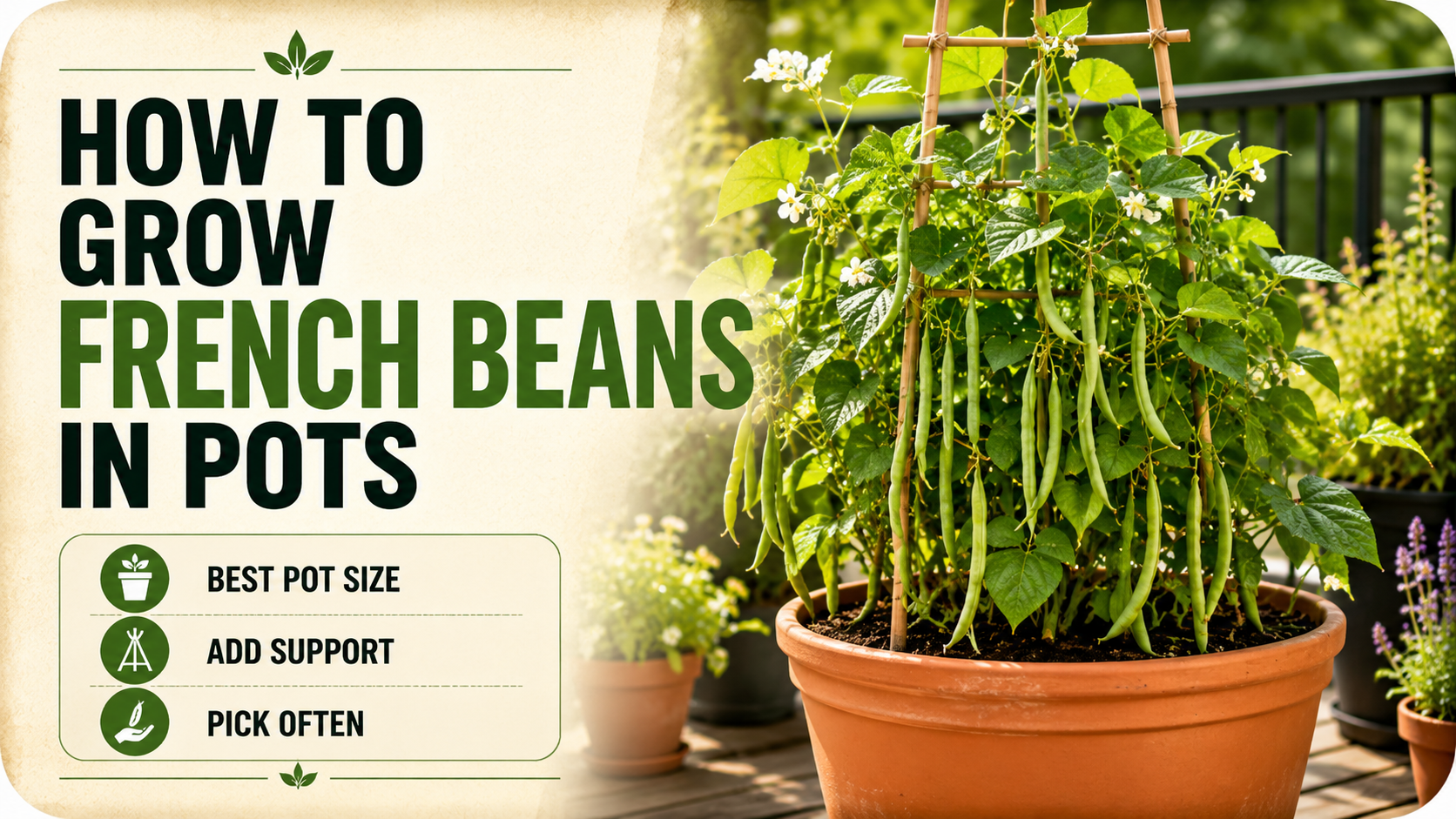
Quick answer: French beans grow well in containers if you choose a dwarf variety or give climbing beans a large pot and sturdy support. Wait until frost risk has passed, use a container at least 25–30cm deep for dwarf beans, keep the compost evenly moist and harvest pods regularly while they are young.
Growing note: French beans are tender. Do not rush seedlings outside during cold spring weather, even when daytime temperatures feel warm.
Quick facts
| Best for | Sunny patios, balconies and sheltered small gardens |
| Difficulty | Beginner-friendly |
| Best type | Dwarf French beans for the simplest container crop |
| Container depth | Around 25–30cm for dwarf beans; larger for climbers |
| Main care needs | Warmth, moisture, support and regular picking |
Dwarf or climbing French beans?
| Type | Container use |
| Dwarf French bean | Compact, usually up to about 45cm tall and ideal for pots |
| Climbing French bean | Productive vertically but needs a large container and tall support |
Dwarf beans are the best starting point for a tiny garden. They are easier to shelter, need less support and can fit into a bucket-sized pot or large box. Climbing beans make better use of height but create more wind resistance and need secure canes or a trellis.
Choosing a container
For dwarf beans, use a pot or trough at least 25–30cm deep with enough width for several plants at the packet spacing. Climbing beans need a larger container, often around 45cm deep, plus strong support.
The pot must be stable. A tall frame attached to a lightweight container can topple in wind, so place climbers against a wall or secure structure.
How to sow French beans
French beans can be started indoors in individual pots or sown directly outside once conditions are warm and frost-free. Starting indoors gives you more control, but seedlings must be hardened off before planting out.
- Fill small pots or the final container with peat-free multi-purpose compost.
- Sow according to the seed packet depth.
- Keep indoor pots warm and bright after germination.
- Harden seedlings off gradually over one to two weeks.
- Plant outside only when frost risk has passed.
- Add supports before climbing plants become tangled.
- Water thoroughly after planting.
Where to position beans
Choose a sunny, sheltered position. Beans need warmth, but containers can dry quickly against a hot wall. Check the compost often and use a mulch to slow water loss.
On a balcony, secure climbing supports carefully and make sure the plants will not block doors, windows or neighbours’ space.
Watering and feeding
Water regularly, especially once flowers and pods appear. Uneven moisture can reduce cropping and cause plants to stall.
- Water at the base.
- Check containers daily in hot weather.
- Do not leave pots sitting in water.
- Use a suitable feed only according to the product instructions.
Supporting French beans
Dwarf beans may need only short sticks if they become top-heavy. Climbing beans need canes, netting or a trellis at least as tall as the variety requires.
Install support before the roots fill the pot. Pushing thick canes into an established container can damage roots.
Harvesting
Pick pods while they are young, smooth and tender. Once seeds swell strongly inside, the pods become tougher. Frequent picking encourages the plant to keep flowering.
Use two hands or scissors so you do not tear the plant.
Common problems
Seedlings fail in cold weather
Beans are tender and may rot or stop growing in cold compost. Wait for warmer conditions and protect young plants from unexpected cold nights.
Flowers fall
Dry compost, extreme heat or sudden temperature changes can cause flower drop. Improve moisture and shelter before adding more feed.
Few pods form
Low light, drought, overcrowding or irregular picking can reduce the crop. Make sure the plants are warm, watered and given enough space.
Leaves are damaged
Slugs, snails and aphids may attack beans. Inspect the plants regularly and use suitable controls.
A simple dwarf-bean plan
Choose one compact variety and grow several plants in a wide container. Put the pot in your warmest sheltered position and pick every few days once pods appear. Dwarf beans give a useful summer crop without the complexity of a tall frame.
French beans belong in the warmer part of the season. See what to sow and plant in May.
Is your container large enough?
Check the width and depth before sowing dwarf or climbing beans.
FAQs
Can French beans grow in pots?
Yes. Dwarf French beans are particularly suitable for containers, while climbing beans need a much larger pot and strong support.
How many bean plants fit in one pot?
That depends on the pot width and variety. Follow the packet spacing rather than crowding plants for a larger number.
When can beans go outside?
Only after frost risk has passed and the plants have been hardened off. In colder areas this may be late May or June.
Do French beans need feeding?
Fresh compost gives a good start. If growth or cropping needs support, use an appropriate vegetable feed according to the label.
Growing note: Dwarf French beans are the easiest container choice. Climbers are useful only when the pot and support are both substantial.