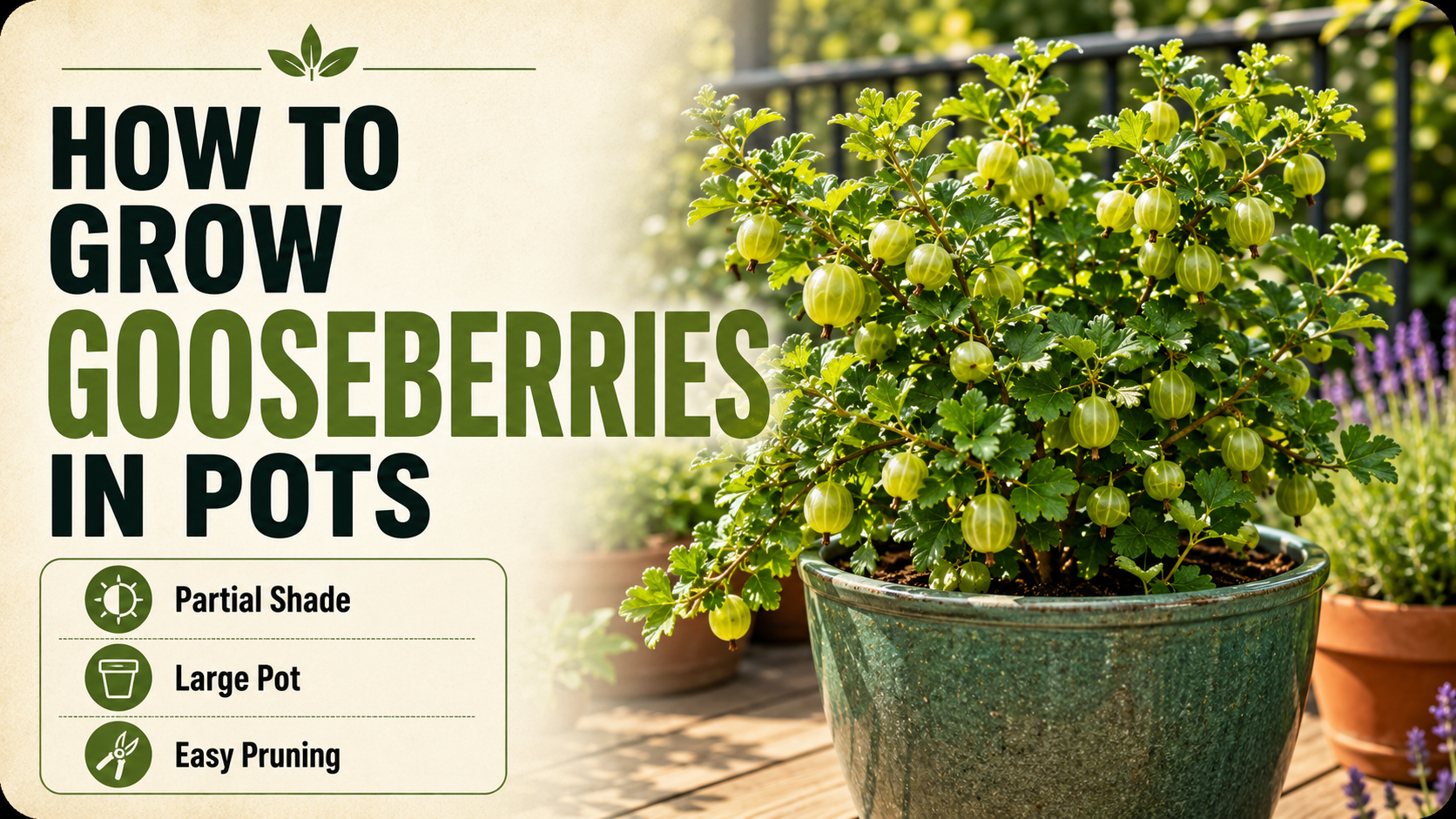
Quick answer: Gooseberries grow well in large containers and tolerate some partial shade. Use one plant in a pot at least 40cm wide and deep, fill it with a good soil-based peat-free compost, water regularly while fruits are swelling and prune annually to keep the centre open and manageable.
Growing note: Gooseberry branches can be thorny. Place the pot where you can harvest safely without blocking a narrow path or doorway.
Quick facts
| Best for | Patios, courtyards, balconies and small gardens |
| Difficulty | Beginner-friendly |
| Container | At least 40cm wide and deep |
| Sunlight | Full sun or partial shade |
| Main care needs | Water, feeding, pruning and bird protection |
Why gooseberries work in containers
Gooseberries are naturally compact fruit bushes and can remain productive in a large pot for years. They tolerate partial shade better than many fruit crops, which makes them useful for small spaces that do not receive all-day sun.
The fruits can be picked young for cooking or left to ripen for eating fresh, depending on the variety. The plant also responds well to pruning, so its size can be controlled.
Choosing a variety
Look for a compact, mildew-resistant variety with fruit you will actually use. Dessert varieties become sweeter when fully ripe, while culinary varieties are often picked earlier for cooking.
| Feature | Why it matters |
| Compact habit | Easier to maintain in a container |
| Mildew resistance | Useful in sheltered patios with limited airflow |
| Fewer thorns | Easier harvesting in a small space |
| Dessert or culinary type | Matches how you plan to use the fruit |
Choosing the pot
Use a container at least 40cm wide and deep, with plenty of drainage holes. A heavy frost-resistant pot is stable and less likely to topple once the bush is in leaf and fruit.
Fill it with a good-quality peat-free soil-based compost. A purely lightweight multipurpose compost may shrink and dry too quickly over several years.
How to plant a gooseberry
- Soak the nursery plant before planting.
- Place the empty pot in its final position.
- Add soil-based peat-free compost to the base.
- Set the plant at the same depth it was growing in its nursery pot.
- Fill around the roots and firm gently.
- Water thoroughly.
- Add a surface mulch while keeping it away from the main stem.
Where to position the container
A sunny position gives the sweetest fruit, but gooseberries also crop in partial shade. Choose a sheltered location with good airflow and avoid a cramped corner where damp foliage dries slowly.
Keep thorny branches away from doors, seating and narrow balcony routes.
Watering
Keep the compost evenly moist, especially while fruits are swelling. Container gooseberries dry faster than plants in the ground.
- Water slowly until the whole root ball is moist.
- Check pots regularly in warm or windy weather.
- Avoid prolonged waterlogging.
- Mulch to reduce evaporation.
Feeding
Apply a suitable general or high-potassium fruit feed according to the product label during the growing season. Refresh the top layer of compost each spring and repot when the roots become crowded.
Pruning container gooseberries
Prune in winter to maintain a clear goblet-shaped centre, removing dead, damaged and crossing branches. Shorten side shoots in summer if necessary to improve airflow and make fruit easier to pick.
Wear gloves and use clean secateurs. The aim is an open, manageable bush rather than a dense tangle.
Harvesting
For cooking, pick alternate berries while they are firm and still slightly under-ripe. This thins the crop and gives the remaining fruits room to grow. For eating fresh, leave the rest until fully coloured and soft enough for the variety.
Common problems
Powdery mildew
A white coating can develop on leaves and fruit. Improve airflow, avoid overcrowding and choose a resistant variety.
Birds take the berries
Cover the bush with securely fitted wildlife-safe netting before the fruit ripens.
The pot dries very quickly
The root system may have filled the container. Repot during the dormant season or refresh the compost and improve mulching.
Few fruits develop
Late frost, weak light, poor feeding or incorrect pruning may reduce the crop. Protect flowers and avoid removing too much young growth.
A simple one-pot gooseberry plan
Choose one compact mildew-resistant variety, plant it in a 40cm or larger pot and place it in sun or light partial shade. Water consistently, prune for an open centre and protect the ripening fruit from birds.
For another long-term patio fruit, see how to grow blueberries in pots.
Plan your fruit containers
Use the growing tools to compare sunlight and available space before adding another permanent fruit pot.
FAQs
How large should a gooseberry pot be?
Use a container at least 40cm wide and deep. Larger is easier to keep moist long-term.
Can gooseberries grow in shade?
They tolerate partial shade, although fruit is generally sweeter and more abundant with stronger light.
Do gooseberries need two plants?
Most are self-fertile, so one plant can crop. Check the cultivar description.
When should I repot a gooseberry?
Repot when the roots fill the container or the plant dries very quickly. Move up gradually during the dormant season.
Growing note: A gooseberry is a permanent container plant. Start with a substantial pot and leave enough access for safe pruning and harvesting.