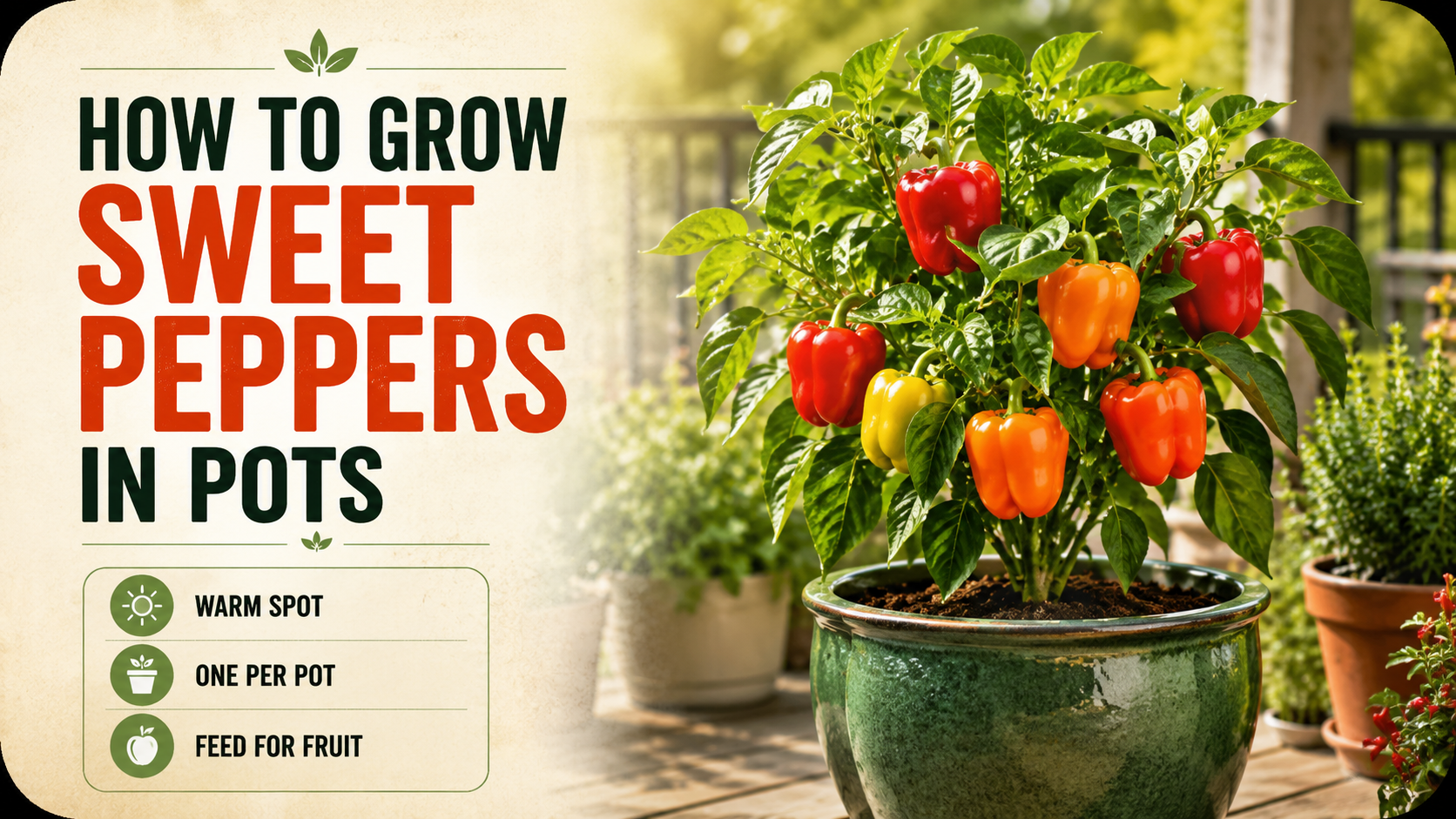
Quick answer: Sweet peppers can grow well in pots if you give them warmth, strong light, steady watering and regular feeding. For a tiny garden, choose a compact or patio variety, use one plant per generous pot, keep it protected until nights are reliably warm and start feeding once flowers and small fruits begin to form.
Growing note: Sweet peppers are tender. They are usually more successful in a greenhouse, conservatory, sunny porch or very warm sheltered patio than in a cool exposed position.
Quick facts
| Best for | Sunny patios, warm balconies, greenhouses and conservatories |
| Difficulty | Beginner to intermediate |
| Container | One compact plant in a 25–30cm+ pot |
| Sunlight | Full sun and as much warmth as possible |
| Main care needs | Warmth, watering, feeding and shelter |
Are sweet peppers a good tiny-garden crop?
Sweet peppers can be a good tiny-garden crop if you have a warm, bright position. They stay more compact than courgettes and can look attractive in a patio pot, especially as the fruits change colour.
The catch is warmth. If your space is cool, shaded or windy, peppers may grow leaves but struggle to ripen fruit. In that case, easier crops such as lettuce, herbs, radishes or tomatoes are usually better first choices.
Choosing the right variety
Look for compact, patio or early varieties. Smaller-fruited peppers are often more realistic in containers because they ripen more easily than large blocky fruits.
| Variety feature | Why it helps |
| Compact habit | Fits a pot or small greenhouse bench |
| Early cropping | Improves the chance of ripe fruit |
| Small or snack-size fruit | Usually ripens more reliably |
| Disease resistance | Useful in protected spaces |
Seed or young plant?
Growing from seed gives more choice, but peppers need an early start, steady warmth and good light. If you are starting late, or if you do not have a warm bright windowsill, buying one healthy young plant is usually easier.
For a first attempt, one strong plant is better than several small plants fighting for light and space.
Choosing a container
Use a pot at least 25–30cm wide and deep for one compact pepper plant. Larger pots hold moisture more steadily, which helps prevent stress. Make sure the container drains freely and is stable enough to hold the plant when it is carrying fruit.
How to plant sweet peppers in pots
- Choose a warm, sunny, sheltered position.
- Fill a clean pot with peat-free multi-purpose compost.
- Water the young plant before removing it from its nursery pot.
- Plant at the same depth it was growing previously.
- Firm gently and water thoroughly.
- Add a small cane or support if the plant is already tall.
- Keep the plant protected from cold nights.
Where to put container peppers
A greenhouse, conservatory or warm porch is ideal. Outdoors, choose a sheltered sunny patio or balcony after frost risk has passed. A warm wall can help, but avoid a spot where the pot bakes dry every afternoon.
Watering and feeding
Sweet peppers prefer steady moisture. Repeatedly drying out and then soaking the pot can stress the plant and reduce fruit quality. Check the compost regularly and water at the base.
- Water slowly so moisture reaches the roots.
- Do not leave the pot standing in water.
- Check small pots daily in warm weather.
- Mulch the surface if the container dries too quickly.
Once flowers and small fruits appear, feed with a high-potassium liquid fertiliser according to the label. Do not use stronger doses in the hope of faster ripening.
Pollination and harvesting
Pepper flowers are self-fertile, but fruit set can improve if the plant is gently moved or if insects can reach the flowers. Indoors or under glass, lightly tap flowering stems or use a soft brush to move pollen.
Peppers can usually be picked green or left to ripen to their mature colour. Fully coloured peppers are sweeter, but they take longer. If the season is short, harvest some fruits green to reduce the load on the plant.
Common problems
Flowers drop
Cold nights, heat stress, dry compost or sudden changes in conditions can cause flower drop. Aim for steady warmth and moisture.
Fruits stay green
The plant may need more warmth, light or time. Small-fruited varieties usually ripen more reliably in containers.
Leaves become sticky
Aphids or whitefly may be present, especially in protected spaces. Inspect the undersides of leaves regularly.
The plant wilts every afternoon
The pot may be too small or drying too quickly. Water deeply and consider moving it away from harsh afternoon heat.
A simple one-pot pepper plan
Buy one compact sweet pepper plant, grow it in a 25–30cm+ pot in your warmest sunny position, and focus on steady care. Add basil or lettuce nearby in separate pots rather than crowding the pepper container.
If you want a similar but spicier crop, see how to grow chillies in pots.
Check the pot before planting
Use the Container Size Calculator before moving a pepper into its final pot.
FAQs
Can sweet peppers grow on a balcony?
Yes, if the balcony is sunny, warm and sheltered. Cool windy balconies are much harder.
How big should a pepper pot be?
Use at least a 25–30cm pot for one compact plant. Larger is easier to water consistently.
Can I grow peppers indoors?
You can grow them on a very bright warm windowsill or in a conservatory, but weak indoor light can limit fruiting.
Should I pick peppers green or wait for colour?
Both are possible. Green peppers are less sweet, while fully coloured peppers need more time and warmth.
Growing note: Sweet peppers are worth trying once your site already has some easier container crops. Warmth is the deciding factor.