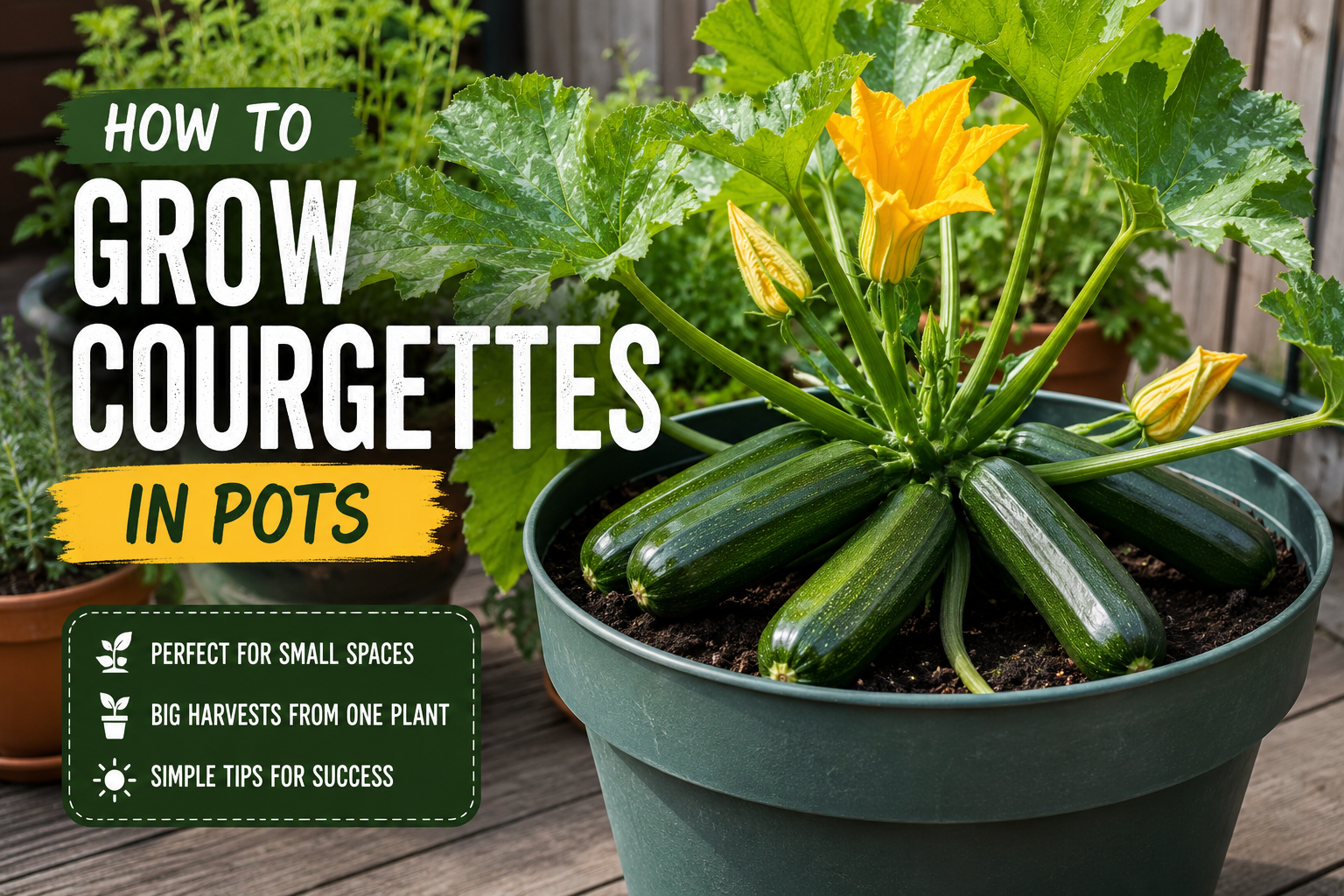
Quick answer: Courgettes can grow in pots, but each plant needs a large container, full sun, regular watering and frequent feeding. Choose a compact or bush variety and use a container at least 45cm wide. One healthy plant is enough for many tiny gardens, and the fruits should be picked while they are young.
Growing note: Courgettes look small when bought as young plants but become broad and thirsty. Measure the available space before you commit to one.
Quick facts
| Best for | Sunny patios, courtyards and larger balconies with a safe load capacity |
| Difficulty | Beginner to intermediate |
| Container | At least 45cm wide for one compact plant |
| Sunlight | Full sun and shelter from cold wind |
| Main care needs | Water, feeding, pollination and regular harvesting |
Are courgettes suitable for a tiny garden?
They can be, but only if you have room for one substantial plant. Courgettes produce a lot of leaf growth and can spread more than beginners expect. On a very small balcony, a tomato, chilli or tray of salad leaves may use the space more efficiently.
If you do have a sunny patio corner, one compact courgette can be extremely productive. The key is to give it a large container from the beginning and avoid surrounding it with other plants that need the same root space.
Choosing a compact variety
Look for words such as compact, bush, patio or container on the seed packet or plant label. These varieties still produce large leaves, but they tend to stay more manageable than trailing or vigorous types.
Green and yellow courgettes are grown in the same basic way. Choose the variety you are most likely to eat rather than buying several different plants.
Choosing a container
Use a sturdy pot at least 45cm wide, with generous drainage holes. Larger is easier because it holds more compost and moisture. A purpose-made vegetable planter or large grow bag can also work.
| Container feature | Why it matters |
| At least 45cm wide | Provides room for a substantial root system |
| Generous depth | Helps retain water in warm weather |
| Strong drainage | Reduces the risk of waterlogged roots |
| Stable base | Supports a large top-heavy plant |
Put the empty container in its final position before filling it. Once watered, it may be too heavy to move safely.
Starting from seed or buying a plant
Courgettes are easy to raise from seed in warmth, but they grow quickly and can outgrow a windowsill. Sow indoors in individual pots in spring, or buy one healthy young plant when the weather is ready for planting out.
Do not sow too many. One seed often becomes one large plant, and two healthy plants can produce more courgettes than a small household needs.
How to plant a courgette in a pot
- Place the container in a warm, sunny position.
- Fill with peat-free multi-purpose or soil-based compost.
- Water the young plant before removing it from its nursery pot.
- Handle the stem base carefully and plant at the same depth it was growing before.
- Firm gently and water thoroughly.
- Leave clear space around the crown for airflow.
- Protect the plant from cold nights until the weather is settled.
Where to position the pot
Courgettes need warmth and strong light. A sunny patio or sheltered courtyard is ideal. An exposed balcony can be difficult because the broad leaves catch the wind and the pot dries rapidly.
Leave enough room to walk around the plant and reach the fruits. Do not wedge it tightly against a wall where leaves remain damp and airflow is poor.
Watering courgettes
Courgettes are thirsty. Check the compost frequently once the plant is large and fruits are forming. Water slowly and deeply at the base, trying to keep the crown and leaves relatively dry.
- Water in the morning when possible.
- Do not rely on a light splash across the surface.
- Use a mulch to slow moisture loss.
- Never leave the container permanently waterlogged.
Feeding
Once flowering and fruiting begin, use a suitable high-potassium liquid feed according to the label. Regular feeding supports a container plant because its roots cannot search beyond the pot.
Flowers and pollination
Courgettes produce separate male and female flowers. Female flowers have a small swelling behind the petals. Early in the season you may see several male flowers before female flowers appear.
If fruits begin to form and then rot at the tip, poor pollination may be involved. Encourage insects by keeping flowers accessible, or transfer pollen from a male flower to a female flower with a soft brush.
Harvesting courgettes
Pick courgettes while they are young and tender, usually around 10–15cm long unless the variety guidance says otherwise. Use a clean knife or secateurs and avoid pulling the fruit from the plant.
Check frequently. A small courgette can become a marrow surprisingly quickly, and regular harvesting encourages more fruit.
Common problems
Powdery mildew
A white powdery coating often appears later in the season. Keep the plant well watered, improve airflow and remove badly affected leaves.
Small fruits rot before growing
Poor pollination, cold conditions or stress may be responsible. Improve warmth, moisture and access for pollinating insects.
Leaves wilt in hot weather
The pot may be drying too quickly. Check the compost below the surface and water deeply. Some temporary midday wilting can occur, but the plant should recover as temperatures fall.
Slugs damage young plants
Inspect around the container and protect young plants with an appropriate physical barrier while they establish.
A simple one-plant plan
Grow one compact courgette in your largest sunny container. Keep a tray of salad leaves elsewhere rather than trying to plant companion crops in the same pot. Water and feed consistently, then pick the fruits twice a week.
Courgettes belong in the warmer part of the growing season. See what to sow and plant in May.
Make sure the pot is large enough
Use the Container Size Calculator before giving a large summer crop your best patio position.
FAQs
Can courgettes grow on a balcony?
Yes, if the balcony is sunny, sheltered and structurally suitable for a large container full of wet compost. Make sure the plant will not block access.
How many courgette plants fit in one pot?
One plant per large container is the safest approach. Crowding makes watering, feeding and airflow much harder.
Do courgettes need support?
Most bush varieties grow without a trellis, although a short stake can help keep the main stem upright. Some varieties can be trained more vertically.
Why am I getting flowers but no courgettes?
You may initially be seeing only male flowers. Poor pollination, cool weather and plant stress can also delay fruit set.
Growing note: One well-watered courgette plant in a generous pot is far more useful than several plants in containers that are too small.