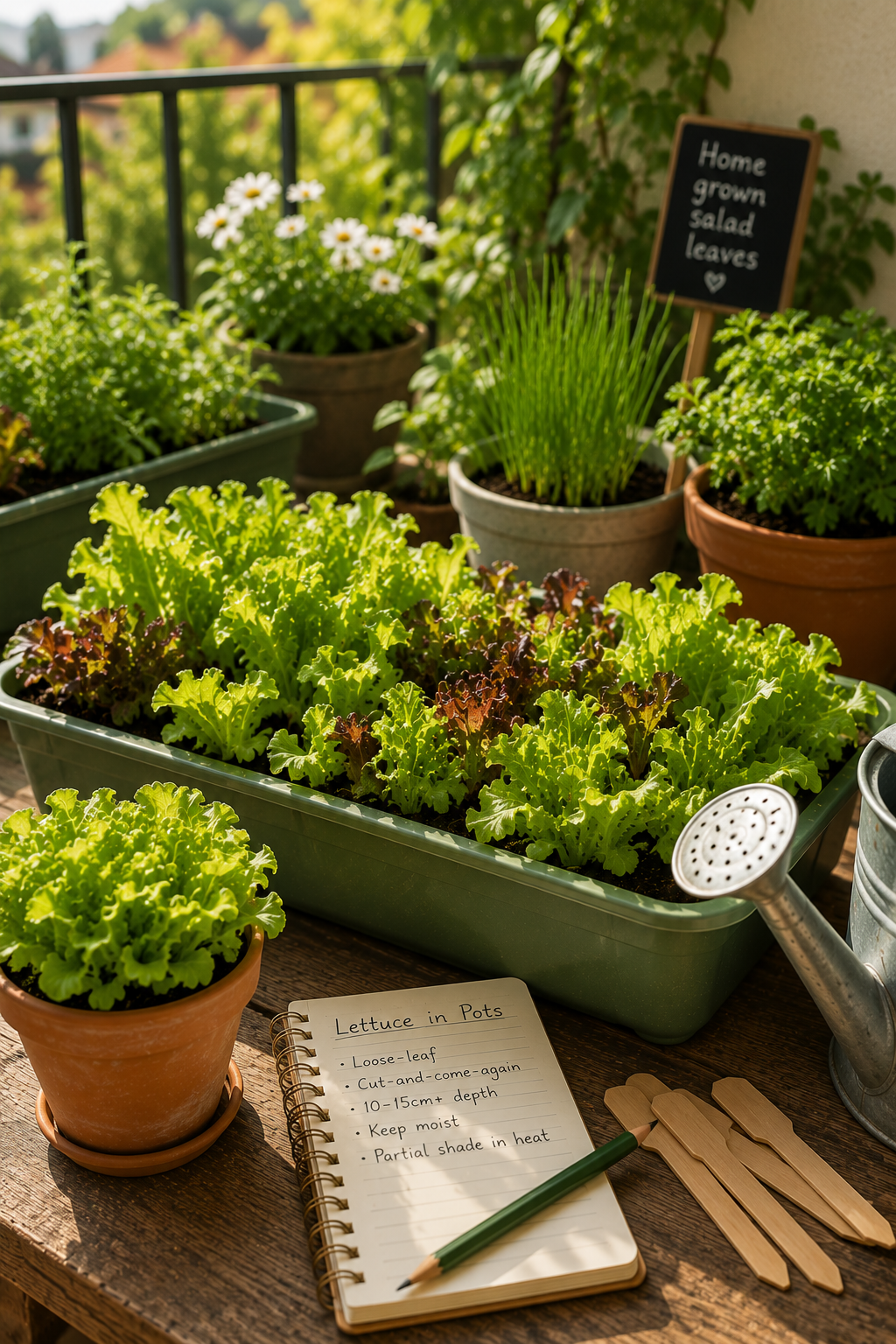
Quick answer: Lettuce is one of the easiest vegetables to grow in pots because it has shallow roots, grows quickly and can be harvested leaf by leaf. For a tiny garden, choose loose-leaf or cut-and-come-again varieties, use a container at least 10–15cm deep, keep the compost evenly moist and give the plants some shade in hot weather.
Quick facts
| Best for | Balconies, patios, windowsills, raised beds and small gardens |
| Difficulty | Very beginner-friendly |
| Container depth | 10–15cm minimum for cut-and-come-again leaves; deeper is easier to manage |
| Sunlight | Full sun in cool weather; partial shade in warm weather |
| Best harvest style | Pick outer leaves little and often |
Why lettuce is perfect for small spaces
Lettuce gives you a quick win. You do not need a large bed, specialist equipment or a whole season of patience. A shallow container on a balcony, patio table or bright windowsill can produce useful leaves within weeks, especially if you grow loose-leaf types.
It is also a good crop for learning. Lettuce teaches you the basics of sowing thinly, watering consistently, thinning seedlings and harvesting at the right time. If you can grow a healthy pot of salad leaves, you can build confidence for tomatoes, herbs and other container crops later.
Best lettuce types for pots
Loose-leaf lettuce
Loose-leaf lettuce is the best starting point for tiny gardens. It does not need to form a tight heart, so you can harvest leaves as they grow. Look for varieties sold as loose-leaf, salad bowl or cut-and-come-again lettuce.
Mixed salad leaves
Mixed salad seed packets often include lettuce plus other leafy crops such as rocket, mizuna or mustard leaves. They are useful if you want variety from one tray, but some mixes can become spicy or strong-flavoured as the weather warms.
Little gem and small hearting lettuce
Small hearting lettuces can work in containers, but they need more spacing and a little more patience. They are better once you have a feel for watering and thinning. For your first attempt, loose-leaf is usually easier.
Choosing the right container
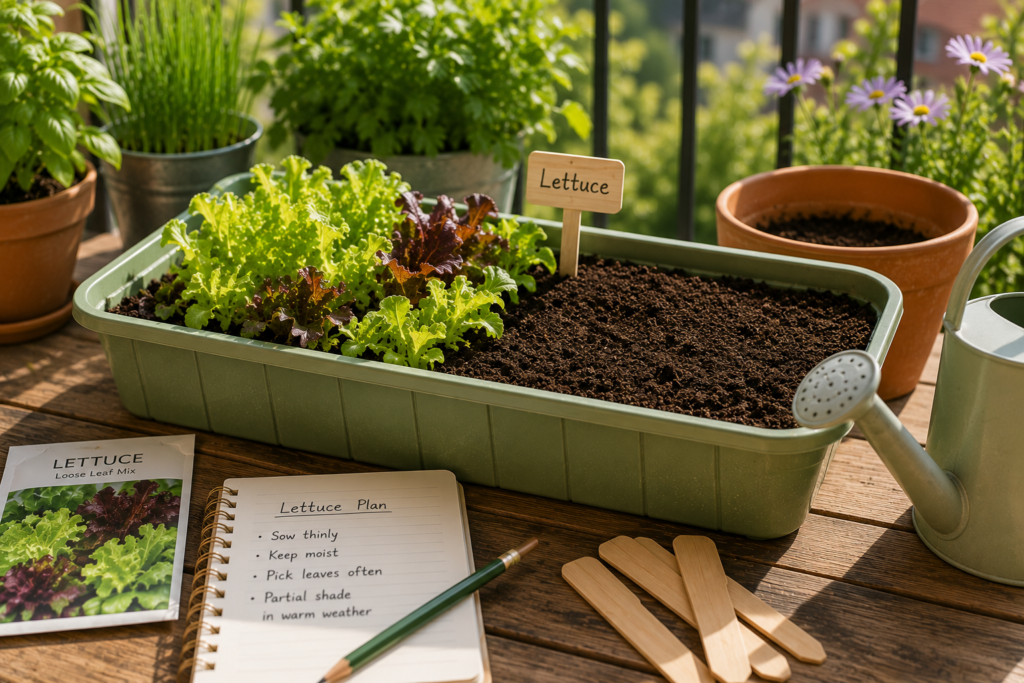
Lettuce does not need a deep pot, but it does need drainage and steady moisture. A shallow tray, window box, trough or wide bowl can all work. The wider the container, the more useful leaves you can grow.
| Container type | Best use |
| Window box | Balconies, railings and narrow ledges |
| Shallow tray | Cut-and-come-again salad leaves |
| Wide bowl | Attractive patio salad container |
| Raised bed edge | Repeat sowings between slower crops |
Avoid very tiny pots. They dry out quickly and give you only a handful of leaves. If your space allows, one wider container is better than several tiny ones.
How to sow lettuce in pots
- Fill a clean container with peat-free multi-purpose compost or a suitable seed compost. Firm it gently, but do not compact it hard.
- Water the compost before sowing so the seeds are not washed into corners afterwards.
- Sprinkle seeds thinly across the surface or sow in shallow rows.
- Cover lightly with compost, following the seed packet depth.
- Label the container with the variety and date.
- Keep the compost moist but not waterlogged.
- Thin seedlings if they come up crowded, leaving enough room for air and leaf growth.
Where to put lettuce containers
In spring, lettuce likes good light. If you are starting early in the season, see what to sow in March for other beginner-friendly tiny-garden crops. A sunny patio, balcony or windowsill is useful while temperatures are cool. As the weather warms, lettuce often does better with some afternoon shade. April is also a good month to keep sowing small batches of lettuce and salad leaves. Too much heat can make it bolt, which means it sends up a flower stem and the leaves turn bitter.
If you only have a sunny south-facing balcony, use the shade from taller containers, a railing or a small screen during hot spells. If you have a shady space, lettuce is still worth trying because it is more shade-tolerant than many fruiting crops.
Watering lettuce in containers
Lettuce is mostly leaf, so it needs steady moisture. Inconsistent watering is one of the main reasons container lettuce struggles. Letting the compost dry out completely, then soaking it, can stress the plants and make leaves tougher or more bitter.
- Check shallow containers often in warm or windy weather.
- Water the compost, not just the leaves.
- Use a rose on your watering can or a gentle stream so seedlings are not flattened.
- Move pots into partial shade during hot spells.
- Mulch larger containers with a thin layer of compost to help retain moisture.
How to harvest lettuce so it keeps growing
For cut-and-come-again lettuce, pick the outer leaves when they are large enough to use and leave the centre of the plant to keep growing. Do not strip the whole plant bare. A few leaves from several plants will give you a better repeat harvest than taking everything from one plant.
Harvest in the morning if you can, when leaves are crisp. Rinse, dry and use them soon after picking. Home-grown lettuce does not need to sit around for days in the fridge; the freshness is the point.
Common lettuce problems in pots
Seedlings are crowded
This usually happens because lettuce seed is small and easy to oversow. Thin the seedlings early. It feels wasteful, but crowded plants grow poorly and are more likely to struggle with airflow and moisture.
Leaves are bitter
Bitterness is often caused by heat, drought stress or plants starting to bolt. Move containers to partial shade, water consistently and harvest leaves young.
Slugs are eating the leaves
Slugs and snails love tender lettuce. Raise containers off the ground, check under pots and rims, and inspect plants in the evening. Keeping the area tidy helps reduce hiding places.
The pot dries out too quickly
Use a wider or slightly deeper container, group pots together so they shade each other, and avoid black plastic pots in very hot positions if they overheat.
Want to check your pot size?
Use the Container Size Calculator before sowing your next tray of leaves. Lettuce is forgiving, but the right container makes watering much easier.
A simple lettuce plan for beginners
Start with one container of loose-leaf lettuce. Two weeks later, sow a second container or a small corner of the same trough. Keep repeating small sowings while the weather is suitable. This gives you a steady supply instead of one large harvest that all arrives at once.
For a tiny garden, lettuce pairs well with radishes, spring onions, chives, parsley and strawberries. Avoid planting it beside thirsty, hungry crops in cramped pots unless the container is large enough for both.
FAQs
Can lettuce grow on a windowsill?
Yes, especially loose-leaf lettuce and salad leaves. Choose the brightest windowsill you have, keep the compost moist and avoid very hot, dry conditions.
How deep does a pot need to be for lettuce?
For cut-and-come-again lettuce, 10–15cm depth can work, although a deeper container is easier to keep moist.
Can I grow lettuce all summer?
You can try, but lettuce often struggles in hot weather. Use partial shade, sow small batches and choose varieties described as slow to bolt. For late-spring timing, see what to sow in May.
Should I harvest the whole lettuce or just leaves?
For loose-leaf lettuce, pick outer leaves and leave the centre to keep growing. For hearting lettuce, you usually harvest the whole head when mature.
Growing note: Seed packet instructions vary by variety. Follow the spacing and timing on your packet, then adapt based on your own light, weather and container size.