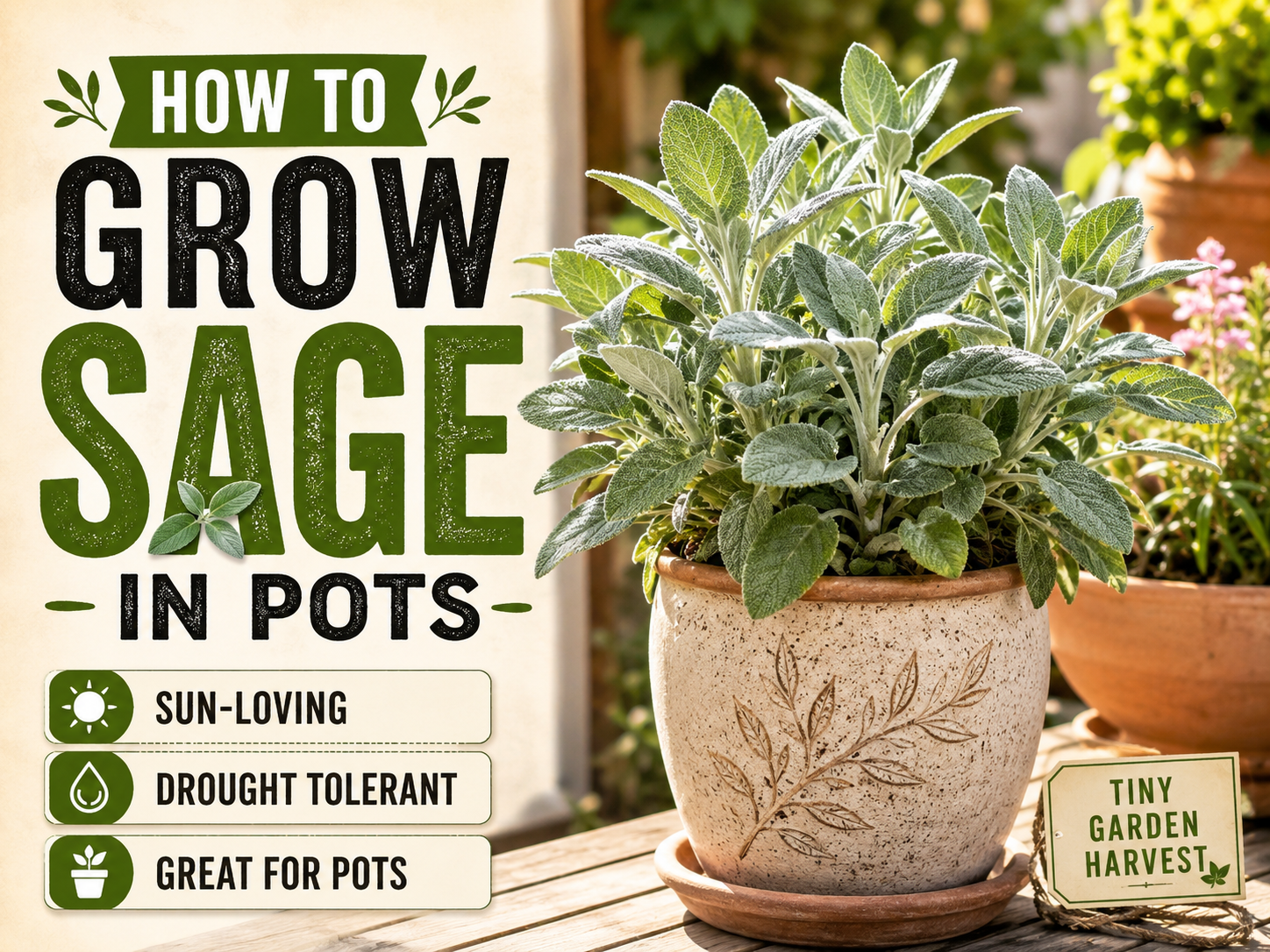
Quick answer: Sage grows well in pots if you give it full sun, free-draining compost and careful watering. Use a small-to-medium container with drainage holes, avoid keeping the roots wet, and harvest young leaves regularly. Sage is a long-term herb, so prune lightly and replace old woody plants when they stop producing fresh growth.
Growing note: Sage prefers lean, sunny, well-drained conditions. It is usually happier a little dry than constantly wet.
Quick facts
| Best for | Sunny patios, balconies and outdoor herb shelves |
| Difficulty | Beginner-friendly if not overwatered |
| Container | Small-to-medium pot with excellent drainage |
| Sunlight | Full sun |
| Best harvest | Pick young leaves and short sprigs as needed |
Why sage suits small spaces
Sage is a useful addition to a tiny edible garden because it gives strong flavour from a small footprint. One healthy pot can earn its space beside the kitchen door, on a balcony shelf or in a small patio herb corner.
It also helps round out the container garden. Some herbs are quick and leafy, while others are long-term plants that give structure, scent and regular harvests without needing a raised bed.
Choosing the right plant or variety
Choose a healthy plant or variety that matches how you cook and how much space you have. For small gardens, compact growth and reliable flavour matter more than novelty.
| Common sage | Reliable kitchen herb with strong flavour |
| Purple sage | Decorative foliage and edible leaves |
| Variegated sage | Attractive in patio pots |
| Pineapple sage | More tender and grown mainly for fragrance |
Choosing a pot
Use a pot with drainage holes and enough width for air around the plant. Terracotta is a good option because it dries more quickly than plastic and helps prevent soggy roots.
The container must have drainage holes. A slightly larger pot is usually easier to water than a tiny decorative pot, but do not jump a small plant straight into an enormous cold, wet container.
How to plant it
- Choose the final position before filling a heavy pot.
- Fill the container with suitable peat-free compost.
- Water the nursery plant if the root ball is dry.
- Plant at the same depth it was growing previously.
- Firm gently and water thoroughly.
- Let excess water drain away.
- Label the pot while the plant is still new.
Where to put the pot
Sage needs full sun for compact growth and strong flavour. A sunny balcony, patio table or warm courtyard ledge is ideal. Indoors, it needs a very bright sill and good airflow.
If your space is exposed, use the most sheltered bright position you have. Wind dries containers quickly and can damage taller herb plants.
Watering
Good watering is mostly about consistency. Check the compost with a finger rather than watering on a fixed schedule.
- Check the compost before watering.
- Water less in cool weather.
- Do not leave the pot standing in water.
- Improve drainage if stems blacken or leaves drop.
Feeding
Most herbs need only modest feeding in fresh compost. If growth slows during the growing season, use a suitable liquid feed at the label rate rather than guessing a stronger dose.
Harvesting
Harvest little and often once the plant is growing strongly. Use clean scissors or secateurs and take small amounts from different parts of the plant so it stays balanced.
Do not strip a young plant bare. A light regular harvest gives better regrowth and a tidier pot than one heavy cut.
Pruning and long-term care
Trim lightly to keep the plant compact and remove dead or damaged stems when you see them. Long-term herbs may need repotting, division or replacement when growth becomes weak.
Refresh the top layer of compost each spring if the plant is staying in the same pot.
Common problems
Leaves turn yellow
Waterlogging, poor drainage or weak light may be responsible.
The plant becomes woody
This is normal with age. Prune lightly and replace very old plants when unproductive.
Leaves are pale and soft
The plant may need more sun and less feeding.
Winter damage appears
Cold wet compost is often worse than cold alone.
A simple plan
Grow one pot of sage first and learn how it behaves in your space before buying several more herbs. Put it where you will remember to water and harvest it.
Sage fits naturally with sun-loving herbs such as thyme, rosemary and oregano.
Choose herbs that suit your space
Use the free growing tools to match herbs to your light, warmth and watering habits before filling every pot.
FAQs
Can it grow on a balcony?
Yes, as long as the balcony gives enough light and the pot is secure, drained and easy to water.
Can it grow indoors?
Some herbs cope indoors on a very bright windowsill, but most are stronger outdoors with better light and airflow.
How often should I water it?
Check the compost first. Water when the plant needs it rather than following a fixed calendar.
Can it share a pot with other herbs?
Only if the other herbs like similar light, moisture and drainage. Separate pots are easier for beginners.
Growing note: Start with one healthy plant in the right pot. Good light, drainage and regular small harvests matter more than complicated tricks.