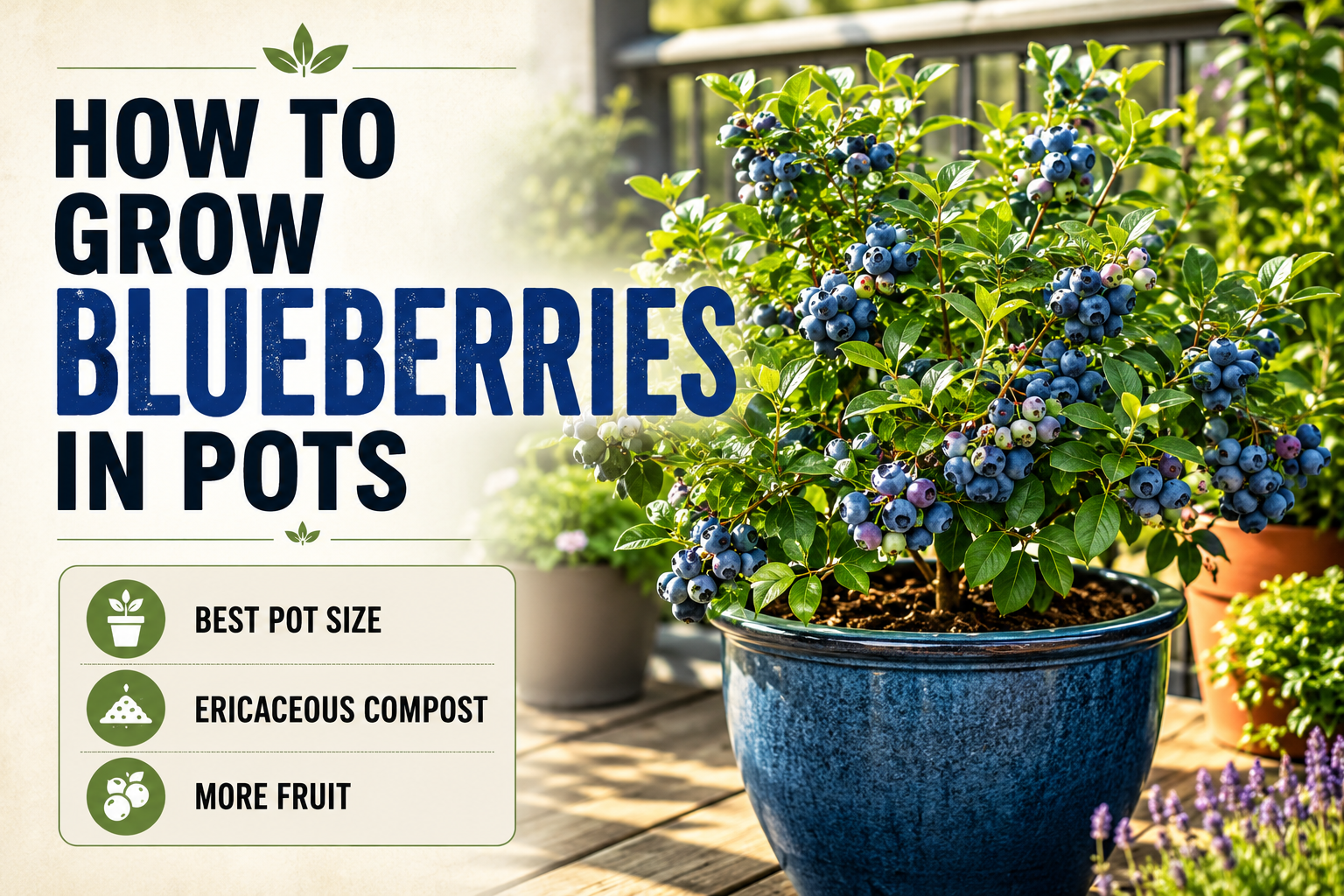
Quick answer: Blueberries are well suited to pots because containers let you provide the acidic compost they need. Choose a compact variety, use a large pot filled with peat-free ericaceous compost, water with rainwater where possible and keep the compost consistently moist. Two compatible varieties usually give a better crop than one.
Growing note: Ordinary multi-purpose compost is not suitable for long-term blueberry growing. Blueberries need acidic, ericaceous compost.
Quick facts
| Best for | Sunny patios, balconies, courtyards and small gardens |
| Difficulty | Beginner-friendly if acidity and watering are correct |
| Container | A large pot, increasing in size as the plant grows |
| Compost | Peat-free ericaceous compost |
| Main care needs | Rainwater, moisture, feeding, pollination and bird protection |
Why blueberries are excellent pot plants
Blueberries naturally prefer acidic growing conditions, which many gardens cannot provide. A pot solves that problem by giving you complete control over the compost. The plants also offer white spring flowers, summer fruit and colourful autumn leaves.
Compact and half-high varieties are especially useful for patios and balconies. A healthy bush can remain productive for years, so this is more of a long-term container crop than an annual vegetable.
Choosing a variety
Look for compact or half-high varieties described as suitable for pots. Check the eventual height and spread before buying. One plant may produce fruit, but two different compatible varieties flowering at the same time usually improve pollination and yield.
| Variety feature | Why it matters |
| Compact or half-high habit | Easier to manage in a pot |
| Similar flowering period | Supports cross-pollination between two plants |
| Good local hardiness | Helps the plant cope with winter conditions |
| Different ripening times | Can extend the harvest if growing more than one |
Choosing a pot
Start with a container that is comfortably larger than the nursery pot, then move the plant up gradually as it grows. The final pot should be substantial, stable and frost-resistant, with generous drainage holes.
Avoid putting a small plant directly into an enormous volume of wet compost. Potting up in stages makes moisture easier to control.
The right compost
Use peat-free ericaceous compost designed for acid-loving plants. Do not mix in garden lime, alkaline soil or ordinary compost. As the compost ages, refresh the surface and repot when roots fill the container.
How to plant a blueberry in a pot
- Soak the nursery pot thoroughly before planting.
- Choose a clean pot with drainage holes.
- Add peat-free ericaceous compost to the base.
- Remove the plant carefully and loosen tightly circling outer roots.
- Set it at the same depth it was growing before.
- Fill around the roots, firm gently and water with rainwater.
- Add an acidic mulch such as composted pine bark, keeping it away from the stem.
Where to position the pot
Blueberries crop best in a sunny sheltered position, although they tolerate light partial shade. Protect flowers from severe late frost where possible. On a balcony, keep the plant away from hot reflective walls that make the pot dry too quickly.
Watering blueberries
Blueberries have fine shallow roots and need consistent moisture. Rainwater is preferable because hard tap water can gradually raise the compost pH. If rainwater is unavailable, occasional tap water is better than letting the plant dry out.
- Check pots regularly in warm and windy weather.
- Water slowly until the root ball is evenly moist.
- Do not let the container stand permanently in water.
- Mulch to slow evaporation and protect shallow roots.
Feeding
Use a fertiliser formulated for ericaceous plants, following the label instructions. Do not use general lime-containing products or exceed the recommended dose.
Pollination and fruiting
Blueberry flowers attract pollinating insects. Two suitable varieties generally crop better than one, but even a self-fertile plant benefits from insect activity. Avoid using insecticides while the plant is flowering.
Protecting the berries
Birds quickly learn when blueberries are ripening. Use wildlife-safe netting secured so birds cannot become trapped, or move smaller pots into a fruit cage. Pick berries when they are fully blue and come away easily.
Pruning container blueberries
Young plants need little pruning beyond removing dead or damaged stems. As the bush matures, remove a small number of the oldest unproductive stems in winter to encourage fresh growth. Do not cut the whole plant back hard without a clear reason.
Winter care
Blueberries are hardy, but roots in pots are more exposed to cold than roots in the ground. Use a frost-resistant container, raise it slightly for drainage and protect the pot during severe weather if necessary.
Common problems
Leaves turn yellow between green veins
The compost may be becoming too alkaline, which prevents the plant taking up iron properly. Check the compost, water source and feeding routine.
The pot dries out constantly
The plant may need a larger container, more mulch or a less exposed position. Blueberries dislike repeated drought.
Few berries develop
Weak pollination, insufficient sun, a young plant or a single poorly matched variety may be responsible. Adding a second compatible variety can help.
Birds take the crop
Protect the plant before the berries fully colour. Once birds discover the fruit, they may remove it quickly.
A simple two-pot blueberry plan
Choose two compact compatible varieties and grow each in its own pot of ericaceous compost. Place them together in a sunny sheltered position, collect rainwater for summer use and protect the fruit before it ripens.
For another balcony fruit crop, see how to grow strawberries on a balcony.
Plan the rest of your patio
Use the free growing tools to match other edible crops to your sunlight and available container space.
FAQs
Can blueberries grow in ordinary compost?
Not successfully in the long term. Use peat-free ericaceous compost because blueberries need acidic conditions.
Do I need two blueberry plants?
One plant may fruit, but two compatible varieties flowering at the same time generally improve pollination and yield.
Can I water blueberries with tap water?
Rainwater is preferable, particularly in hard-water areas. Use tap water rather than allowing the plant to dry out, but try to collect rainwater for regular use.
How often should I repot a blueberry?
Repot when roots fill the container or growth slows because the pot is too small. Move up gradually rather than using an oversized pot immediately.
Growing note: The two essentials are acidic compost and steady moisture. Get those right before worrying about advanced pruning or feeding.