
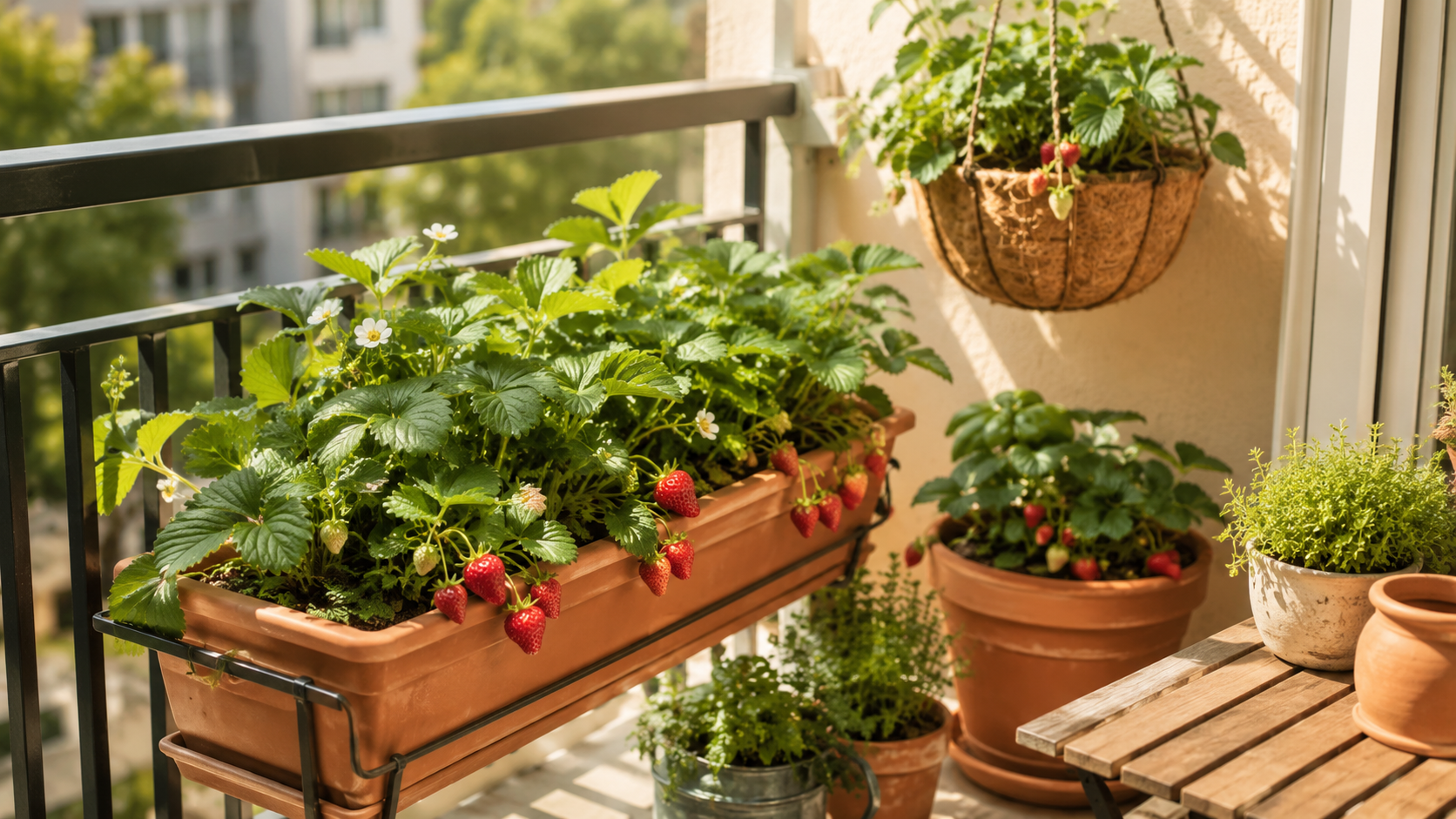
Quick answer: Strawberries are excellent balcony plants because they grow well in pots, troughs and hanging baskets, stay compact and produce fruit close to the kitchen. Give them a sunny position, good drainage, regular water and enough room around the crown. Keep the fruit off damp compost and protect ripening berries from birds where necessary.
Growing note: Balcony containers dry quickly in warm and windy weather. Strawberries need reliable moisture while flowering and fruiting, but the roots should not sit in water.
Quick facts
| Best for | Sunny balconies, patios, hanging baskets and window boxes |
| Difficulty | Beginner-friendly |
| Container | One plant in a medium pot, several in a trough or a suitable hanging basket |
| Sunlight | Full sun for the best flowering and flavour |
| Main care needs | Water, drainage, feeding and protection of ripening fruit |
Why strawberries suit balconies
Strawberries give you flowers, attractive leaves and edible fruit without needing a large bed. The plants sit neatly in containers and can be placed at a comfortable height for watering and picking. Even one or two plants can make a balcony feel productive.
They also use vertical space well. A hanging basket, tiered planter or wall-mounted trough can keep the fruit away from the floor, although these containers need more frequent watering than larger pots.
Choosing strawberry plants
Buying healthy young plants is the easiest route for beginners. Look for compact plants with fresh leaves and no obvious pests or damaged crowns. You may see summer-fruiting varieties, perpetual or everbearing varieties, and alpine strawberries.
| Type | What to expect |
| Summer-fruiting | A concentrated crop over a shorter period |
| Perpetual or everbearing | Smaller flushes over a longer season |
| Alpine | Small aromatic fruit and a neat habit |
Choose according to how you want to harvest. A few perpetual plants can be useful for occasional picking, while summer-fruiting plants give a more obvious seasonal crop.
Choosing a balcony container
Use a pot with drainage holes and enough compost to stay moist between waterings. A medium pot can hold one plant comfortably. A wider trough can hold several plants if they are spaced according to the label. Hanging baskets work, but they dry out quickly and should be easy to reach.
Avoid squeezing too many plants into a small container. Crowding reduces airflow, makes watering uneven and can encourage disease.
How to plant strawberries in pots
- Choose a container with good drainage and place it in a sunny position.
- Fill it with peat-free multi-purpose compost, leaving room below the rim for watering.
- Water the strawberry plant before removing it from its nursery pot.
- Plant with the crown at compost level. Do not bury the crown and do not leave the roots exposed.
- Firm gently and water thoroughly.
- Add a thin layer of clean straw or a suitable mulch around the plant once fruit begins to form, keeping it away from the crown.
Where to position strawberries on a balcony
A sunny, sheltered position is best. A wall can provide warmth and reduce wind, but avoid a spot that becomes unbearably hot and dry. Rotate freestanding pots occasionally if the plants lean strongly towards the light.
Check that hanging baskets and railing planters are securely fixed and suitable for the weight of wet compost. Never place a heavy container where it could fall.
Watering balcony strawberries
Water at the compost level and try to keep flowers and fruit relatively dry. During flowering and fruiting, check containers regularly. Hanging baskets may need daily attention in warm weather, while larger pots hold moisture for longer.
- Water slowly until moisture reaches the lower compost.
- Do not rely on a brief splash across the surface.
- Avoid leaving pots permanently waterlogged.
- Move very small pots out of harsh afternoon heat if they dry too fast.
Feeding container strawberries
Container plants have limited nutrients. During active growth and fruiting, use a suitable feed according to the product label. Do not increase the dose in an attempt to force more fruit. Consistent water, sun and healthy roots matter just as much.
Keeping fruit clean and protected
Fruit resting on damp compost is more likely to rot or become dirty. Use clean straw, a strawberry mat or another suitable barrier under developing berries. On balconies where birds visit, lightweight netting may be needed, but it must be fitted securely so wildlife cannot become trapped.
What to do with runners
Strawberry plants often produce runners with small plantlets. If your container is crowded, remove most runners so the plant can concentrate on fruiting. If you want new plants, root one or two plantlets into small pots while they are still attached, then separate them once established.
Common strawberry problems in containers
Leaves wilt in the afternoon
The pot may be drying too quickly. Check the compost below the surface, water thoroughly and consider moving the container away from intense afternoon heat.
Fruit rots before ripening
Improve airflow, avoid wetting the fruit and keep berries off damp compost. Remove damaged fruit promptly.
Lots of leaves but little fruit
Insufficient sun, excessive nitrogen, young plants or poor pollination may be involved. Move the container to better light if possible and avoid overfeeding.
Birds take the berries
Use secure wildlife-safe netting or move pots closer to the house where you can monitor them. Pick ripe fruit promptly.
A simple balcony strawberry plan
Start with two healthy plants in separate medium pots or a wide trough. Put them in the sunniest safe position, keep them evenly watered and learn how quickly the containers dry. Add more plants only after you know you can maintain them through warm weather.
Strawberries are a useful late-spring container crop. See what to sow and plant in May for more seasonal ideas.
Plan the rest of your balcony
Use the free tools to match crops to your sunlight, available space and container size.
FAQs
Can strawberries grow in hanging baskets?
Yes. Hanging baskets keep fruit away from the ground and use vertical space, but they dry out quickly and need regular checking.
How many strawberry plants should go in a pot?
That depends on the width of the pot and the variety. One plant in a medium individual pot is a simple starting point; follow the plant label when filling a trough or basket.
Do strawberries come back every year?
Strawberries are perennial, so healthy plants can crop for several years. Productivity often declines with age, and growers usually replace older plants periodically.
Can strawberries grow on a shady balcony?
They may grow, but flowering, fruit quantity and flavour are usually better with strong light. For a balcony with little sun, leafy crops and some herbs may be more reliable.
Growing note: Keep the crown at compost level when planting. Burying it too deeply can cause rot, while planting too high exposes the roots.