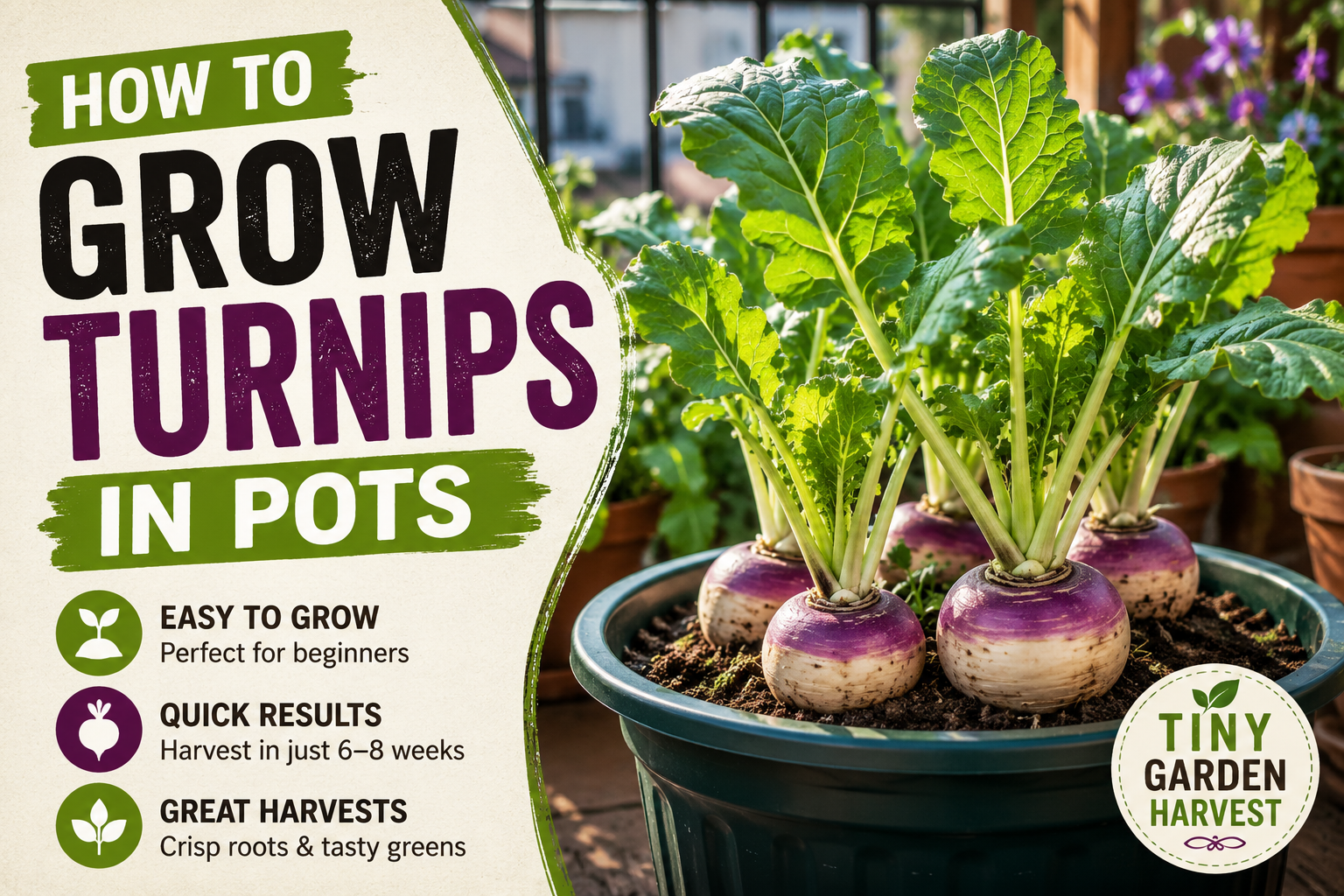
Quick answer: Turnips grow well in large containers when harvested young as mini vegetables. Use a pot or trough at least 20–25cm deep, sow seeds directly into the final container, keep the compost moist and harvest the roots while they are small and tender. Sow small batches every few weeks for a steady supply.
Growing note: Turnips prefer cool conditions. Hot weather and dry compost can make the roots woody or encourage the plants to bolt.
Quick facts
| Best for | Patios, balconies, courtyards and small gardens |
| Difficulty | Beginner-friendly |
| Container depth | 20–25cm for baby or salad turnips |
| Sunlight | Full sun or light partial shade |
| Best harvest | Mini roots harvested young |
Why turnips suit container growing
Turnips are quick, compact and useful when harvested young. The roots do not need the depth of long carrots, and the leaves can also be eaten when tender. A trough of baby turnips can fit into the spring or late-summer gap between other crops.
They are best grown as a succession crop rather than one large sowing. Small batches are easier to water, thin and harvest at the right size.
Choosing a variety
Look for salad turnips, baby turnips or early-maturing varieties specifically described as suitable for containers. Small round roots are easier than large maincrop types.
| Type | Container suitability |
| Salad turnip | Best for crisp young roots |
| Baby turnip | Harvested early from a trough or wide pot |
| Early round variety | Good for repeat spring sowings |
| Large maincrop turnip | Needs more room and a longer season |
Choosing the container
Use a pot or trough at least 20–25cm deep with plenty of drainage holes. The container should be wide enough to space roots properly. A medium rectangular planter is often easier than several small pots.
Turnips need steady moisture, so avoid shallow decorative bowls that dry out quickly.
How to sow turnips
- Fill the final container with peat-free multi-purpose compost.
- Water before sowing.
- Make shallow drills or individual holes according to the packet.
- Sow thinly and cover lightly.
- Label the variety and date.
- Keep the compost moist while seedlings emerge.
- Thin crowded seedlings before the roots begin to swell.
Where to position the pot
Turnips grow best in a bright position during cool weather. In warm conditions, light afternoon shade helps keep the compost cooler and reduces stress.
A sheltered patio or balcony position is ideal. Strong wind dries the leaves and compost rapidly.
Watering
Water consistently from germination to harvest. Dry spells can produce tough roots, while severe fluctuations may cause splitting.
- Check containers often during dry weather.
- Water slowly so moisture reaches the lower compost.
- Do not leave the pot permanently standing in water.
- Mulch lightly once seedlings are established.
Thinning seedlings
Crowded plants produce small leaves and poorly shaped roots. Thin seedlings to the spacing on the packet. If the leaves are young and healthy, the thinnings can be used in salads.
Harvesting
Pull turnips while the roots are still small, smooth and tender. Salad turnips are often at their best around golf-ball size. Harvest the largest roots first and leave smaller plants to continue growing.
The leaves are edible too, although older foliage may need cooking. Remove damaged or pest-affected leaves.
Common problems
Roots become woody
The crop may be old, dry or growing in hot conditions. Harvest younger and maintain consistent moisture.
Plants bolt
Heat, drought and temperature swings can trigger flowering. Sow during cooler periods and choose a bolt-resistant variety.
Leaves have holes
Flea beetles, caterpillars or slugs may be responsible. Fine mesh and regular inspection help protect young plants.
Roots stay tiny
Crowding, shade or dry compost can limit root growth. Thin the seedlings and move the container into better light.
A simple succession plan
Sow a small patch every two or three weeks from spring into early summer, then resume in late summer when temperatures begin to fall. Harvest each batch young rather than trying to grow oversized roots.
Turnips pair well with other quick container roots such as radishes and beetroot.
Check your pot depth
Use the Container Size Calculator before sowing roots in a shallow trough.
FAQs
How deep should a container be for turnips?
A depth of 20–25cm suits many baby and salad turnips. Larger varieties need more room.
Can turnips grow in partial shade?
They tolerate light partial shade, although useful light is still needed for good roots.
Can I eat turnip leaves?
Yes. Young healthy leaves can be eaten raw or cooked, while mature leaves are usually better cooked.
How often should I sow turnips?
Small sowings every two or three weeks give a steadier harvest and reduce the chance of a glut.
Growing note: Container turnips are easiest when treated as a quick mini-vegetable rather than a large storage crop.