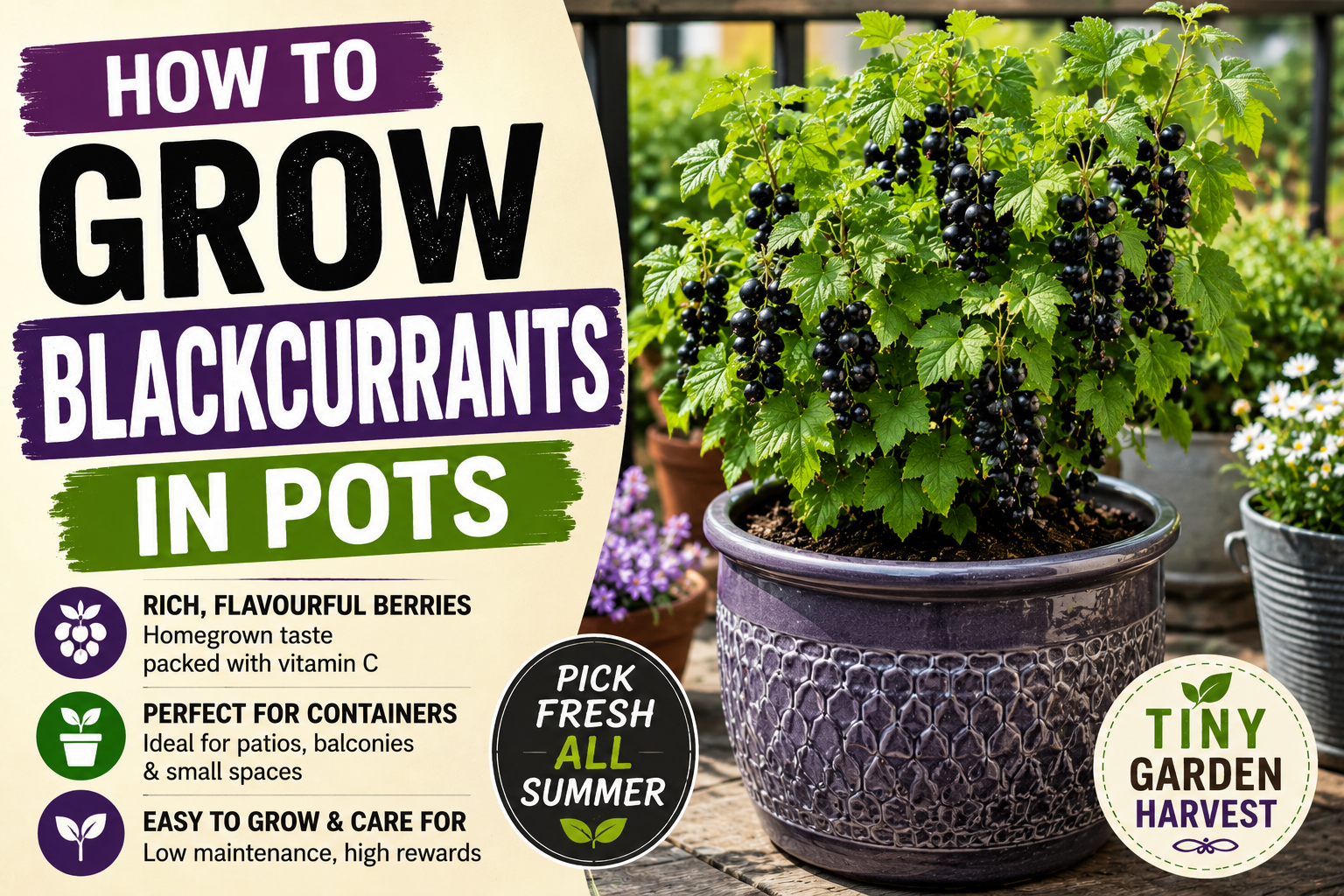
Quick answer: Blackcurrants can grow in large containers if you use a compact variety, a substantial pot and a good soil-based peat-free compost. Keep the compost evenly moist, feed each spring and prune older stems to encourage strong young growth. For a tiny garden, one compact bush is usually enough.
Growing note: Blackcurrants fruit best on younger wood, so their pruning is different from redcurrants and gooseberries.
Quick facts
| Best for | Patios, courtyards, balconies and small gardens |
| Difficulty | Beginner to intermediate |
| Container | Large pot around 45–50cm wide for long-term growing |
| Sunlight | Full sun or partial shade |
| Main care needs | Watering, feeding, pruning and bird protection |
Are blackcurrants good in containers?
Blackcurrants are naturally bushy and can crop well in a large pot, especially if you choose a compact cultivar. They are useful for jams, desserts, cordials and freezing, and they tolerate some partial shade.
They are not a tiny windowsill crop. Treat them as a long-term patio fruit bush that needs a permanent container and annual care.
Choosing a compact variety
Look for a variety described as compact, patio-suitable or resistant to common problems such as mildew. Check the mature size before buying. Some blackcurrants become large bushes and are better in the ground.
| Feature | Why it matters |
| Compact habit | Fits a patio or balcony container |
| Disease resistance | Useful in sheltered sites |
| Good flavour | Important if using fruit fresh or for desserts |
| Strong cropping | Makes the permanent pot worthwhile |
Choosing a container
Use a large pot around 45–50cm wide with drainage holes. A soil-based peat-free compost is better for long-term structure than a very light multipurpose compost alone.
The pot will become heavy once filled and watered, so place it in its final position before planting. Check balcony load limits before adding large fruit containers.
How to plant a blackcurrant
- Soak the nursery plant before planting.
- Choose a large stable pot with drainage holes.
- Add soil-based peat-free compost to the base.
- Plant slightly deeper than the nursery soil line if the plant label recommends it.
- Firm gently and water thoroughly.
- Mulch the surface to conserve moisture.
- Keep the label for pruning and variety information.
Where to position the pot
Blackcurrants crop best in sun, but they tolerate partial shade. A sheltered position helps protect flowers from cold winds and reduces branch damage. Avoid very hot dry spots where the container repeatedly dries out.
Watering and feeding
Keep the compost evenly moist, especially while fruit is swelling. Drought stress can reduce berry size and weaken the bush for the following season.
- Water deeply rather than splashing the surface.
- Check pots often in warm weather.
- Mulch each spring.
- Avoid leaving the pot waterlogged.
Feed in spring with a suitable fruit fertiliser according to the label. Refresh the top layer of compost annually and repot or root-prune when the plant becomes congested.
Pruning blackcurrants
Blackcurrants fruit well on young strong wood. Each winter, remove some older darker stems near the base and keep younger vigorous shoots. This encourages renewal and prevents the bush becoming a dense tangle.
Do not prune blackcurrants exactly like redcurrants. Redcurrants fruit on older wood and spurs, while blackcurrants need regular renewal growth.
Harvesting
Pick berries when fully black, soft and ripe. Some varieties ripen in clusters more evenly than others. Harvest gently and use or freeze the fruit soon after picking.
Common problems
Few berries form
Late frost, weak light, incorrect pruning or a young plant may be responsible. Protect flowers where possible and check the variety’s cropping habit.
Birds take the fruit
Use wildlife-safe netting before berries ripen. Secure it so birds cannot become trapped.
The bush becomes woody and unproductive
Prune out older stems in winter to encourage new growth from the base.
Leaves look pale or growth slows
The container may be depleted or root-bound. Refresh compost and consider repotting during dormancy.
A simple one-bush plan
Choose one compact blackcurrant, plant it in a large stable pot and place it in full sun or partial shade. Keep it watered, feed in spring and prune out old stems each winter to encourage fresh growth.
For similar long-term fruit options, see redcurrants in containers and gooseberries in pots.
Plan your fruit containers
Use the growing tools before choosing another permanent patio fruit crop.
FAQs
Can blackcurrants grow in pots?
Yes, if the pot is large enough and the plant is kept watered, fed and pruned.
How big should a blackcurrant pot be?
A large pot around 45–50cm wide is a useful starting point for long-term growing.
Can blackcurrants grow in shade?
They tolerate partial shade, although full sun usually gives better cropping.
Do I need two blackcurrant plants?
Many blackcurrants are self-fertile, so one plant can crop. Check the cultivar description.
Growing note: Blackcurrants need renewal pruning. Keep young strong stems and gradually remove older unproductive wood.