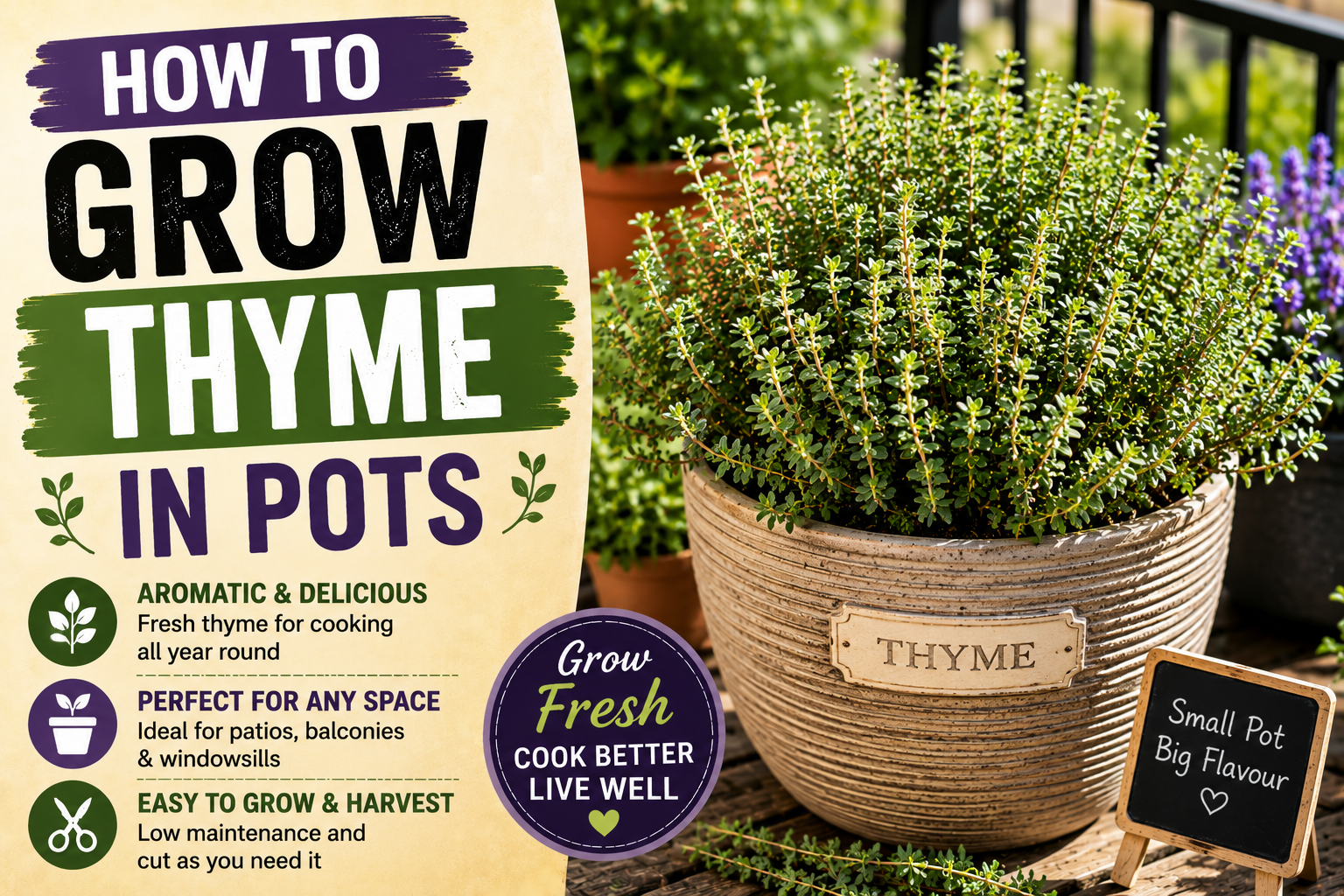
Quick answer: Thyme grows well in pots when it has full sun, sharp drainage and careful watering. Use a container with drainage holes, choose a gritty peat-free compost mix, and let the top of the compost dry before watering again. Thyme is ideal for sunny balconies, patio tables and small herb collections.
Growing note: Thyme dislikes sitting in wet compost. It is usually happier slightly dry than constantly damp.
Quick facts
| Best for | Sunny balconies, patios, courtyards, windowsills and herb shelves |
| Difficulty | Beginner-friendly if not overwatered |
| Container | Small or medium pot with excellent drainage |
| Sunlight | Full sun |
| Best harvest | Snip short sprigs regularly |
Why thyme suits small spaces
Thyme is compact, evergreen in many conditions and useful in the kitchen. It does not need a large pot or constant attention, which makes it a good choice for a sunny tiny garden.
It pairs well with Mediterranean-style herbs such as rosemary and oregano because they all prefer sun and freer-draining compost than leafy herbs like parsley, mint and coriander.
Choosing a thyme variety
| Type | Best use |
| Common thyme | Everyday cooking |
| Lemon thyme | Fresh citrus note for fish, chicken and vegetables |
| Creeping thyme | Low, spreading and decorative |
| Silver or variegated thyme | Attractive foliage, often slightly less vigorous |
Common thyme is the simplest practical choice. Lemon thyme is also excellent if you want a more distinctive flavour.
Choosing a pot
Use a pot with good drainage holes. Terracotta works well because it dries more quickly than plastic or glazed containers. Thyme does not need a huge pot, but it does need room for air around the stems.
Avoid deep saucers that keep the base wet for long periods.
Compost for thyme
Use a free-draining peat-free mix. A standard multi-purpose compost can be improved with horticultural grit or another suitable drainage material. The goal is moisture that drains rather than clings around the roots.
How to plant thyme
- Choose a sunny position.
- Fill a pot with free-draining compost.
- Water the thyme plant before repotting.
- Plant at the same depth it was growing previously.
- Firm gently and water lightly.
- Let the pot drain fully.
- Avoid heavy watering while the plant settles.
Where to put thyme
Thyme wants full sun and good airflow. A sunny balcony rail shelf, patio table or warm windowsill can work well. Indoors, make sure the plant receives strong light and is not kept in a humid, poorly ventilated corner.
Watering thyme
Water thoroughly, then allow the upper compost to dry before watering again. Thyme is often killed by kindness: too much water is more dangerous than a short dry spell.
- Check the compost with a finger before watering.
- Do not leave the pot standing in water.
- Water less in cool weather.
- Use terracotta or a gritty mix if you tend to overwater.
Harvesting thyme
Snip short sprigs as needed, avoiding cutting back into old bare wood. Regular light harvesting keeps the plant compact. The flavour is often strongest just before flowering.
Pruning and refreshing
After flowering, trim lightly to keep the plant tidy. Do not cut hard into old woody stems because thyme may not regrow well from bare wood. Replace very woody tired plants when they stop producing fresh shoots.
Common problems
The plant turns brown and collapses
Wet compost, poor drainage or lack of airflow may be causing root problems. Move the plant to a sunnier, drier position and improve drainage.
Growth becomes woody
This is natural as thyme ages. Trim lightly after flowering and replace very old plants when needed.
Leaves are pale and soft
The plant may need more sun and less water. Thyme prefers bright, lean conditions.
The pot dries very quickly
That is less serious for thyme than for leafy herbs, but a slightly larger terracotta pot can make watering easier.
A simple thyme plan
Buy one healthy common thyme plant, place it in a terracotta pot of free-draining compost and keep it in your sunniest position. Snip small sprigs regularly and water only when the compost begins to dry.
For more herb-growing basics, see how to grow herbs on a windowsill.
Choose herbs for your conditions
Use the growing tools to match herbs to your available light and watering style.
FAQs
Can thyme grow indoors?
Yes, if it has a very bright windowsill and good airflow. It often performs better outdoors in full sun.
How often should I water thyme?
Water when the top of the compost has dried. Do not keep it constantly damp.
Can thyme grow with rosemary?
Yes, if the container is large enough and the compost drains freely. Both prefer sun and careful watering.
Should I cut thyme back hard?
No. Trim lightly and avoid cutting into old bare wood.
Growing note: Thyme is a low-maintenance herb, but only if the pot drains well and receives enough sun.