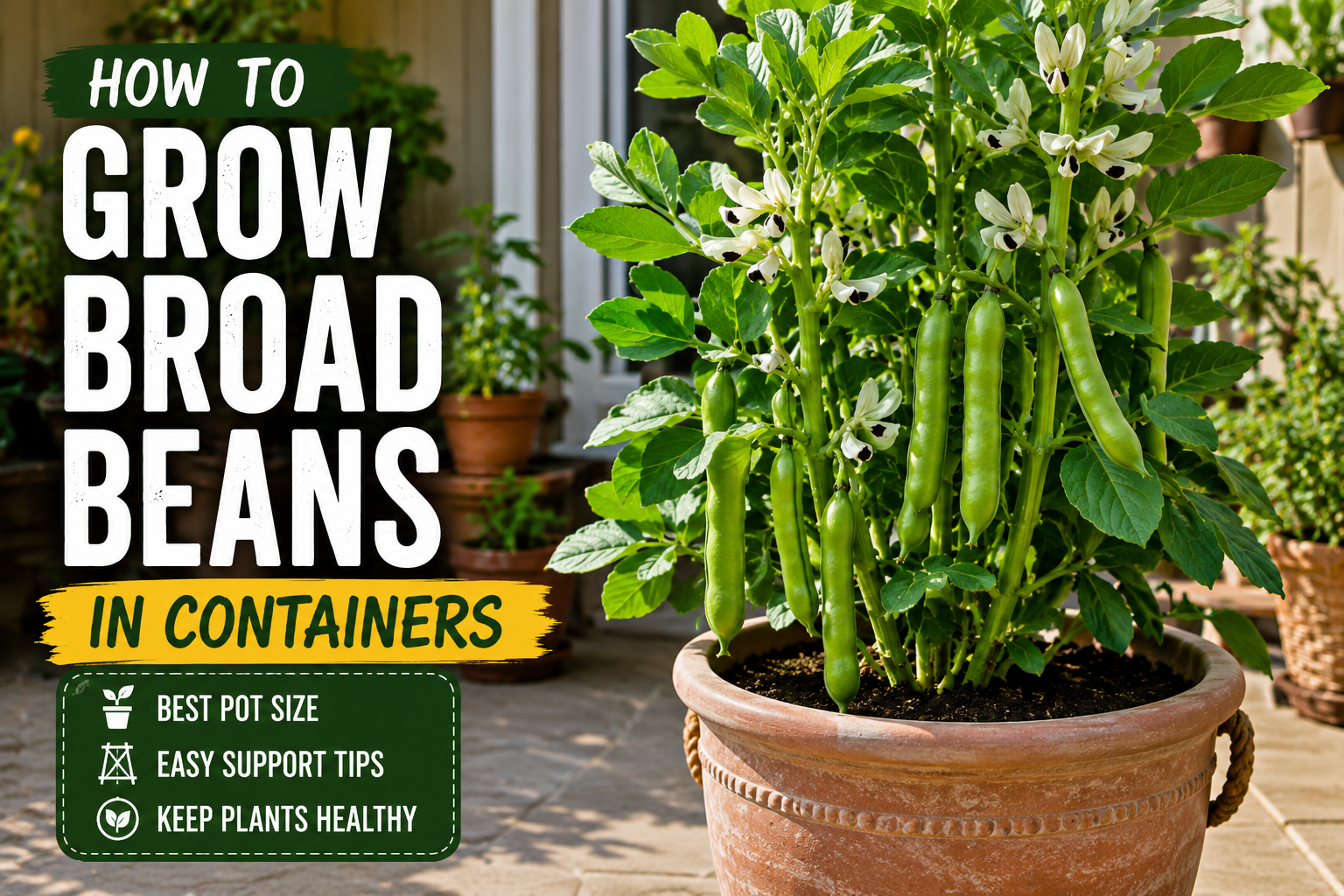
Quick answer: Broad beans can grow in containers if you choose a dwarf variety, use a deep wide pot, keep the plants evenly watered and provide support. Sow in spring for the simplest container crop, space plants according to the packet and pinch out the soft growing tips once the first pods begin to form.
Growing note: Standard broad beans become tall and heavy. Dwarf varieties are the most realistic choice for a balcony or small patio.
Quick facts
| Best for | Sunny sheltered patios, balconies and courtyards |
| Difficulty | Beginner-friendly with support |
| Best type | Dwarf broad beans |
| Container | A wide deep pot or trough with room for several plants |
| Main care needs | Moisture, staking and aphid checks |
Are broad beans suitable for containers?
Broad beans are less compact than radishes or lettuce, but dwarf varieties can produce a useful spring crop from a large pot. The plants are sturdy, tolerate cool conditions and can be sown earlier than tender beans.
They are best treated as a seasonal experiment rather than a high-yield staple. A container will not produce a freezer full of beans, but freshly picked young pods are still rewarding.
Choosing a dwarf variety
Look for a variety specifically described as dwarf or suitable for containers. Standard varieties may reach a metre or more and need stronger staking.
| Type | Container suitability |
| Dwarf broad bean | Best choice for pots and exposed spaces |
| Standard broad bean | Needs a larger container and stronger support |
| Autumn-sown type | Possible in mild sheltered conditions, but spring is simpler |
Choosing a container
Use a deep, wide pot or trough that holds enough compost to stay moist. Broad beans form substantial roots and dislike drying out during flowering. The pot should also be heavy enough to keep the crop stable in wind.
Make sure there are drainage holes. Wet, stagnant compost can rot seeds and roots, especially in cold weather.
How to sow broad beans
- Fill the container with peat-free multi-purpose compost.
- Water before sowing.
- Sow the large seeds at the depth and spacing shown on the packet.
- Add canes or short stakes early.
- Keep the compost moist but not saturated.
- Protect emerging seedlings if birds or mice are a problem.
- Guide stems between supporting strings as they grow.
Where to position the pot
Choose a sunny sheltered position. Broad beans tolerate cool weather, but strong wind can loosen roots and snap stems. A position against a wall or sturdy railing is useful if the pot still receives good light.
Supporting the plants
Place short canes around the edge of the container and run soft string around them to create a simple frame. The plants can support one another inside this enclosure.
Do not wait until the stems are falling over. Early support is much easier to add without damaging roots.
Watering and feeding
Water regularly, especially when flowers and pods are forming. Fresh compost usually provides a reasonable start, so avoid excessive nitrogen feeding, which can encourage soft leafy growth.
- Check containers frequently during dry spring weather.
- Water slowly at the base.
- Use mulch to reduce evaporation.
- Do not let the pot stand permanently in water.
Pinching out the tops
Once the first pods begin to form, pinch out the soft top 7–10cm of each plant. This can reduce black bean aphid infestations and encourages the plant to focus on pod development.
The young tips are edible when healthy and can be cooked like spinach.
Harvesting broad beans
Pick pods from the bottom of the plant upwards. For tender whole pods, harvest very young. For shelled beans, wait until the pods feel filled but before the beans become tough.
Regular harvesting gives the remaining pods room and helps you catch the crop at its best.
Common problems
Black bean aphids
Dense black colonies often gather on the growing tips. Pinch out tips after the first pods form and check plants regularly.
Flowers fall without pods
Dry compost, cold weather or poor pollination can reduce pod set. Maintain moisture and allow insects access to the flowers.
Plants flop over
The variety may be too tall for the container or the support too weak. Add string around the whole group rather than tying each stem tightly.
Seeds rot before germinating
Cold waterlogged compost is a common cause. Use free-draining compost and avoid overwatering early sowings.
A simple dwarf-bean plan
Sow one large trough with a dwarf variety in spring. Add a low support frame immediately, keep the pot moist and pinch the tips once pods begin to form. Follow the broad beans with a summer container crop after harvest.
Broad beans fit well into an early-season plan. See what to sow in March and what to sow in April.
Compare container crops
Use the free tools to decide whether broad beans, peas or dwarf French beans make the best use of your space.
FAQs
Can broad beans grow on a balcony?
Yes, especially dwarf varieties on a sunny sheltered balcony. Use a stable pot and support the plants early.
How deep should a broad-bean container be?
Use a substantial deep container rather than a shallow window box. The exact size depends on the variety and number of plants.
When should I sow broad beans in pots?
Spring sowing is the simplest approach for most beginners. Some varieties can be sown in autumn in mild protected conditions.
Do broad beans need feeding?
Fresh compost usually gives them a good start. Consistent water and adequate root room matter more than heavy feeding.
Growing note: Dwarf broad beans are much easier in containers than tall standard varieties. Check the expected plant height before buying seed.