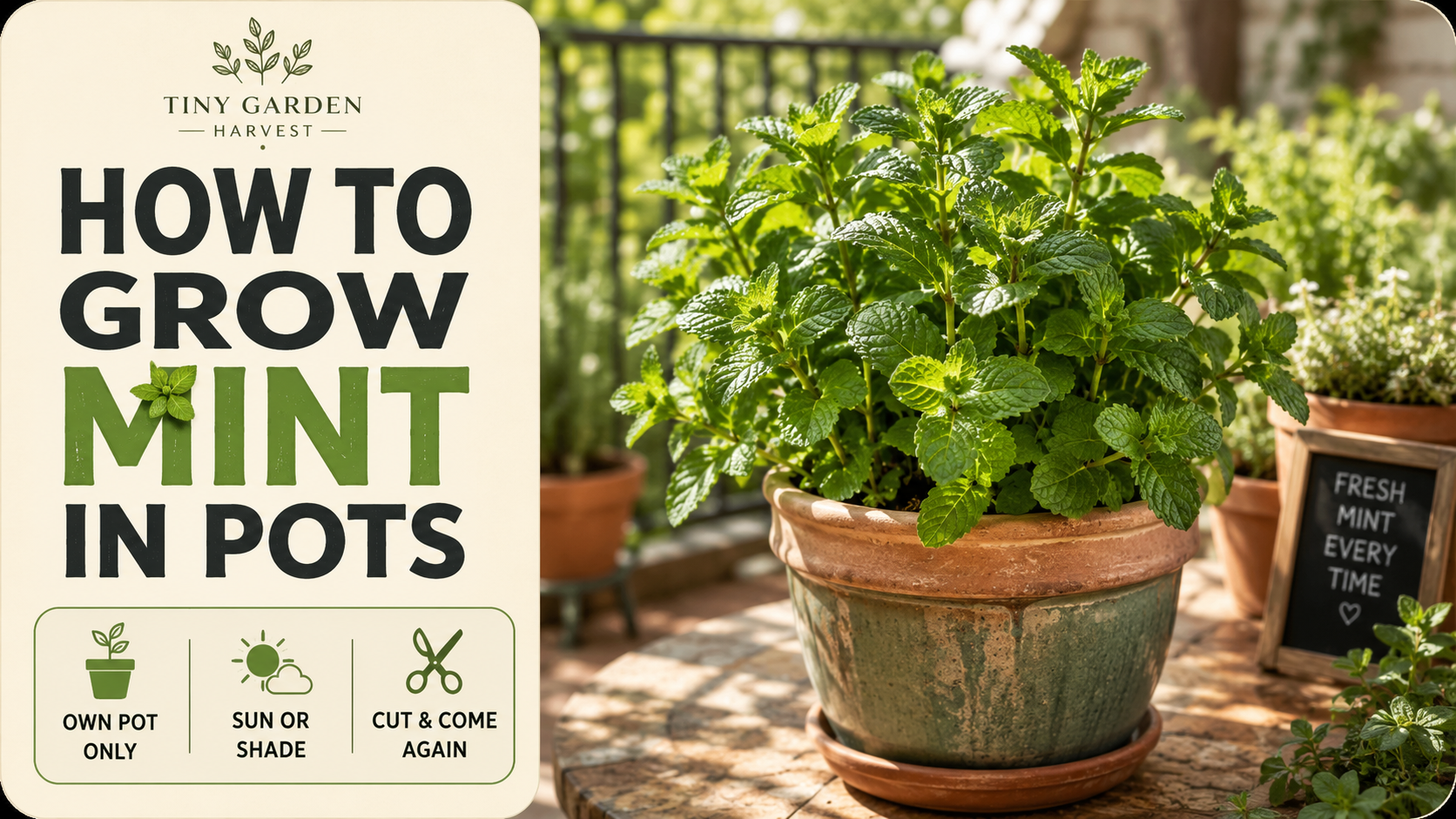
Quick answer: Mint is one of the easiest herbs to grow in pots and is best kept in its own container because it spreads strongly. Use a pot with drainage, place it in sun or partial shade, keep the compost moist and cut stems regularly to encourage fresh growth. Repot or divide the plant when it becomes crowded.
Growing note: Mint can become invasive in open ground. Growing it in a separate pot keeps it productive and contained.
Quick facts
| Best for | Patios, balconies, doorsteps and bright outdoor windowsills |
| Difficulty | Very beginner-friendly |
| Container | Own pot with drainage holes |
| Sunlight | Full sun or partial shade |
| Best harvest | Cut young stems regularly |
Why mint is ideal for containers
Mint is vigorous, useful and forgiving. It grows well in a pot, recovers after cutting and provides leaves for drinks, salads, potatoes, sauces and desserts. For a tiny garden, it gives a lot of value from one container.
The main reason to use a pot is control. Mint spreads by runners and can take over a bed. A separate container keeps the roots contained and makes harvesting easier.
Choosing a mint variety
| Type | Best use |
| Spearmint | Classic kitchen mint |
| Peppermint | Strong flavour for teas and desserts |
| Apple mint | Softer flavour and attractive leaves |
| Chocolate mint | Novelty flavour for drinks and desserts |
Start with one variety you will actually use. Different mints can become tangled if planted together.
Choosing a pot
Use a medium pot with drainage holes. Mint likes moisture, but it should not sit permanently in water. A wider pot gives the plant room to spread while remaining easy to manage.
Terracotta looks attractive but dries quickly. Plastic, glazed or metal containers retain moisture longer, which can be helpful in summer.
How to plant mint
- Choose one healthy mint plant.
- Fill a pot with peat-free multi-purpose compost.
- Water the plant before repotting.
- Set it at the same depth it was growing previously.
- Firm gently and water thoroughly.
- Place the pot where it receives good light.
- Keep it separate from slower herbs.
Where to put mint
Mint grows in sun or partial shade. A position with morning sun and afternoon shade is often ideal because it reduces drying. On a hot balcony, mint may need more frequent watering than you expect.
Watering
Mint prefers consistent moisture. If the leaves droop, the pot may be too dry. Water deeply and let excess moisture drain away.
- Check pots often in warm weather.
- Water at the compost surface.
- Move the pot to partial shade if it dries too fast.
- Do not leave it waterlogged for long periods.
Harvesting mint
Cut stems just above a pair of leaves. This encourages branching and fresh growth. Regular cutting keeps the plant bushy and delays flowering.
If the plant flowers, it is still usable, but the leaves may become stronger. Cut it back after flowering to refresh the growth.
Repotting and dividing mint
Mint quickly fills a pot with roots. If growth becomes weak or the compost dries almost immediately after watering, tip the plant out and divide it. Replant a healthy section into fresh compost.
This is also a good way to keep one mint pot productive without buying new plants every year.
Common problems
The plant looks tired and woody
Cut it back and refresh the compost. Old congested mint often improves after division.
Leaves turn yellow
The pot may be waterlogged, hungry or root-bound. Check drainage and root congestion.
The pot dries constantly
Move it to partial shade, use a larger pot or divide and repot the plant.
Mint spreads out of the pot
Trim runners regularly and keep the pot away from open soil if you do not want it rooting elsewhere.
A simple mint plan
Grow one pot of spearmint near the kitchen door. Keep it watered, cut stems regularly and divide it once it becomes crowded. Do not mix it into a small herb trough with delicate herbs.
For more indoor and small-space herbs, see how to grow herbs on a windowsill.
Plan a useful herb container
Use the tools to match herbs to your light and watering habits before buying more plants.
FAQs
Can mint grow indoors?
It can grow on a bright windowsill, but outdoor light usually gives stronger growth. Keep it away from hot dry radiators.
Does mint need full sun?
No. Mint grows well in partial shade and often prefers it during hot weather.
Should mint have its own pot?
Yes. Mint is vigorous and can overwhelm slower herbs in a mixed container.
Can I cut mint right back?
Yes, a healthy established mint plant usually regrows well after a hard cut, especially in the growing season.
Growing note: Mint is easy because it is vigorous. The skill is keeping that vigour contained and refreshed.