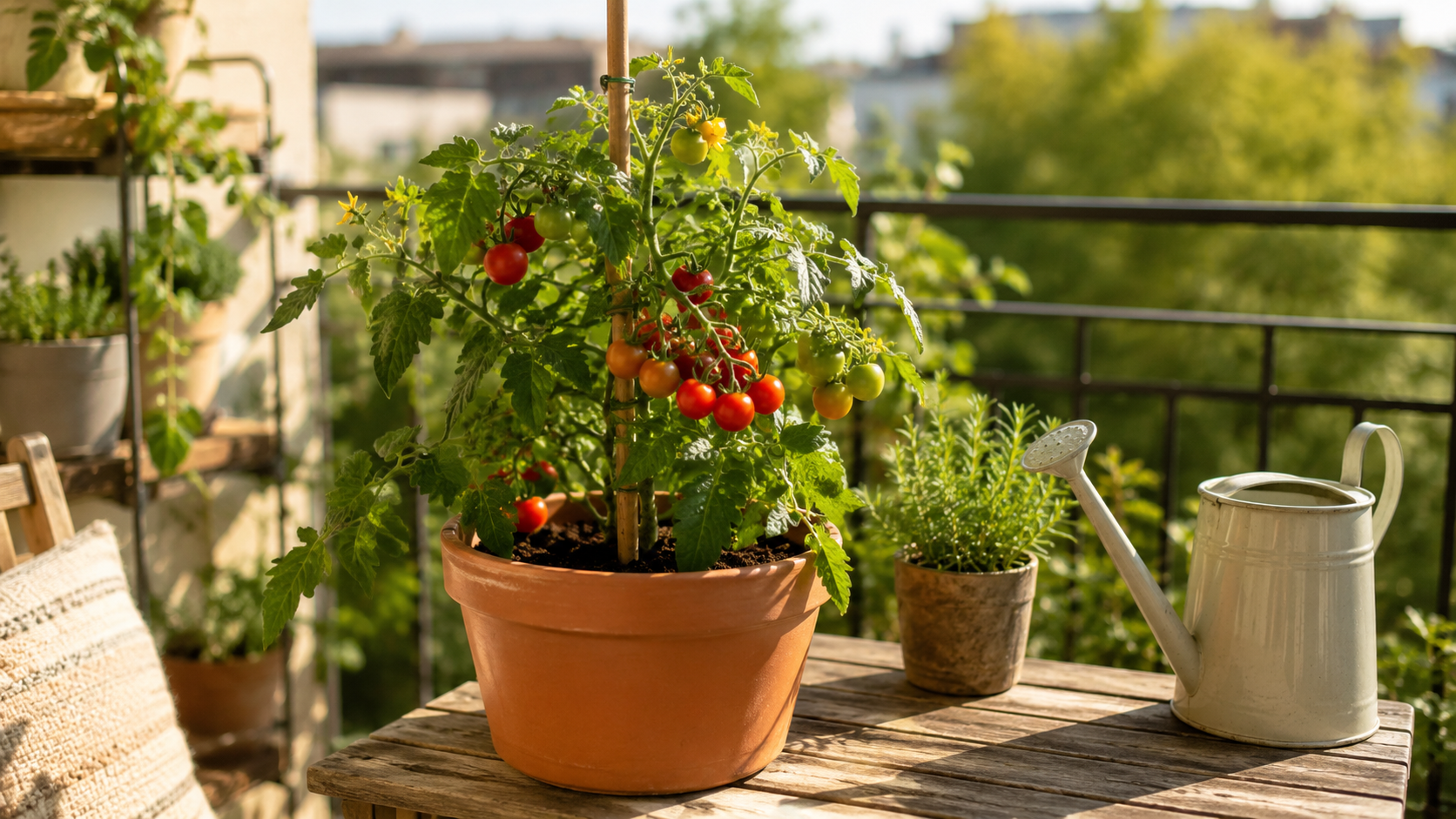
Quick answer: Tomatoes grow well in containers if you give them sun, warmth, root space, steady watering and regular feeding. For a tiny garden, choose compact bush or cherry varieties, use at least a 30cm pot or a suitable growing bag, keep plants protected until nights are frost-free, and water consistently once fruit begins to form.
Quick facts
| Best for | Sunny patios, balconies, courtyards and sheltered small gardens |
| Difficulty | Beginner to intermediate |
| Container size | At least 30cm wide/deep for one compact plant; larger is easier |
| Sunlight | Full sun and shelter from strong wind |
| Main care needs | Watering, feeding, support and frost protection |
Are tomatoes a good tiny-garden crop?
Yes, if you have enough sun. Tomatoes are one of the most rewarding container crops because even one plant can give you a real harvest. They also make a tiny garden feel abundant: green leaves, yellow flowers and ripening fruit all from one pot.
The catch is that tomatoes are more demanding than lettuce or radishes. They need warmth, regular watering and enough compost around their roots. A stressed tomato in a tiny pot will be much harder to manage than one healthy plant in a generous container.
Choose the right tomato type
Bush tomatoes
Bush tomatoes are usually the easiest choice for small spaces. They stay more compact, need less pruning and suit pots, troughs, hanging baskets and growing bags. Many cherry bush varieties produce plenty of small fruits without needing complicated training.
Cordon tomatoes
Cordon tomatoes grow tall and need staking, tying in and side-shoot removal. They can work in containers, but they are more demanding. If this is your first tiny-garden tomato, start with a compact bush variety unless you enjoy the extra training work.
Cherry tomatoes
Cherry tomatoes are ideal for beginners because the fruits ripen more quickly than large beefsteak types and are useful straight from the plant. They are also easier to use in salads, lunchboxes and quick meals.
Choosing a container
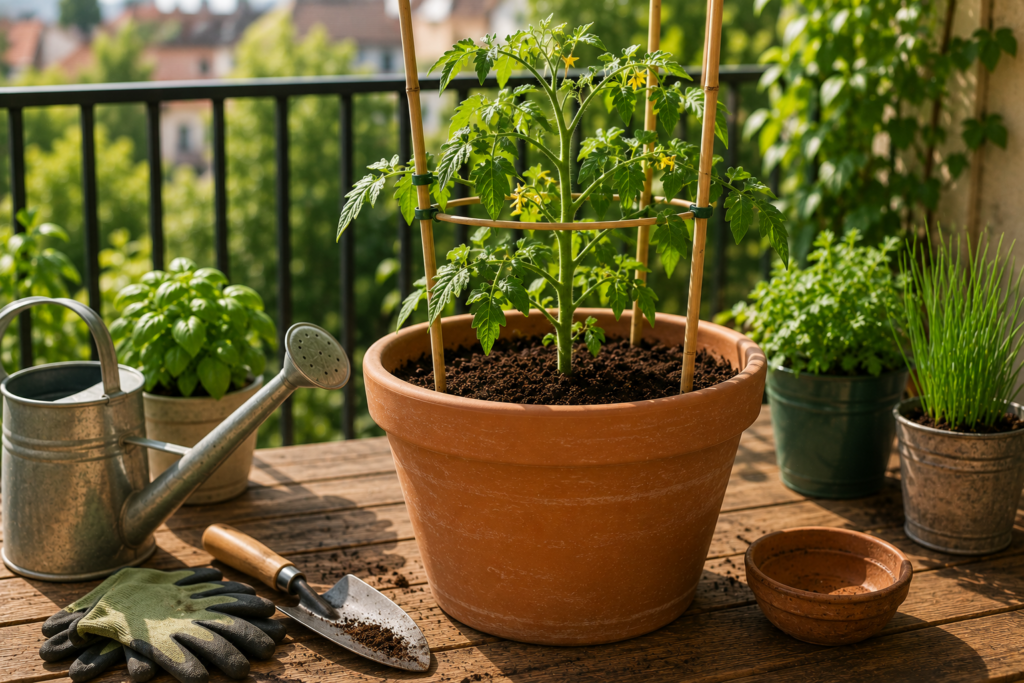
A tomato plant needs more root space than it appears to need when you buy it as a small plant. Use at least a 30cm pot for a compact plant, and go bigger if you can. Larger containers hold more moisture and nutrients, which makes the plant easier to care for in summer.
| Container option | Best use |
| 30cm+ pot | One compact bush tomato |
| Large patio pot | One strong plant with easier watering |
| Growing bag | Two or three plants, depending on bag size and variety |
| Deep trough | Compact plants spaced well apart |
| Hanging basket | Trailing cherry varieties only, with frequent watering |
Whatever you choose, drainage matters. Pots need holes, growing bags need drainage slits, and containers should not sit permanently in water.
When to plant tomatoes outside
Tomatoes are tender, so wait until nights are frost-free before moving them outside permanently. In mild areas this may be around mid-May, but colder or exposed spaces may need longer. Before planting out, harden plants off gradually by putting them outside during the day and bringing them back under cover at night for a week or two.
If an unexpected cold night is forecast after planting, cover plants with horticultural fleece or move pots to the most sheltered place you have.
How to plant tomatoes in containers
- Place the container in its final sunny, sheltered position before filling if it will be heavy.
- Fill with good-quality peat-free multi-purpose compost. Mix in slow-release fertiliser if you use it, following the packet instructions.
- Water the tomato plant before planting.
- Plant deeply, burying part of the stem so the first leaves sit just above the compost surface.
- Firm gently and water well to settle compost around the roots.
- Add a cane, support or cage early so you do not damage roots later.
- Keep the compost evenly moist while the plant establishes.
Where to put container tomatoes
Tomatoes need a warm, sunny, sheltered spot. A south-facing patio, sunny balcony, courtyard wall or greenhouse doorway can all work well. Windy balconies are harder because plants dry out quickly and stems can be damaged, so use sturdy pots and secure supports.
Avoid deep shade. If your space gets only a little sun, tomatoes may grow leaves but produce disappointing fruit. In that case, salad leaves, herbs, spinach and strawberries may be better choices.
Watering tomatoes in pots
Watering is where most container tomato problems begin. Pots dry out faster than garden soil, and tomatoes dislike dramatic swings between dry and soaked. Aim for steady moisture.
- Check pots daily in warm weather.
- Water at the base of the plant rather than over the leaves.
- Water slowly so moisture reaches the roots.
- Do not let containers dry out completely once fruit is forming.
- Use a saucer only if you empty excess water and avoid waterlogging.
Feeding tomatoes
Container tomatoes rely on you for nutrients. Once the first fruits start to form, feed regularly with a tomato fertiliser, following the instructions on the product. Do not guess stronger doses. More feed is not automatically better and can stress plants.
If leaves look pale, growth is weak or fruits are slow to develop, check watering and container size as well as feeding. A hungry plant and a thirsty plant can look similar to beginners.
Do tomatoes need pruning?
Bush tomatoes usually need little pruning. Remove dead, yellowing or damaged leaves and let the plant keep its natural shape. Cordon tomatoes need more attention: they are normally grown as a single main stem and side shoots are removed as they appear.
Always check your variety type. The wrong pruning can reduce your harvest, especially if you remove too much from a bush tomato.
Common tomato problems in containers
The plant wilts even though you watered it
The compost may have dried so much that water is running around the edges rather than soaking in. Water slowly, pause, then water again. In hot weather, consider moving the pot somewhere slightly less exposed.
Flowers appear but fruit does not set
Cold, heat, poor airflow or inconsistent watering can all affect fruit set. Gently tapping flower trusses can help move pollen, but the main fix is usually better growing conditions.
Fruits split
Splitting often follows uneven watering, especially when dry compost is suddenly soaked. Keep moisture steadier as fruits swell and ripen.
Leaves turn yellow at the bottom
Some older lower leaves yellow naturally as plants mature, but widespread yellowing can point to watering, feeding or root-space issues. Remove old leaves to improve airflow, but do not strip the plant bare.
Before you pot up your tomato
Check whether your container is big enough and plan where the plant will get the most sun. The free tools can help you avoid the classic too-small-pot mistake.
A simple tomato plan for a tiny garden
If you are growing tomatoes for the first time, keep it simple. Buy or grow one compact cherry tomato plant, put it in the best pot you can fit, place it in your sunniest sheltered spot and give it consistent care. Add basil, chives or salad leaves nearby in separate pots rather than crowding the tomato container.
Once you have grown one healthy plant, it is easy to scale up. Two good tomato plants are plenty for many small-space growers.
FAQs
Can tomatoes grow on a balcony?
Yes, if the balcony is sunny and sheltered enough. Use a generous container, secure the plant against wind and check watering often.
How big should a tomato pot be?
For compact plants, use at least a 30cm pot. Bigger is usually easier because it holds more compost, moisture and nutrients.
Should I grow tomatoes from seed or buy plants?
Both work. Seeds give more choice, but buying young plants is easier if you are starting late or do not have a warm, bright indoor space.
When should I feed tomatoes in pots?
Start feeding once the first fruits begin to form, using a tomato fertiliser according to the label instructions.
Can I grow tomatoes indoors?
Tomatoes can start indoors, but cropping indoors is harder unless you have very strong light and good airflow. Most beginners get better results by moving plants outside once nights are warm enough.
Growing note: Tomatoes reward consistency. Give one plant enough sun, root room, water and feed before trying to grow several in cramped containers.