Quick answer: March is the month to wake up a tiny edible garden without rushing it. In the UK, you can start tomatoes and some salads indoors, and you can sow hardy crops such as radishes, salad leaves, spinach, spring onions, peas, broad beans, beetroot and carrots outdoors when the compost or soil is workable. Keep tender plants protected and let the weather set the pace.
Growing note: March weather can swing from mild sunshine to sharp frost. Treat these timings as a practical UK guide, then adjust for your own balcony, patio, windowsill and local forecast.
At a glance: what to sow in March
| Best tiny-garden crops this month | Radishes, salad leaves, spinach, spring onions, peas, broad beans, beetroot, carrots and tomatoes indoors |
| Best containers | Shallow trays for salad leaves, deeper pots for carrots and peas, seed trays or small pots for tomatoes |
| Best spaces | Sunny windowsills, sheltered patios, balconies, raised beds and container gardens |
| Main caution | Do not move tender crops outdoors yet unless your nights are reliably frost-free |
| Beginner priority | Start with radishes and cut-and-come-again salad leaves |
What makes March different in a tiny garden?
March feels like the start of the growing year, but it is not summer in disguise. The light is improving, days are longer and seeds begin to feel more possible. At the same time, cold nights, wet compost and sudden frosts can slow everything down.
That matters even more in a tiny garden. Pots warm up faster than open ground, but they also dry out faster and cool down quickly overnight. A balcony may be warmer against a wall, while a north-facing patio might still feel wintry. The best March approach is simple: sow a few reliable crops, keep tender plants indoors and avoid filling every pot too early.
What to sow indoors in March
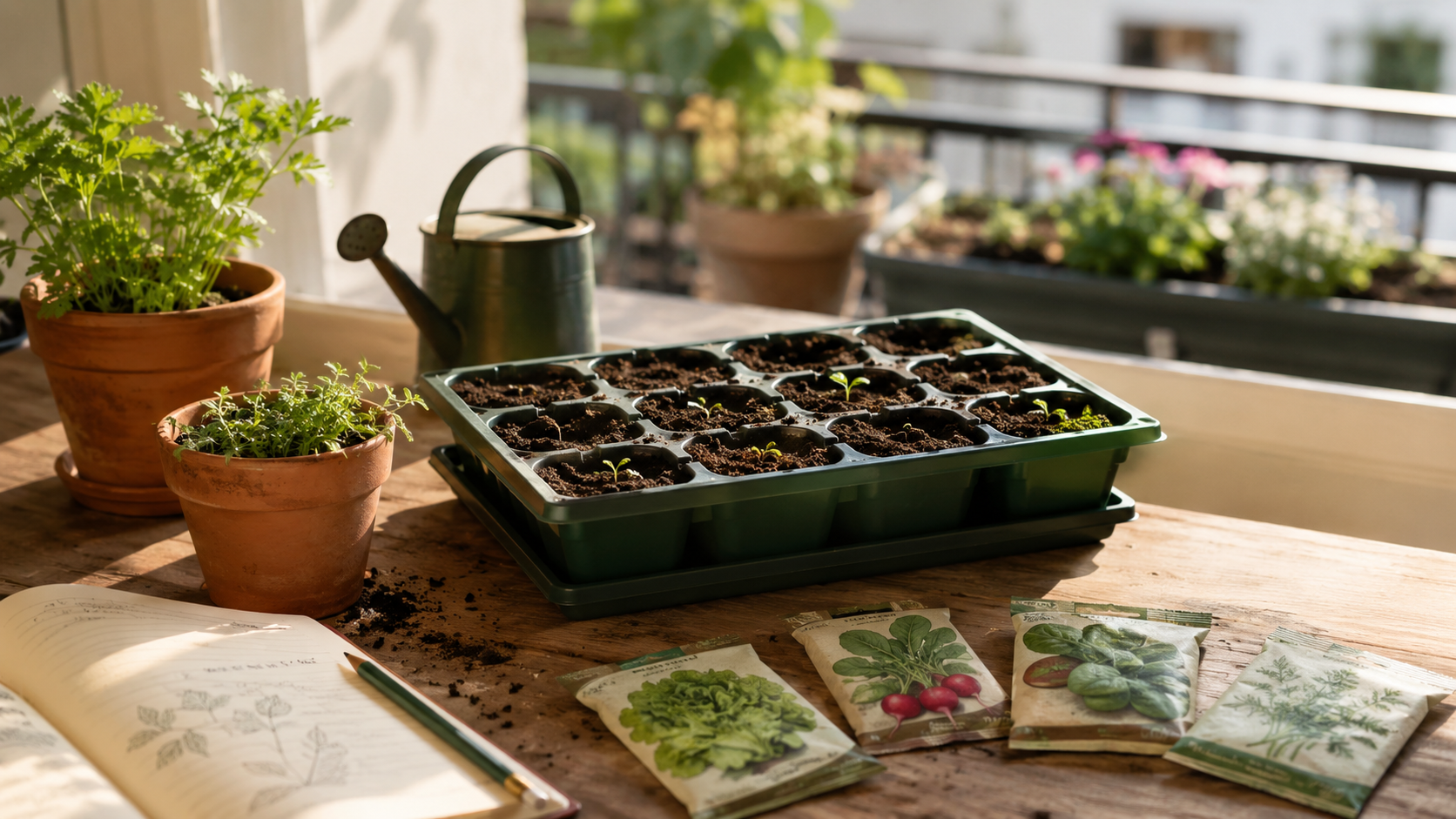
Indoor sowing is useful in March because it lets you start warm-season crops without exposing them to cold nights. You do not need a greenhouse. A bright windowsill, a small propagator or a warm shelf near good light can be enough for a modest tiny-garden start.
Tomatoes
Tomatoes are one of the best crops to start indoors in March if you have a sunny balcony, patio or sheltered outdoor space for them later. Sow seeds in small pots or modules of seed compost, keep them warm and give them as much bright light as possible once they germinate. Compact bush or cherry varieties are usually easier in containers than tall cordon types.
The important thing is not to rush them outside. Tomatoes are tender plants. They should stay protected until nights are frost-free and they have been hardened off gradually.
Lettuce and salad leaves
Loose-leaf lettuce, rocket, mizuna and mixed salad leaves can be started indoors in March, especially if your outdoor space is still cold or wet. For a tiny garden, choose cut-and-come-again mixes rather than large hearting lettuces. They crop faster, take less space and let you pick a few leaves at a time.
Herbs for a warm windowsill
Soft herbs such as basil can be started indoors if you can provide warmth and good light, although they sulk in cold conditions. Parsley, coriander and chives can also be started in pots, but germination can be slower. For beginners, buying small herb plants later in spring is often easier than raising every herb from seed.
What to sow outdoors in March
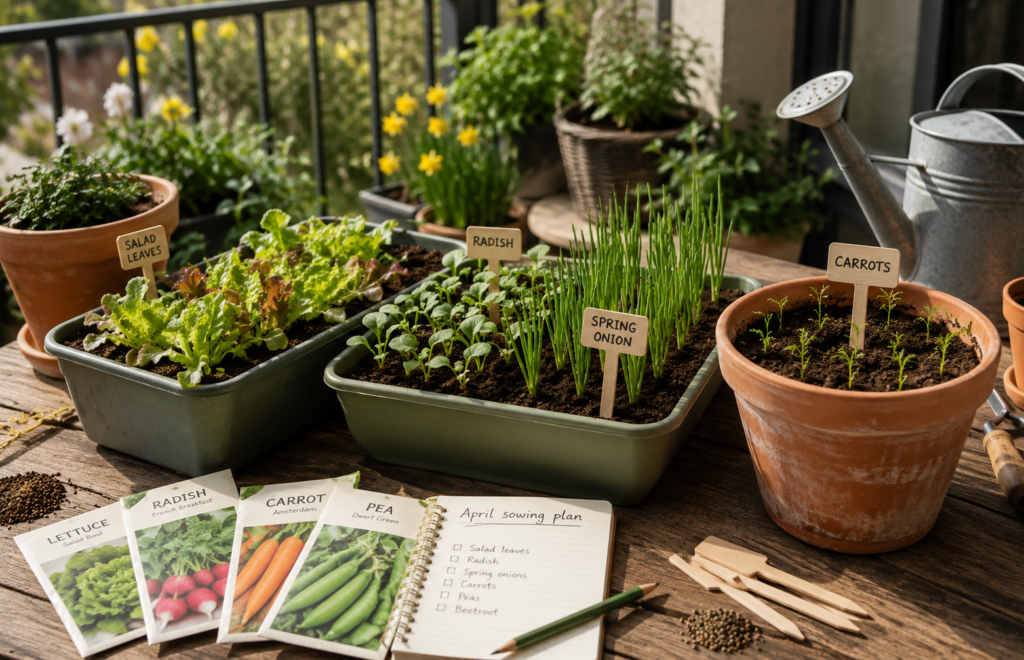
Outdoor sowing in March depends on your local conditions. If your pots are waterlogged, frozen or sitting in a very exposed spot, wait. If your compost is workable and the forecast is reasonable, you can begin with hardy, quick crops.
Radishes
Radishes are the classic tiny-garden March crop. They grow quickly, do not need deep soil and are useful for filling small spaces between slower crops. Sow thinly in a pot, trough or raised bed, then keep the compost evenly moist. Harvest them young, before they become woody or too peppery.
Salad leaves and spinach
Salad leaves and spinach are good choices for shallow containers, window boxes and small raised beds. Sow small amounts every couple of weeks rather than one large tray all at once. This gives you a steadier harvest and reduces the chance of wasting leaves.
Spring onions
Spring onions are compact, useful and happy in containers. Sow them in rows or small clusters, then harvest when they are pencil-thin or leave them a little longer. They are especially good in a narrow trough beside salad leaves.
Peas and broad beans
Peas and broad beans can be sown in March in many UK gardens, but in a tiny garden they need a little planning. Choose dwarf peas if your space is small, and give them twiggy sticks, netting or a small frame to climb. Broad beans are less container-friendly than radishes or lettuce, but a few plants in a deep pot can work if you want an early crop.
Carrots and beetroot
Carrots and beetroot can be sown outdoors in March when conditions are mild enough. Use deeper containers for carrots, and choose shorter or round varieties if your pot is not especially deep. Beetroot is more forgiving and works well as baby roots in containers.
Best crops for containers in March
If you are starting with only one or two containers, prioritise crops that are quick, compact and forgiving. A good March container mix would be one pot of cut-and-come-again leaves, one trough of radishes and spring onions, and a few tomato seedlings indoors for later.
| Crop | Container suggestion | Why it works |
| Radishes | 15cm+ deep pot or trough | Fast, compact and beginner-friendly |
| Salad leaves | 10–15cm+ deep tray or pot | Can be harvested leaf by leaf |
| Spinach | 15cm+ deep pot | Useful spring leaves before hot weather |
| Spring onions | 15cm+ deep trough | Narrow, tidy and productive |
| Dwarf peas | 25–30cm+ deep pot with support | Vertical crop for a sunny balcony or patio |
| Tomatoes indoors | Small pots now, larger containers later | Start indoors for summer patio crops |
Best crops for balconies in March
Balconies are often windy, so choose sturdy crops and avoid balancing lots of small plastic pots where they can dry out or blow over. Salad leaves, radishes, spring onions and herbs are good balcony starters. If your balcony is sunny and sheltered, start tomato seedlings indoors now and plan where their final pots will sit later.
Check weight before filling large containers. A long trough of wet compost is heavier than it looks, especially on a balcony. When in doubt, use several medium containers rather than one huge planter.
What not to sow or plant outside yet
The easiest March mistake is treating the first sunny weekend as permission to plant everything. Tender crops such as outdoor tomatoes, cucumbers, courgettes, squash, pumpkins, chillies, peppers and basil still need protection. You can start some of them indoors, but they should not be planted outside until the risk of frost has passed.
Beans are another crop to handle carefully. In mild areas you may be able to start some under cover, but most tiny-garden beginners are better waiting until April or May for outdoor beans.
Simple March plan for a tiny garden
- Choose one sunny spot and one backup sheltered spot. Do not try to use every corner yet.
- Clean old pots and check they have drainage holes.
- Fill one shallow container with salad leaves.
- Sow one small trough with radishes and spring onions.
- Start two or three tomato seeds indoors if you have a sunny summer position for them.
- Keep fleece, cloches or a clear plastic cover ready for cold nights.
- Wait before sowing tender crops outdoors.
As the weather improves, your next step is planning what to sow in April.
Not sure what your space can handle?
Use the Tiny Garden Harvest tools to match crops to your space, sunlight and container size before you fill every pot.
March jobs for small-space growers
- Refresh old compost in containers or replace it where crops struggled last year.
- Wash seed trays, labels and small pots before sowing.
- Check whether your balcony or patio gets more sun than it did in winter.
- Start saving rainwater if you have space for a small water butt or covered container.
- Plan where larger summer crops, especially tomatoes, will eventually go.
- Sow little and often rather than filling every container at once.
FAQs
Can I sow tomatoes outside in March?
In most UK gardens, no. Tomatoes are tender and need warmth. Start them indoors in March, then move them outside only after frost risk has passed and they have been hardened off.
What is the easiest thing to sow in March?
Radishes and cut-and-come-again salad leaves are two of the easiest choices for a tiny garden. They are quick, compact and do not need deep containers.
Is March too early for carrots in pots?
Not always. If conditions are mild and your compost is workable, you can sow carrots in a deep container. Short-rooted varieties are better for pots than long maincrop types.
Should I use a propagator?
A propagator is helpful for tomatoes, chillies and other warmth-loving seeds, but you can still start many spring crops without one. Good light, steady moisture and patience matter more than gadgets.
Growing note: Always check seed packet instructions and your local forecast. A sheltered London balcony and an exposed northern patio can behave very differently in March.