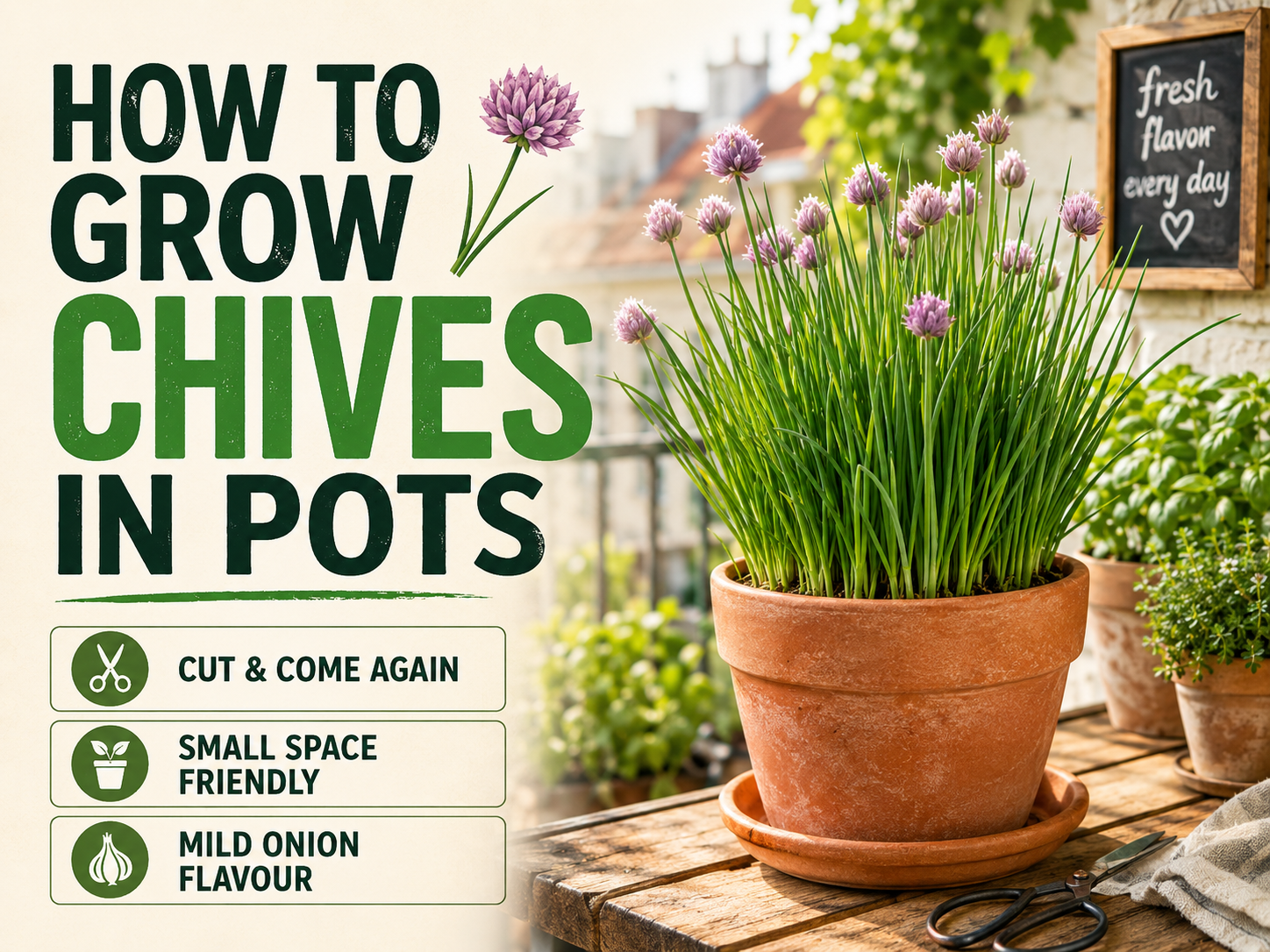
Quick answer: Chives are one of the easiest herbs to grow in pots. Use a small-to-medium container with drainage, place it in sun or partial shade, keep the compost lightly moist and cut leaves near the base when needed. Chives come back after cutting and are ideal for balconies, patios and windowsills.
Growing note: Chives grow in clumps. If the pot becomes crowded, divide the clump and replant a healthy section into fresh compost.
Quick facts
| Best for | Windowsills, balconies, patios, doorsteps and small gardens |
| Difficulty | Very beginner-friendly |
| Container | Small-to-medium pot with drainage |
| Sunlight | Full sun or partial shade |
| Best harvest | Cut leaves near the base |
Why chives are perfect for tiny gardens
Chives are compact, useful and forgiving. They do not need a large planter, they tolerate some shade, and they regrow after cutting. A single pot can sit on a ledge, outdoor table or bright windowsill and provide a steady supply of mild onion flavour.
They also produce attractive purple flowers, which can help a tiny edible garden look less purely practical and more decorative.
Choosing chives
Common chives have fine hollow leaves with a mild onion flavour. Garlic chives have flatter leaves and a gentle garlic flavour. Both can grow in pots, but common chives are the classic beginner choice.
| Type | Best use |
| Common chives | Mild onion flavour for everyday cooking |
| Garlic chives | Flat leaves and gentle garlic flavour |
| Flowering chives | Useful edible flowers and pollinator interest |
Starting chives from seed or plants
Chives can be grown from seed, but buying a small plant is quicker. If sowing, use a pot of moist compost and be patient while the seedlings form a usable clump.
A supermarket pot can work if it is fresh and healthy, but repotting into a larger container usually gives better growth.
Choosing a pot
Chives do not need a huge container. A pot around 15–20cm wide is enough for a useful clump, although a larger pot gives more room and steadier moisture. Drainage holes are essential.
How to plant chives
- Choose a pot with drainage holes.
- Fill with peat-free multi-purpose compost.
- Water the chive plant before repotting.
- Plant at the same depth it was growing before.
- Firm gently and water thoroughly.
- Place in sun or partial shade.
- Cut lightly once the plant is growing strongly.
Where to put chives
Chives grow in full sun or partial shade. A bright windowsill, balcony ledge or patio pot all work. In very hot weather, partial shade can help stop the pot drying too quickly.
Watering
Keep the compost lightly moist, especially in small pots. Chives are forgiving, but repeated drought will make the leaves coarse and weak.
- Water when the top of the compost begins to dry.
- Avoid leaving the pot waterlogged.
- Use a saucer indoors but empty excess water.
- Move tiny pots out of harsh afternoon sun if they dry too fast.
Harvesting chives
Cut leaves near the base with clean scissors. Do not just snip the tips, because this leaves untidy half-stems. Take a small handful from different parts of the clump and let the plant regrow.
Chive flowers are edible and attractive. If you want more leaf growth, remove flower stems before they open.
Dividing chives
After a year or two, a chive clump may become crowded. Lift the plant, split it into smaller sections and replant the healthiest piece into fresh compost. This refreshes growth and gives you extra plants.
Common problems
Leaves turn yellow
The pot may be too dry, waterlogged or crowded. Check compost moisture and consider dividing an old clump.
Growth becomes weak
The plant may need more light, fresh compost or division. Chives are easy to rejuvenate.
The pot dries too quickly
Move it to partial shade or repot into a slightly larger container.
The plant flowers
Flowering is normal. Remove flower stems for more leaf growth, or enjoy the edible flowers.
A simple chive plan
Buy one small chive plant, repot it into a 15–20cm container and keep it near the kitchen. Cut leaves near the base as needed and divide the clump when it becomes crowded.
Chives also pair well with other herb pots such as parsley, mint and basil.
Plan your herb pots
Use the free growing tools to choose herbs that suit your light and watering routine.
FAQs
Can chives grow indoors?
Yes, chives can grow on a bright windowsill, though they are often stronger outdoors in good light.
Do chives need full sun?
No. They grow in full sun or partial shade.
Do chives regrow after cutting?
Yes. Cut near the base and the clump will produce fresh leaves.
Can I grow chives with other herbs?
Yes, but they are often easiest in their own small pot, especially if you want to divide the clump later.
Growing note: Chives are one of the best first herb pots because they are compact, useful and forgiving.