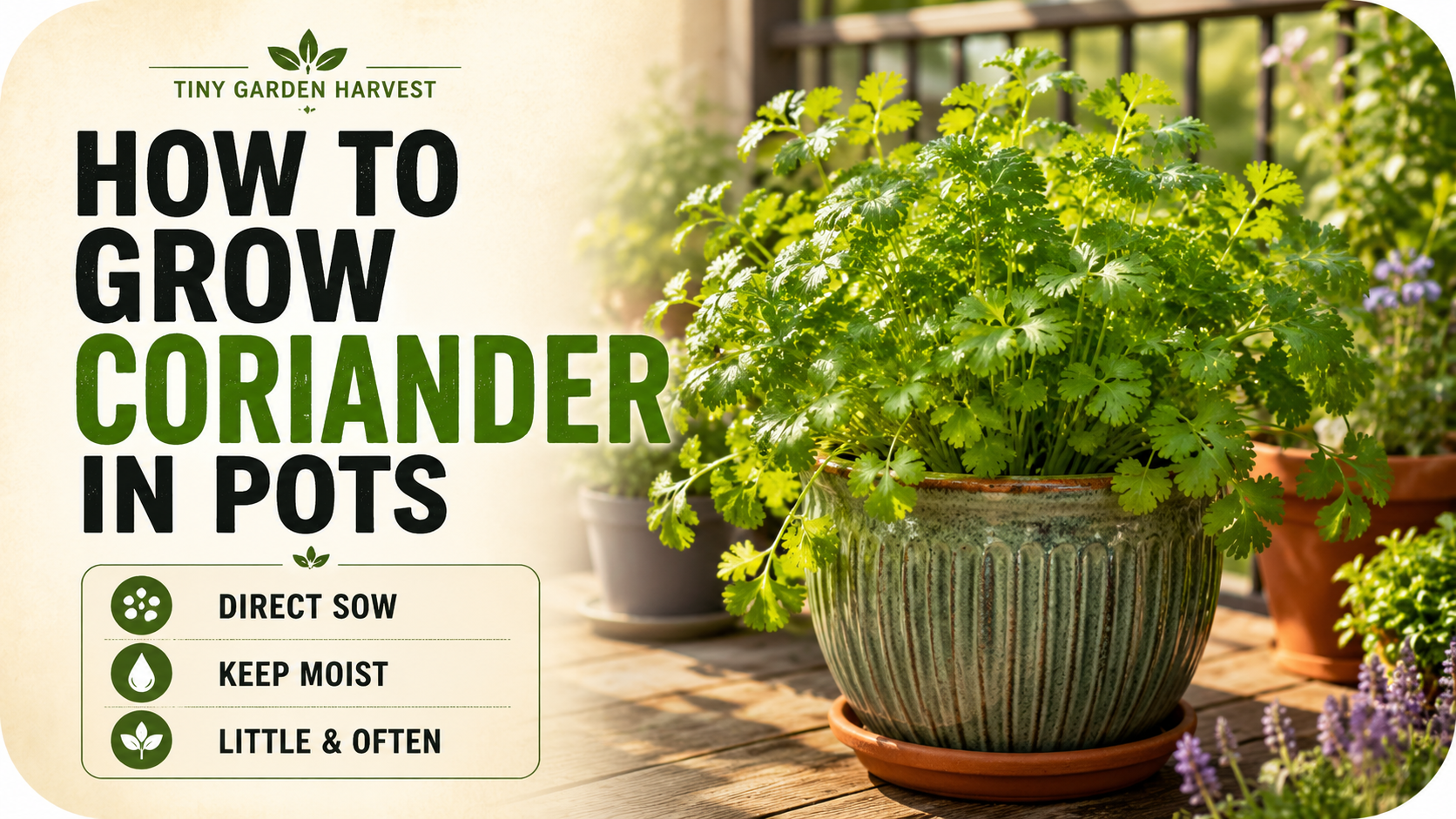
Quick answer: Coriander grows well in pots when it is sown directly, kept evenly moist and harvested young. It bolts quickly in heat, so make small repeat sowings rather than trying to keep one plant going all season. Use a container at least 15–20cm deep and give it good light with some shade in warm weather.
Growing note: Coriander dislikes root disturbance. Sow it directly into its final pot rather than transplanting if possible.
Quick facts
| Best for | Balconies, patios, bright windowsills and kitchen-door pots |
| Difficulty | Beginner-friendly with repeat sowing |
| Container depth | 15–20cm minimum |
| Sunlight | Bright light; partial shade in warm weather |
| Best method | Sow small batches regularly |
Why coriander can be tricky
Coriander is easy to germinate but quick to bolt. Bolting means the plant sends up a flower stem, after which the leaves usually become less useful. Heat, drought and root disturbance all speed this up.
The solution is not to force one plant to last forever. Sow small amounts regularly and harvest leaves while they are young.
Leaf coriander or seed coriander?
Most tiny-garden growers want leaves. If the plant flowers and forms seed, you can allow some to ripen for coriander seed, but leaf production will slow. For regular fresh leaves, succession sowing is more useful.
Choosing a container
Use a pot, trough or window box at least 15–20cm deep. A wider container allows a more useful patch of leaves. Drainage holes are essential, but the compost should not dry out repeatedly.
How to sow coriander
- Fill the final container with peat-free multi-purpose compost.
- Water before sowing.
- Sow seeds thinly in shallow rows or a small patch.
- Cover lightly according to the packet.
- Label the container with the date.
- Keep the compost moist during germination.
- Thin crowded seedlings by cutting extras at the base.
Where to position coriander
In cool weather, coriander likes bright light. In warmer weather, a position with morning sun and afternoon shade helps slow bolting. A hot south-facing windowsill may be too stressful in summer.
Watering
Keep the compost evenly moist. Drought stress is one of the main reasons coriander bolts early. Water gently at the base and check containers often during warm weather.
- Do not let the pot dry completely.
- Avoid waterlogging.
- Use a deeper trough if shallow pots dry too quickly.
- Move the pot to light shade during hot spells.
Harvesting coriander
Cut outer stems or snip young leaves as needed. Do not remove every leaf from a small plant. If you want a larger harvest, sow a wider patch rather than stripping one plant bare.
Repeat sowing
Sow a small batch every two or three weeks while conditions are suitable. This gives you a steady supply of young leaves and reduces disappointment when an older plant bolts.
Common problems
The plant bolts quickly
Heat, dry compost and root disturbance are common causes. Sow directly, keep the pot moist and use partial shade.
Seedlings are tall and weak
They may need stronger light. Move the container brighter, but avoid intense heat.
Leaves turn yellow
Check for waterlogging, poor drainage or depleted compost. Coriander likes moisture but not stagnant roots.
The flavour becomes strong
Older stressed plants can taste stronger. Harvest younger and sow a fresh batch.
A simple coriander plan
Sow a small patch in a 15–20cm-deep container near the kitchen. Harvest young stems for a few weeks, then sow a second patch before the first one bolts. Treat coriander as a quick crop, not a permanent herb.
For another fast leafy crop, see how to grow rocket in pots.
Match herbs to your space
Use the grow finder to see which herbs suit your light, warmth and container size.
FAQs
Can coriander grow on a windowsill?
Yes, if the windowsill is bright but not excessively hot. A very hot dry sill can make coriander bolt quickly.
Should I transplant coriander?
Direct sowing is best because coriander dislikes root disturbance.
How often should I sow coriander?
Small sowings every two or three weeks give a steadier supply than one large sowing.
Can I eat coriander flowers and seeds?
Yes, the flowers attract insects and the seeds can be used as coriander seed, but leaf production declines once flowering starts.
Growing note: Think of coriander like salad leaves: sow little and often, then replace tired plants with fresh growth.