How to Grow Rocket in Pots
Peppery rocket is one of the quickest salad leaves for a pot or window box. Which type to grow, when to sow, how to stop it bolting and how to keep picking.
Quick answer
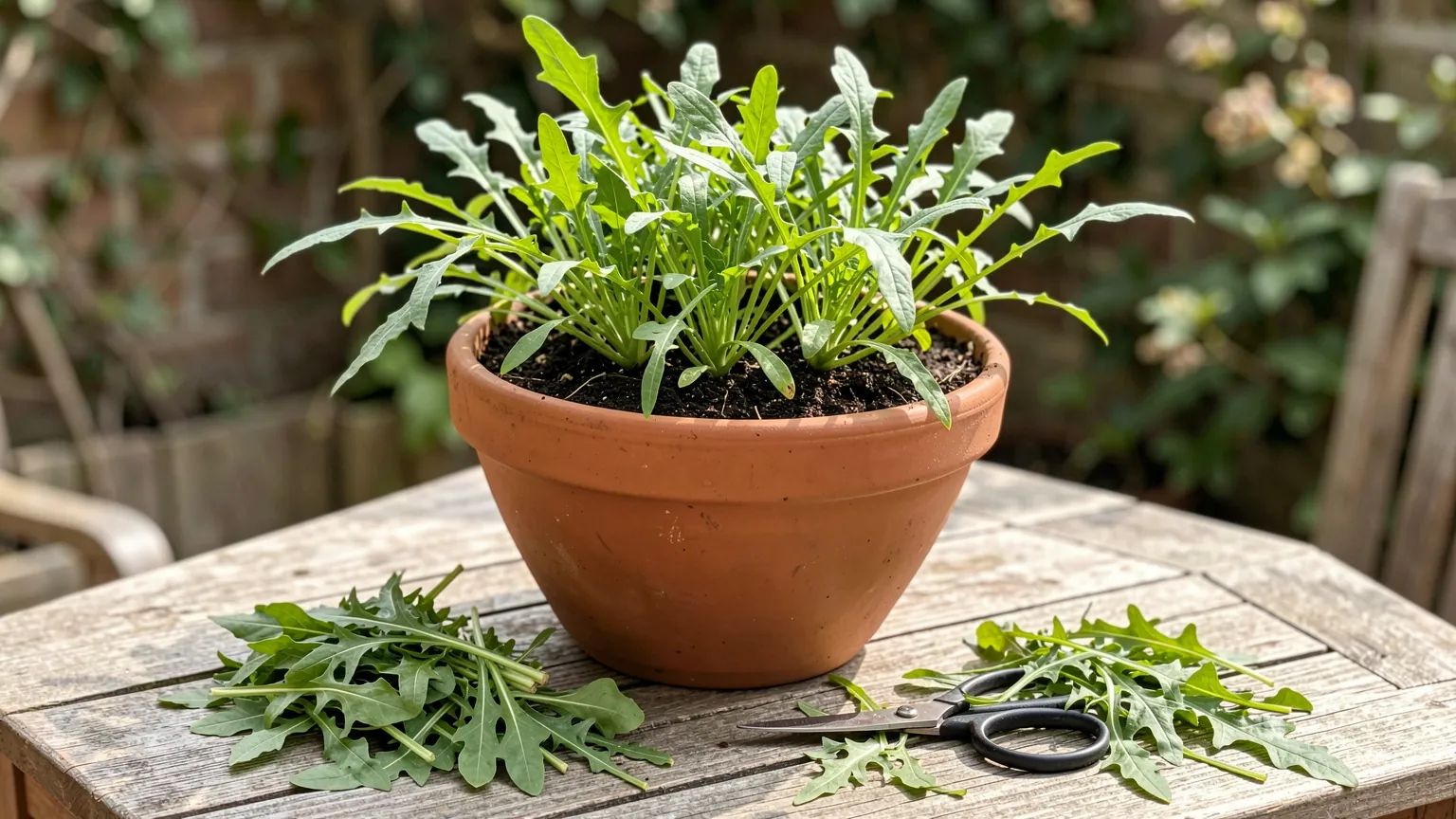
Rocket is one of the easiest salad leaves to grow in a pot. Sow it thinly in a container at least 15cm deep, from spring to early autumn outdoors, and keep the compost evenly moist. Salad rocket is quick, with young leaves often ready to pick within about four weeks in good conditions. It grows best in cool weather and tends to run to flower in hot, dry spells, so spring and late-summer sowings are the easiest. Pick leaves little and often, and sow a fresh batch every few weeks.
Growing note: Rocket gets hotter and more peppery as plants age and as the weather warms. For the mildest leaves, pick them young and sow in cooler months.
Quick facts
| Best for | Window boxes, balconies, patios, raised beds and bright windowsills |
| Difficulty | Very beginner-friendly |
| Container depth | About 15cm minimum |
| Sunlight | Full sun in cool weather; partial shade in summer |
| When to sow | Spring to early autumn outdoors; autumn and winter under cover |
| Best harvest | Young leaves, picked little and often |
Why rocket suits a tiny garden
Rocket is fast, compact and full of flavour. A single window box can keep you in peppery leaves for weeks, and bags of rocket are one of the more expensive salads to buy. It grows happily in a shallow container, does not need staking or special care and is ready far sooner than most vegetables.
It is also useful at both ends of the year. Rocket prefers cool weather, so it fills the gaps in spring and autumn when bigger summer crops are either not started or already finished.
Salad rocket or wild rocket?
Two types of rocket are sold as seed. Both grow well in pots, but they behave differently.
| Type | What to expect |
| Salad rocket | Larger, softer, broader leaves and a milder peppery taste. Very quick to grow, but runs to flower sooner, especially in summer. Sow little and often. |
| Wild rocket | Smaller, narrower, more deeply cut leaves with a stronger flavour. Slower to get going, but slower to run to flower and keeps cropping for longer. It is a short-lived perennial and can come back for more than one season. |
For quick results, start with salad rocket. If you want one container that keeps producing with less resowing, try wild rocket.
Choosing a container
Use a pot, trough or window box at least 15cm deep, with drainage holes. Rocket has fairly shallow roots, but very small pots dry out quickly, and dry compost is the main trigger for early flowering. A wide trough or window box gives the most leaves for the space.
Fill it with peat-free multi-purpose compost. Rocket does not need a rich mix, and fresh compost has enough food for a short crop.
When to sow rocket
- Spring is one of the best times. Sow outdoors once the weather starts to warm, or earlier under cover.
- Summer sowings work, but plants often run to flower quickly in heat. Give summer containers some afternoon shade and keep them well watered.
- Late summer and early autumn sowings are often the most successful, with cool weather, fewer pests and leaves to pick well into autumn.
- Autumn and winter sowings can be made under cover or on a bright windowsill. Growth is slow in the darkest months, but plants pick up again as the days lengthen.
How to sow rocket in pots
- Fill the container with compost to just below the rim and water it so it is evenly moist.
- Sow the seed thinly in short rows or scatter it across the surface, then cover with about 1cm of compost, or follow the depth on the packet.
- Keep the compost moist. Seedlings usually appear within a week or so in mild weather.
- Thin the seedlings so they are not crowded. For baby leaves, a few centimetres apart is enough; for larger plants, give them more space. Eat the thinnings.
- Sow a fresh batch every two or three weeks for a steady supply, especially of salad rocket.
Where to put the container
In spring and autumn, give rocket a bright spot in full sun. In summer, a position with morning sun and afternoon shade keeps the compost cooler and slows flowering. Rocket copes with partial shade better than many crops, so it is a good choice for a balcony that only gets sun for part of the day.
Watering
Keep the compost evenly moist. Rocket that dries out becomes tough and very hot in flavour and is more likely to run to flower. Check pots daily in warm or windy weather, and water at the base rather than over the leaves.
In cool autumn and winter weather, water much less often, only when the top of the compost feels dry. Avoid leaving the container standing in water.
Feeding
Salad rocket in fresh compost does not usually need feeding. Wild rocket, which stays in its container for longer, benefits from an occasional general liquid feed during the growing season, following the label.
Harvesting rocket
Start picking when the leaves are large enough to use. Either pick individual outer leaves, or cut the plants a few centimetres above the compost and leave them to regrow. Both methods give several pickings from one sowing.
- Pick in the morning, when the leaves are crisp.
- Take a little from several plants rather than stripping one bare.
- Use the leaves soon after picking. They wilt more quickly than lettuce.
When plants start to send up flower stems, the leaves become tougher and much hotter. The small flowers are edible and attract bees, so you can leave a few plants to flower, but sow a fresh batch for leaves.
Common problems
Plants flowering too soon
Heat, dry compost and crowding all make rocket bolt. Sow in spring or late summer, keep the compost moist, give summer pots some shade and thin seedlings. Wild rocket is slower to flower than salad rocket.
Tiny holes in the leaves
This is usually flea beetle, which is most active in warm, dry weather. The leaves are still edible, but heavy damage slows growth. Cover the container with fine insect mesh, secured around the edges, and keep the compost moist.
Leaves too hot or bitter
Older leaves, hot weather and dry compost make rocket stronger. Pick leaves younger, water consistently and sow in cooler months.
Slugs and snails
Slugs can eat seedlings, especially in damp spring and autumn weather. Raise pots off the ground and check plants in the evening.
A simple rocket plan
Sow a short row of salad rocket in a window box, then another row two or three weeks later. Pick young leaves from the first row while the second grows. If you want less resowing, keep a separate pot of wild rocket going alongside. Rocket grows well next to lettuce, pak choi, spinach and radishes, all of which like the same cool, moist conditions.
Rocket is also one of the best leaves for a winter trough. See how to grow winter salad leaves in containers and what to sow in November. For quick indoor leaves, try microgreens on a windowsill.
Check your container
Use the Container Size Calculator before sowing rocket in a shallow window box or tray.
FAQs
How deep does a pot need to be for rocket?
About 15cm is a useful minimum. A deeper or wider container stays moist for longer, which helps stop rocket running to flower.
Can I grow rocket on a windowsill?
Yes. Use your brightest windowsill and a container with drainage. Growth is slower in winter, so sow small batches.
Does rocket grow back after cutting?
Yes. Cut a few centimetres above the compost or pick outer leaves, and the plants will regrow for several more pickings.
Why has my rocket gone to flower?
Rocket runs to flower in hot weather, in dry compost and when plants are crowded. Sow in cooler months, keep pots moist and give summer containers some shade.
Can I eat rocket flowers?
Yes. Rocket flowers are edible and have a mild peppery taste. The leaves become tougher and hotter once plants flower, though.
Growing note: Rocket is all about timing and moisture. Sow little and often in cool weather, keep the compost damp and pick the leaves young.