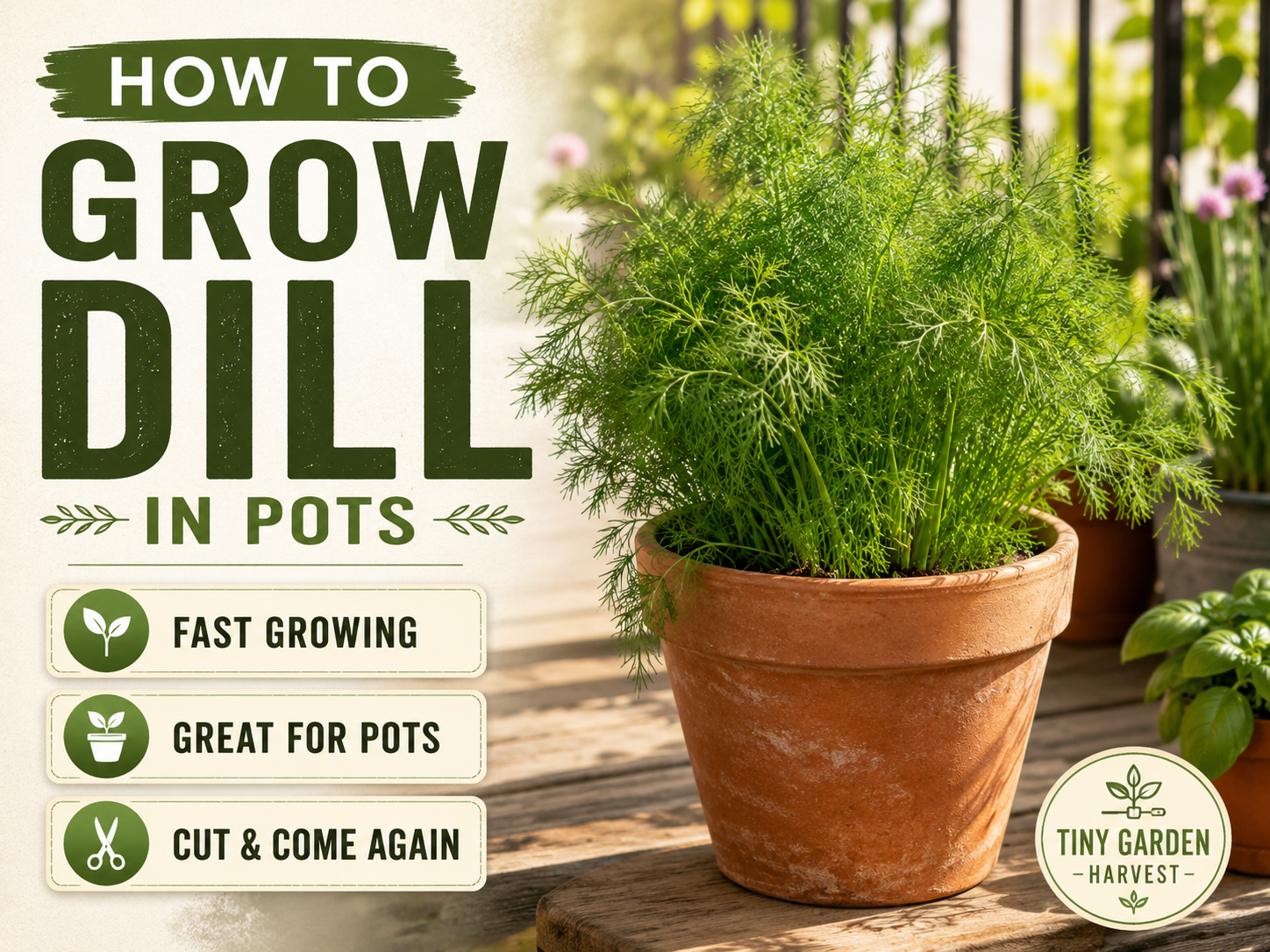
Quick answer: Dill grows well in pots if you sow it directly into a reasonably deep container, keep the compost moist and protect the tall stems from wind. It dislikes root disturbance, so avoid transplanting where possible. Harvest young feathery leaves regularly, or let some plants flower and set seed.
Growing note: Dill is an annual herb with a taproot. Direct sowing into its final pot is usually easier than moving seedlings.
Quick facts
| Best for | Sunny balconies, patios and outdoor kitchen herb pots |
| Difficulty | Beginner-friendly, but dislikes transplanting |
| Container | At least 20–25cm deep with drainage |
| Sunlight | Full sun or light partial shade |
| Best harvest | Snip leaves young, or leave flowers for seed |
Why dill suits small spaces
Dill is a useful addition to a tiny edible garden because it gives strong flavour from a small footprint. One healthy pot can earn its space beside the kitchen door, on a balcony shelf or in a small patio herb corner.
It also helps round out the container garden. Some herbs are quick and leafy, while others are long-term plants that give structure, scent and regular harvests without needing a raised bed.
Choosing the right plant or variety
Choose a healthy plant or variety that matches how you cook and how much space you have. For small gardens, compact growth and reliable flavour matter more than novelty.
| Leaf dill | Best for regular fresh leaves |
| Bouquet dill | Useful for flowers and seed heads |
| Compact dill | Better for containers and exposed sites |
| Fernleaf-type dill | Often shorter and neater in pots |
Choosing a pot
Use a container at least 20–25cm deep so the taproot has room. A deeper pot also holds moisture more steadily during warm weather.
The container must have drainage holes. A slightly larger pot is usually easier to water than a tiny decorative pot, but do not jump a small plant straight into an enormous cold, wet container.
How to plant it
- Choose the final position before filling a heavy pot.
- Fill the container with suitable peat-free compost.
- Water the nursery plant if the root ball is dry.
- Plant at the same depth it was growing previously.
- Firm gently and water thoroughly.
- Let excess water drain away.
- Label the pot while the plant is still new.
Where to put the pot
Dill likes good light and warmth. A sunny patio or sheltered balcony works well, but avoid the windiest corner because tall stems can bend or fall.
If your space is exposed, use the most sheltered bright position you have. Wind dries containers quickly and can damage taller herb plants.
Watering
Good watering is mostly about consistency. Check the compost with a finger rather than watering on a fixed schedule.
- Check pots often in warm weather.
- Water at the compost level.
- Avoid waterlogging.
- Use a deeper pot if the container dries too quickly.
Feeding
Most herbs need only modest feeding in fresh compost. If growth slows during the growing season, use a suitable liquid feed at the label rate rather than guessing a stronger dose.
Harvesting
Harvest little and often once the plant is growing strongly. Use clean scissors or secateurs and take small amounts from different parts of the plant so it stays balanced.
Do not strip a young plant bare. A light regular harvest gives better regrowth and a tidier pot than one heavy cut.
Pruning and long-term care
Trim lightly to keep the plant compact and remove dead or damaged stems when you see them. Long-term herbs may need repotting, division or replacement when growth becomes weak.
Refresh the top layer of compost each spring if the plant is staying in the same pot.
Common problems
Plants bolt quickly
Heat, drought or crowding can push dill into flower.
Seedlings collapse
Overwatering and poor airflow can damage young seedlings.
Stems fall over
The position may be too windy or the pot too light.
Leaves are sparse
Weak light, overcrowding or dry compost may be limiting growth.
A simple plan
Grow one pot of dill first and learn how it behaves in your space before buying several more herbs. Put it where you will remember to water and harvest it.
Dill fits well with parsley, coriander and chives.
Choose herbs that suit your space
Use the free growing tools to match herbs to your light, warmth and watering habits before filling every pot.
FAQs
Can it grow on a balcony?
Yes, as long as the balcony gives enough light and the pot is secure, drained and easy to water.
Can it grow indoors?
Some herbs cope indoors on a very bright windowsill, but most are stronger outdoors with better light and airflow.
How often should I water it?
Check the compost first. Water when the plant needs it rather than following a fixed calendar.
Can it share a pot with other herbs?
Only if the other herbs like similar light, moisture and drainage. Separate pots are easier for beginners.
Growing note: Start with one healthy plant in the right pot. Good light, drainage and regular small harvests matter more than complicated tricks.