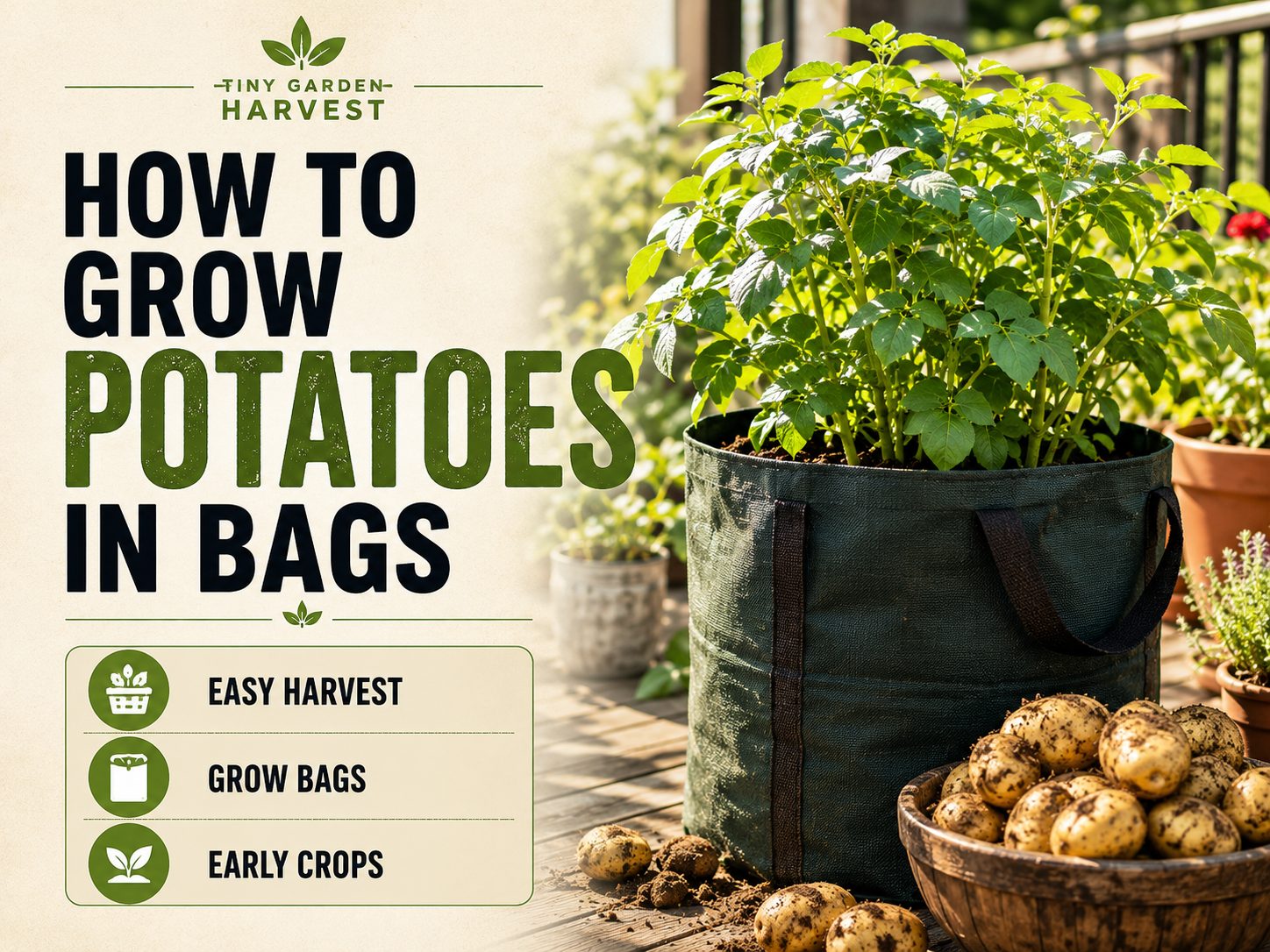
Quick answer: Potatoes grow well in bags and large containers if you use an early variety, provide at least 30cm of width and depth, keep adding compost around the shoots and water regularly. One seed potato per roughly 30cm of container diameter is a sensible starting point. Early potatoes are usually the easiest choice for a tiny garden.
Growing note: Potato containers become heavy when filled and watered. Put the container in its final position before planting and check that a balcony or raised surface can safely carry the weight.
Quick facts
| Best for | Patios, courtyards, balconies with suitable load capacity and small gardens |
| Difficulty | Beginner-friendly |
| Container | At least 30cm wide and deep, with drainage |
| Best types | First early and second early potatoes |
| Main care needs | Moisture, earthing up and protection from frost |
Why grow potatoes in bags?
A potato bag or large pot turns a bulky ground crop into a manageable container project. You can place it on a patio, harvest without digging a bed and reuse the space once the crop is finished.
Early varieties suit small spaces because the plants mature more quickly and usually remain more manageable than maincrop potatoes. The harvest will not be enormous, but freshly lifted small potatoes can make the container worthwhile.
Choosing seed potatoes
Use certified seed potatoes rather than supermarket potatoes. Seed potatoes are produced for planting and reduce the risk of introducing disease. Choose an early variety if you want a compact crop that finishes sooner.
| Type | Tiny-garden use |
| First early | Fastest crop and well suited to containers |
| Second early | Slightly longer season but still manageable |
| Maincrop | Needs more time, water and container space |
Choosing a bag or container
Use a purpose-made potato bag, large plastic pot, sturdy tub or other food-safe container with drainage holes. It should be at least 30cm wide and deep. A larger container holds moisture more steadily, but it is also heavier.
Dark containers can heat up in strong summer sun. If the sides become very hot, move the container into light afternoon shade while keeping the foliage in good light.
How to plant potatoes in a container
- Place the empty container in its final position.
- Add about 15cm of peat-free multi-purpose compost.
- Plant one seed potato per roughly 30cm of container diameter, with shoots facing upwards.
- Cover with compost so the potato sits just below the surface.
- Water lightly and wait for shoots to appear.
- As shoots grow, add more compost around them, leaving the top leaves exposed.
- Continue until the container is nearly full.
What does earthing up do?
Adding compost around the shoots gives developing tubers more covered growing space and helps stop potatoes near the surface from turning green. Green potatoes contain higher levels of natural toxins and should not be eaten.
Do not bury the whole plant at once. Add compost in stages as the shoots grow.
Where to put the container
Choose a bright, open position with several hours of sun. Shelter young shoots from late frost with horticultural fleece or by moving smaller pots under cover.
Good airflow helps keep foliage healthy, but a very exposed balcony can dry the compost quickly and damage tall stems.
Watering potatoes in bags
Potatoes need consistent moisture once growth is strong and tubers begin to form. Container compost can dry quickly, so check below the surface rather than relying on appearance alone.
- Water slowly until moisture reaches the lower compost.
- Check bags daily during warm, windy weather.
- Do not leave the container standing in water.
- Avoid severe drying followed by sudden soaking.
Feeding container potatoes
Fresh compost gives the plants a good start. If you use a potato or general vegetable fertiliser, follow the label instructions. Avoid guessing at stronger doses.
How to know when potatoes are ready
Early potatoes are usually harvested while the foliage is still green or beginning to flower, according to the variety timing. Gently feel inside the compost or empty one container to check the tuber size.
For a full harvest, stop watering shortly before lifting if conditions allow, then tip the container onto a sheet and search through the compost carefully.
Common problems
Very small harvest
The container may have dried out, received too little light or held too many seed potatoes. Next time, reduce crowding and use a larger container.
Green potatoes
Tubers were exposed to light. Cover developing potatoes fully with compost and discard green tubers.
Foliage damaged by frost
Protect new growth with fleece and avoid placing the container in a cold exposed position early in the season.
Leaves develop dark patches
Potato blight and other diseases can affect container crops. Remove severely affected material, avoid wetting foliage unnecessarily and follow current local guidance.
A simple one-bag plan
Choose one early variety and plant a single potato bag rather than several. Learn how much water it needs and how heavy it becomes. If the result is useful, add a second bag the following season.
Check the available space
Use the free tools to compare the bag size with other container crops before you commit your patio space.
FAQs
How many potatoes can I plant in one bag?
A practical guide is one seed potato per roughly 30cm of container diameter. Overcrowding usually reduces tuber size and makes watering harder.
Can I use an old compost bag?
A sturdy bag can work if it is clean, stable and has drainage holes, although a purpose-made container is often easier to handle.
Do potato bags need full sun?
The foliage needs good light. In extreme heat, shading the container sides can help prevent the compost from overheating.
Can I reuse the compost?
Do not immediately reuse it for potatoes or close relatives such as tomatoes because pests or disease may remain. It can be used elsewhere if the crop was healthy and the compost is refreshed appropriately.
Growing note: Never eat green potatoes. Keep developing tubers covered and discard any that have turned green.