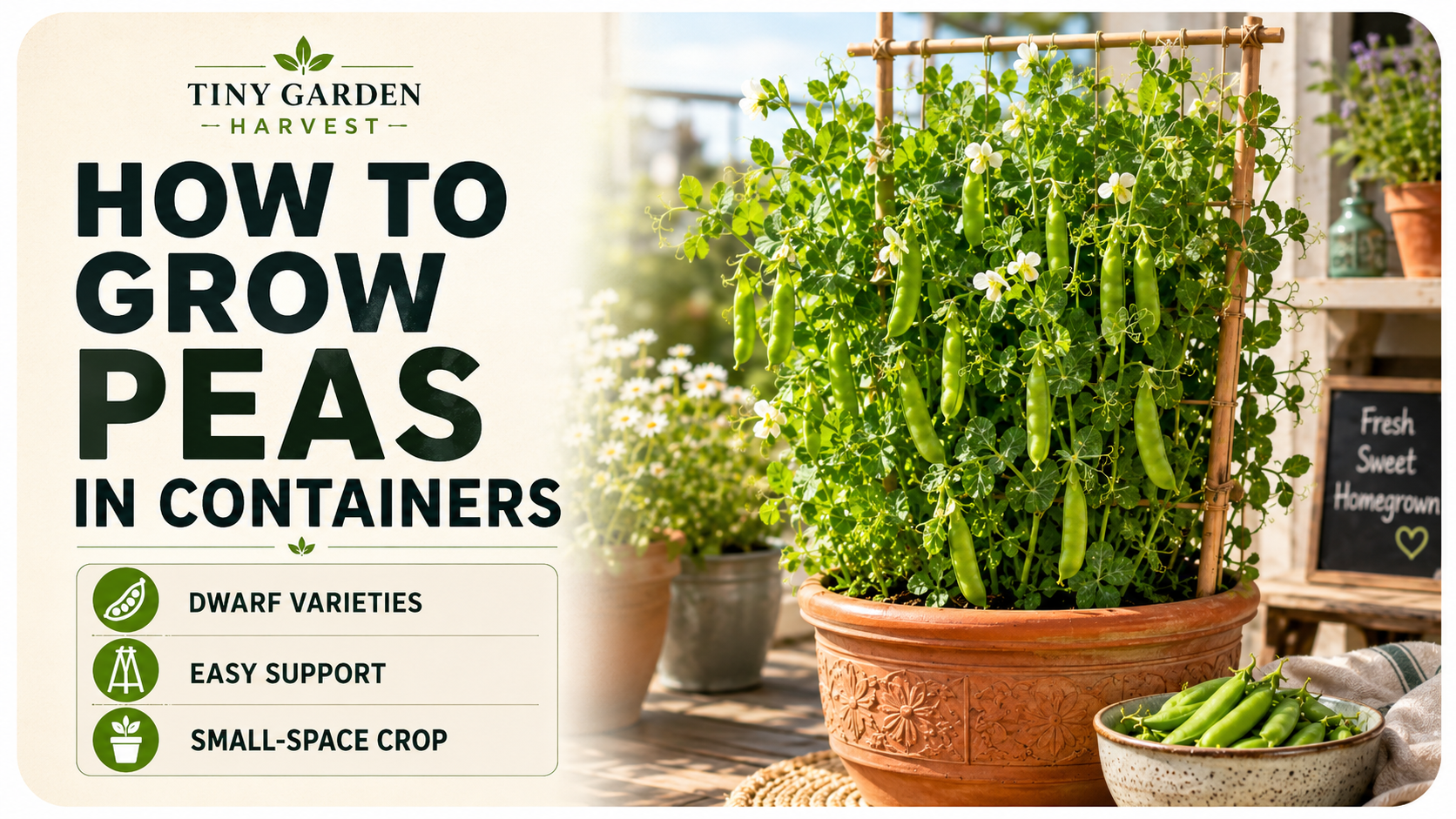
Quick answer: Peas can grow in containers, especially dwarf peas and compact mangetout varieties. Use a wide, stable pot at least 45cm across where possible, add support before the plants start climbing, keep the compost consistently moist and harvest pods regularly. Container yields are usually smaller than in the ground, but the crop can still be worthwhile in a sunny tiny garden.
Growing note: Peas prefer cool growing conditions. They may struggle in hot, dry weather, so spring and early summer are usually the easiest times for container growing.
Quick facts
| Best for | Sunny patios, balconies, courtyards and small gardens |
| Difficulty | Beginner-friendly with support and regular watering |
| Container | A wide container around 45cm across for a useful crop |
| Best types | Dwarf peas, compact shelling peas and mangetout |
| Main care needs | Support, moisture and regular picking |
Are peas worth growing in containers?
Peas usually crop more heavily in open ground, but a container can still provide a small, fresh harvest. They are especially appealing if you enjoy eating pods straight from the plant or want a vertical crop that does not take over the whole patio.
For a tiny garden, variety choice matters. Tall peas need more support and root room, while dwarf and compact varieties are easier to manage. Mangetout can be particularly useful because you eat the whole pod and do not have to wait for peas to swell inside.
Choosing the right pea variety
| Type | Container suitability |
| Dwarf pea | Compact and easiest to support in a pot |
| Mangetout | Fast-cropping and useful for small harvests |
| Sugar snap | Good if the variety stays reasonably compact |
| Tall shelling pea | Possible in a large container, but needs stronger support |
Check the expected height on the packet before sowing. A variety described as dwarf, patio or compact is generally the easiest starting point.
Choosing a container
Use a stable container that is wide enough for several plants and heavy enough not to topple once the supports are in place. A trough, large pot or deep rectangular planter can all work. The container must have drainage holes.
A very narrow pot may dry out quickly and provide too little root room for a useful crop. If your balcony has a weight limit, use a lightweight planter designed for outdoor use and avoid overfilling it.
How to sow peas in a container
- Place the empty container in its final position if it will be difficult to move once filled.
- Fill it with peat-free multi-purpose compost and water before sowing.
- Add twiggy sticks, pea netting or a compact trellis before the shoots become tangled.
- Sow according to the spacing and depth on the seed packet.
- Cover the seeds, label the pot and water gently.
- Keep the compost moist while the seedlings establish.
- Guide young shoots towards the support rather than tying them tightly.
Where to put container peas
A bright position with several hours of sun is ideal, but peas do not enjoy intense heat. A sunny spring balcony or patio usually suits them well. During a hot spell, a little afternoon shade can reduce stress and slow the compost from drying.
Shelter from strong wind is important. A pea plant carrying pods can act like a sail, so secure the support and use a stable container.
Supporting peas properly
Install support at sowing time. Short twiggy sticks are enough for dwarf peas, while taller varieties need netting or a trellis. The support should be anchored inside or directly behind the container so the stems are not pulled sideways.
Peas climb with tendrils, so they often need only gentle guidance. Avoid tight ties that can cut into soft stems.
Watering and feeding
Container peas need steady moisture, especially during flowering and pod formation. Check the compost frequently in warm or windy weather and water slowly at the base.
- Do not let the container dry completely once flowers appear.
- Avoid leaving the pot permanently waterlogged.
- Mulch the surface with compost to reduce rapid moisture loss.
- Fresh compost usually provides a good start; avoid unnecessary heavy feeding.
Harvesting peas
Pick regularly once pods are ready. Mangetout should be harvested while the pods are still flat and tender. Sugar snap pods are picked when they are plump but crisp. Shelling peas are ready when the pods feel full.
Frequent picking encourages the plant to keep producing. Check the vines every day or two during the main harvest.
Common problems
Powdery mildew
A pale powdery coating often appears during dry weather. Keep plants watered, improve airflow and avoid letting the pot become severely stressed.
Few flowers or pods
Heat, weak light, dry compost or a container that is too small can reduce cropping. Check the growing conditions before adding fertiliser.
Plants fall over
The support may be too weak or the pot too light. Reinforce the frame and move the container to a more sheltered position.
Birds or mice take the seeds
Use netting or start seeds under temporary protection if this is a recurring problem. Make sure any netting is safely secured.
A simple pea plan for a tiny garden
Choose one dwarf or mangetout variety, sow a single wide container and add support from the start. Keep the pot close enough to the kitchen that you remember to water and pick it. Treat the harvest as a fresh seasonal extra rather than expecting a freezer full of peas.
Peas can fit into an early-season sowing plan. See what to sow in March and what to sow in April.
Check your planter first
Use the Container Size Calculator to see whether your pot has enough width and depth for a climbing crop.
FAQs
How big should a container be for peas?
A wide container around 45cm across is a useful starting point for a small crop. Larger and taller varieties need more root room and stronger support.
Can peas grow on a balcony?
Yes, if the balcony receives useful light and is not excessively windy. Use a stable pot and secure the support carefully.
Do peas need full sun?
They crop best with good light, but they tolerate cooler conditions better than intense heat. Light afternoon shade can help in hot weather.
Can I grow peas without support?
Very dwarf varieties may need only a few short sticks, but most peas benefit from something to climb.
Growing note: Container pea harvests are usually modest. Choose a compact variety and grow them for freshness rather than volume.