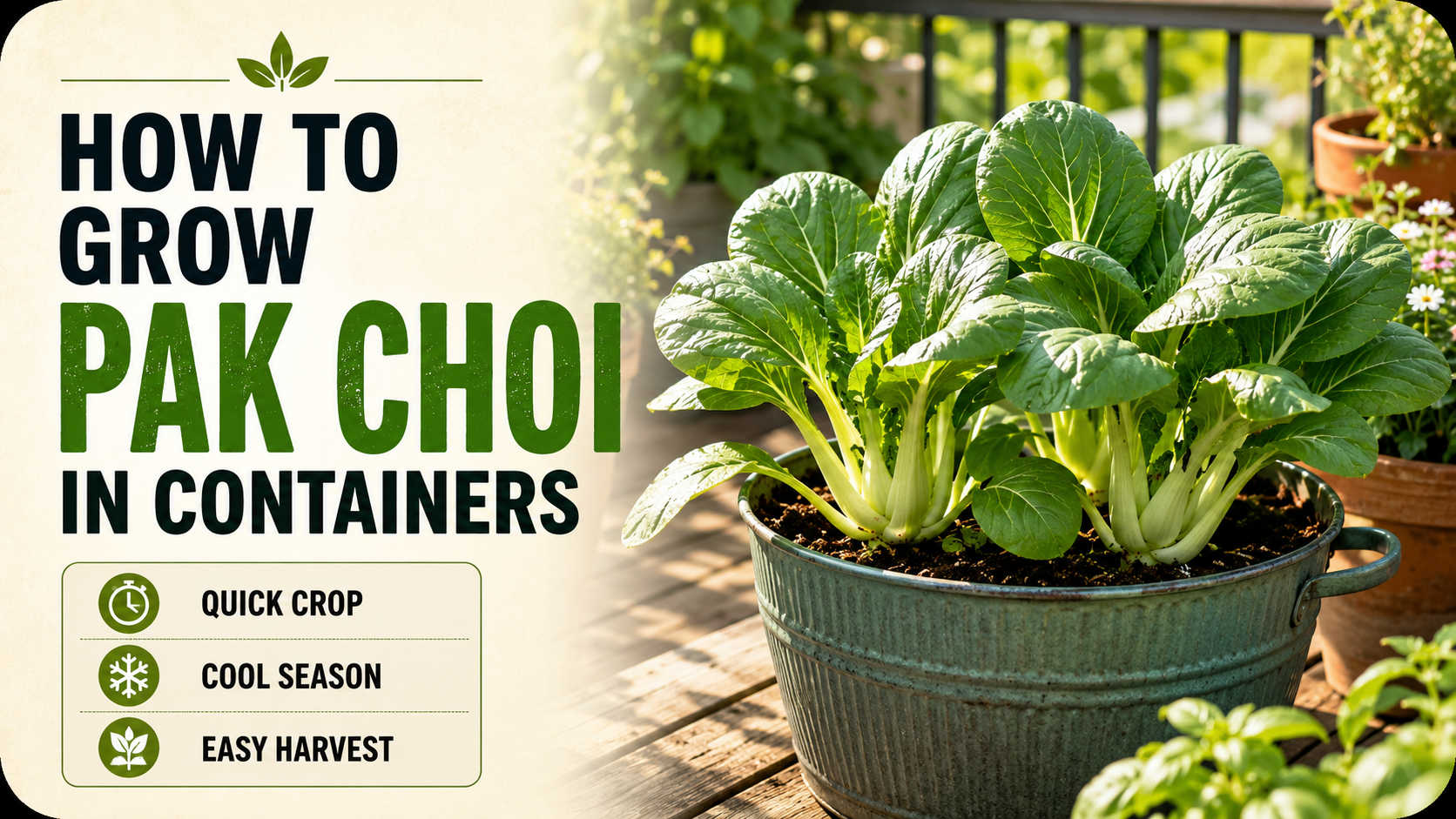
Quick answer: Pak choi grows well in containers when the weather is cool, the compost stays evenly moist and the plants are not crowded. Use a pot or trough at least 20cm deep, sow small batches in spring or late summer, and harvest either as baby leaves or whole compact heads.
Growing note: Pak choi can bolt quickly in hot, dry or stressful conditions. Spring and late-summer sowings are usually easier than midsummer crops.
Quick facts
| Best for | Balconies, patios, window boxes, courtyards and raised beds |
| Difficulty | Beginner-friendly in cool weather |
| Container depth | About 20cm minimum |
| Sunlight | Full sun in cool weather; partial shade in warm spells |
| Best harvest | Baby leaves or compact whole heads |
Why pak choi suits small spaces
Pak choi is fast, compact and useful in the kitchen. You can harvest baby leaves from a trough or allow a few plants to form full heads in a deeper container. It is especially valuable in spring and autumn, when large summer crops are not yet occupying every pot.
The main challenge is timing. Pak choi dislikes sudden stress, and long hot days can make it flower before a useful head forms. Small repeat sowings give you a better chance of catching a good growing window.
Choosing a variety
Look for varieties described as compact, baby, dwarf or slow to bolt. Green-stemmed and white-stemmed types are grown in much the same way, but compact cultivars are easier to fit into window boxes and patio troughs.
| Type | Container use |
| Baby-leaf pak choi | Fast harvests from a tray or trough |
| Compact full-head type | One or several spaced plants in a deeper container |
| Slow-bolting variety | Useful when temperatures are less predictable |
| Large traditional type | Needs more spacing and a generous pot |
Choosing a container
Use a pot, window box or trough at least 20cm deep. Wider containers are easier because they let you space several plants while keeping the compost moist. Drainage holes are essential.
Avoid tiny pots. Pak choi has a relatively small root system, but a miniature pot can dry out in a few hours and trigger bolting.
How to sow pak choi
- Fill the container with peat-free multi-purpose compost and water before sowing.
- Sow thinly in shallow rows or individual stations according to the packet.
- Cover lightly and label the container.
- Keep the compost consistently moist during germination.
- Thin crowded seedlings while they are small.
- Make another small sowing two or three weeks later.
- Protect young plants from slugs and flea beetles.
Where to position the container
In cool spring or autumn weather, give pak choi a bright position. As temperatures rise, move the pot where it receives morning sun and afternoon shade. This helps keep the compost cool and reduces stress.
Shelter from strong wind is useful because the broad leaves lose moisture quickly.
Watering
Pak choi grows best in consistently moist compost. Check the pot frequently and water slowly at the base. Repeated drying is one of the quickest ways to produce tough leaves or premature flower stems.
- Water before the compost becomes completely dry.
- Use a deeper trough if shallow pots are difficult to maintain.
- Avoid leaving the container permanently waterlogged.
- Mulch lightly around larger plants to slow moisture loss.
Feeding
Fresh compost generally provides a good start. For a longer full-head crop, use a suitable general vegetable feed according to the label. Avoid excessive feeding, which can produce soft growth.
Harvesting pak choi
For baby leaves, cut individual outer leaves or harvest the whole young plant. For full heads, cut at the base once the plant reaches a useful size. Do not wait for every plant in the container to mature at exactly the same time.
If a flower stem begins to rise, harvest promptly. The leaves remain edible, but the texture and flavour usually become less tender.
Common problems
The plant bolts
Heat, drought, root disturbance and sudden temperature changes can trigger flowering. Sow in cooler periods, keep the compost moist and use partial shade.
Leaves have tiny holes
Flea beetles are a common cause. Fine insect mesh can protect young plants, provided it is secured around the container.
Seedlings disappear
Slugs and snails may eat young growth. Check around the pot in the evening and keep the surrounding area tidy.
Heads stay very small
Crowding, poor light, dry compost or a container that is too small may be limiting growth. Thin the plants and improve moisture.
A simple repeat-sowing plan
Sow one short row or small patch now, then another after two or three weeks. Harvest the first as baby leaves if conditions become hot, and allow the second to form fuller heads if the weather stays cool.
Pak choi fits well beside other quick leafy crops such as spinach in pots and rocket in pots.
Check your container
Use the Container Size Calculator before sowing pak choi in a shallow window box or tray.
FAQs
Can pak choi grow on a balcony?
Yes. A balcony with good light and some shelter is ideal, especially in spring and autumn.
How deep should a pak choi pot be?
About 20cm is a useful minimum. A deeper container is easier to keep moist.
Can I grow pak choi in summer?
You can try a slow-bolting variety in partial shade, but cool spring and late-summer conditions are usually easier.
Does pak choi regrow after cutting?
Outer-leaf harvesting may give a little regrowth, but pak choi is usually treated as a quick crop and resown regularly.
Growing note: The best pak choi crop is often the one you sow little and often rather than trying to maintain one container all season.