How to Grow Onions and Shallots in Containers
Onions and shallots are easy to grow in a pot or trough from sets. When to plant in autumn and spring, how far apart, and how to harvest and dry the bulbs.
Quick answer
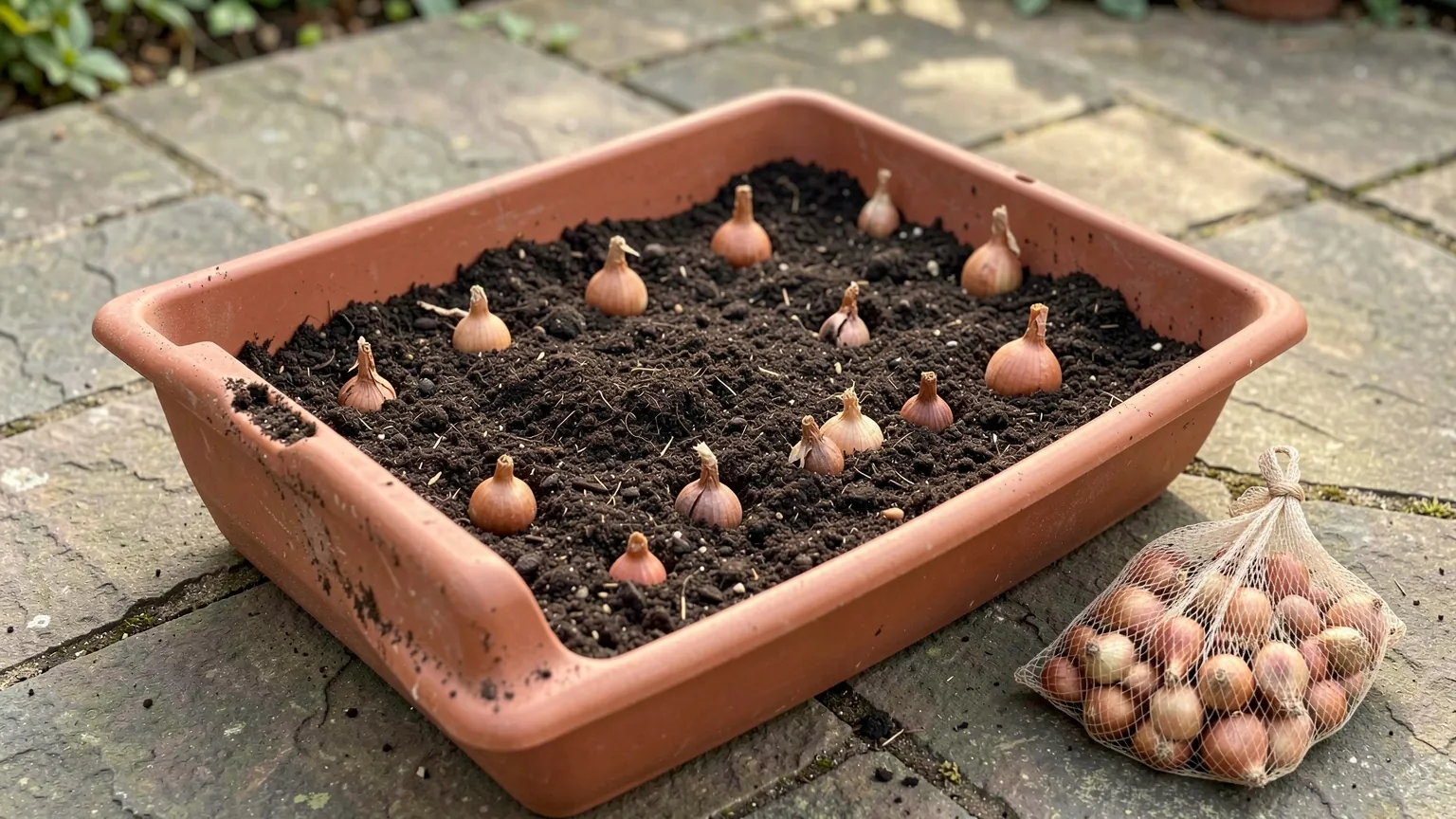
The easiest way to grow onions and shallots in containers is from sets, which are small, immature bulbs. Plant onion sets about 10cm apart and shallot sets about 15–20cm apart in a wide pot or trough at least 20cm deep, with the tips just showing. Put the container in full sun and keep birds off until the sets have rooted. Onion sets sold for autumn planting go in during autumn, while most onion and shallot sets are planted from late winter to spring. Harvest when the leaves turn yellow and flop over, then dry the bulbs before storing.
Growing note: Onions in a pot will not save you much money, because onions are cheap to buy. Grow them for the pleasure of it, or choose shallots and red onions, which cost more in the shops and are especially good fresh.
Quick facts
| Best for | Wide pots, troughs, patios, balconies and raised beds |
| Difficulty | Beginner-friendly from sets |
| Container depth | About 20cm minimum; width matters more than depth |
| Sunlight | Full sun |
| When to plant | Autumn onion sets in autumn; most onion and shallot sets from late winter to spring |
| Spacing | Onions about 10cm apart; shallots about 15–20cm apart |
| Harvest | Summer, when the leaves yellow and fall over |
Why grow onions and shallots in a tiny garden?
Onions and shallots are simple to grow. Once planted, they need little more than sun, occasional watering and weeding. They take up little width above the compost, so a wide trough can hold a useful number of bulbs, and they leave the container free again by late summer.
Shallots are particularly good value in a small space. Each set you plant grows into a cluster of several new bulbs, so a single trough gives a good handful for the kitchen.
Sets or seed?
Onions and shallots can be grown from seed or from sets. For containers, sets are much easier.
| Method | What to expect |
| Sets | Small bulbs that are planted straight into the container. Quick to establish, reliable and easy for beginners. The best choice for most tiny gardens. |
| Seed | Cheaper and offers more varieties, but slower. Seedlings need sowing early, thinning and more care while they are small. |
Some onion sets are heat-treated, which makes them less likely to run to flower. This is worth looking for, especially with red onions.
When to plant onions and shallots
- Autumn onion sets are sold for planting in autumn, usually by the end of November. They grow slowly over winter and are ready earlier the following summer. They do not usually store as long as spring-planted onions, so use them first.
- Spring-planting onion sets are planted from about March into April, once the compost is not cold and wet.
- Shallot sets are usually planted from late winter to early spring. Some varieties are also sold for autumn planting. The old saying is to plant shallots on the shortest day and harvest them on the longest, but in a container there is no need to plant into cold, wet compost. Wait for a mild spell.
Always check the packet, because the best planting time varies between varieties.
Choosing a container
Use a pot or trough at least 20cm deep with drainage holes. Onions and shallots have fairly shallow roots, so surface area matters more than depth. A long trough or a wide, shallow pot gives you the most bulbs for the space.
Fill it with peat-free multi-purpose compost. Sets can rot in compost that stays wet, so make sure water drains away freely. Mixing in a little horticultural grit helps, especially for sets planted in autumn.
Use fresh compost rather than compost that has already grown onions, garlic or leeks. This reduces the risk of soil-borne diseases such as onion white rot.
How to plant onion and shallot sets
- Fill the container with compost to just below the rim and firm it lightly.
- Push each set into the compost, pointed end up, so the tip is just showing at the surface.
- Space onion sets about 10cm apart and shallot sets about 15–20cm apart. Shallots need more room because each set forms a cluster of bulbs.
- Water in lightly.
- Cover the container with netting or fleece until the sets have rooted. Birds often pull new sets out of the compost.
- Check after a few days and after frost, and push back any sets that have lifted.
Where to put the container
Onions and shallots need full sun to form good bulbs. Choose the sunniest part of your balcony or patio. In partial shade, they will still grow, but the bulbs are likely to be smaller.
Containers planted in autumn are best in a sheltered, sunny spot, raised on pot feet so they drain well through winter.
Watering
Water in dry spells, especially in spring and early summer when the bulbs are growing. Containers dry out faster than open ground, so check them more often in warm or windy weather. Do not keep the compost wet, though. Onions and shallots dislike waterlogging, and autumn-planted sets need very little water over winter.
Once the bulbs are well swollen and the leaves start to turn yellow in summer, stop watering. This helps the bulbs ripen.
Feeding
Fresh compost gives sets a good start. Over spring, an occasional general-purpose liquid feed helps container-grown bulbs, following the label. Stop feeding once the bulbs are swelling well, because late feeding can produce soft bulbs that do not store well.
Weeding
Onions and shallots have narrow, upright leaves that do not shade out weeds, and they do not like competition. Pull out weeds by hand while they are small, taking care not to disturb the bulbs.
Harvesting and drying
Onions and shallots are ready in summer. Autumn-planted onions are usually ready first, from early summer. The signs are the same for both: the leaves turn yellow and flop over.
- When most of the leaves have yellowed and fallen over, ease the bulbs out of the compost.
- Lay them out to dry in a sunny, airy spot, or under cover if the weather is wet, for about two weeks.
- They are ready to store when the skins are papery and the necks are dry and tight.
- Store them in a cool, dry, airy place, in a net bag or a shallow tray.
Shallots grow as a cluster. Lift the whole cluster, then separate the bulbs once they are dry.
You can also use onions straight from the container before they ripen. Fresh, unripened bulbs taste good but do not store, so eat them within a few days.
Common problems
Sets pulled out of the compost
Birds pull at the dry tips of newly planted sets, and frost can push them up. Cover the container with netting or fleece until the sets have rooted, and gently replant any that are lifted.
Plants running to flower
Onions sometimes send up a flower stem, known as bolting. It is often caused by cold spells or dry compost. Snap off the flower stem and use the bulb soon, because bolted onions do not store well. Heat-treated sets are less likely to bolt.
Sets rotting
Sets can rot in compost that stays cold and wet, especially over winter. Use free-draining compost, raise containers on pot feet and empty any saucers.
Small bulbs
Shade, crowding, dry compost and late planting all lead to small bulbs. Give the container full sun, keep to the spacing and water in dry spells while the bulbs are growing.
Pests and diseases
Onion fly and allium leaf miner can damage onions and shallots. Fine insect mesh over the container helps keep them out. Onion white rot is a soil-borne disease, so always use fresh compost for onions and other members of the onion family. Downy mildew can cause grey, furry patches on the leaves in damp weather; give plants space so air can move around them.
A simple onion and shallot plan
For a tiny garden, try one wide trough of shallots planted in late winter or early spring, and a pot of red onion sets in spring. If you want to start earlier, plant a container of autumn onion sets in October or November and use them through early summer.
Onions and shallots sit well alongside other members of the onion family. See how to grow garlic in pots, how to grow spring onions in containers and how to grow chives in pots. For seasonal timing, see what to sow in November for autumn onion sets, and what to sow in March and April for spring planting.
Check your container
Use the Container Size Calculator to see how many onion or shallot sets will fit in your pot or trough.
FAQs
How deep does a pot need to be for onions?
About 20cm is a useful minimum. Onions and shallots have fairly shallow roots, so a wide container is more useful than a very deep one.
How many onions can I grow in a pot?
Allow about 10cm between onion sets and 15–20cm between shallot sets. A wide trough holds far more than a round pot of the same depth.
Can I plant onion sets in November?
Yes, if they are sold for autumn planting. Plant them in free-draining compost in a sunny, sheltered spot, and cover them until they have rooted.
When are shallots ready to harvest?
Usually in summer, when the leaves turn yellow and flop over. Lift the whole cluster, dry it in a sunny, airy spot, then separate the bulbs.
Are spring onions the same as onion sets?
No. Spring onions, also called salad onions, are grown from seed and picked young. Onion sets are small bulbs that grow into full-sized onions. See how to grow spring onions in containers.
Growing note: Plant sets with their tips showing, keep the birds off, give them full sun and stop watering once the leaves start to yellow. That is most of the work done.