How to Grow Swiss Chard in Containers
Chard is a colourful, forgiving leafy crop for pots and troughs that keeps cropping for months. Varieties, sowing, pot size, watering, picking and winter care.
Quick answer
Swiss chard is one of the easiest leafy crops for a container. Sow it from spring to late summer in a pot or trough at least 20–30cm deep, thin the seedlings and keep the compost moist. Start picking the outer leaves when they are big enough to use, and the plants keep producing for months. Chard is slower to run to seed than spinach in summer, and later sowings often carry on into winter and crop again in spring.
Growing note: Chard "seeds" are really small clusters of several seeds, so more than one seedling often comes up from each. Thinning them out is the one job you should not skip.
Quick facts
| Best for | Balconies, patios, window boxes (for baby leaves) and raised beds |
| Difficulty | Very beginner-friendly |
| Container depth | About 20cm for baby leaves; 30cm for full-sized plants |
| Sunlight | Full sun to partial shade |
| When to sow | Spring to late summer |
| Harvest | Outer leaves, picked over many months |
Why chard suits a tiny garden
Chard gives a lot of food for the space it takes up. You pick a few outer leaves at a time and the plant keeps growing from the centre, so a single trough can supply leaves for cooking from summer through autumn, and often into the following spring.
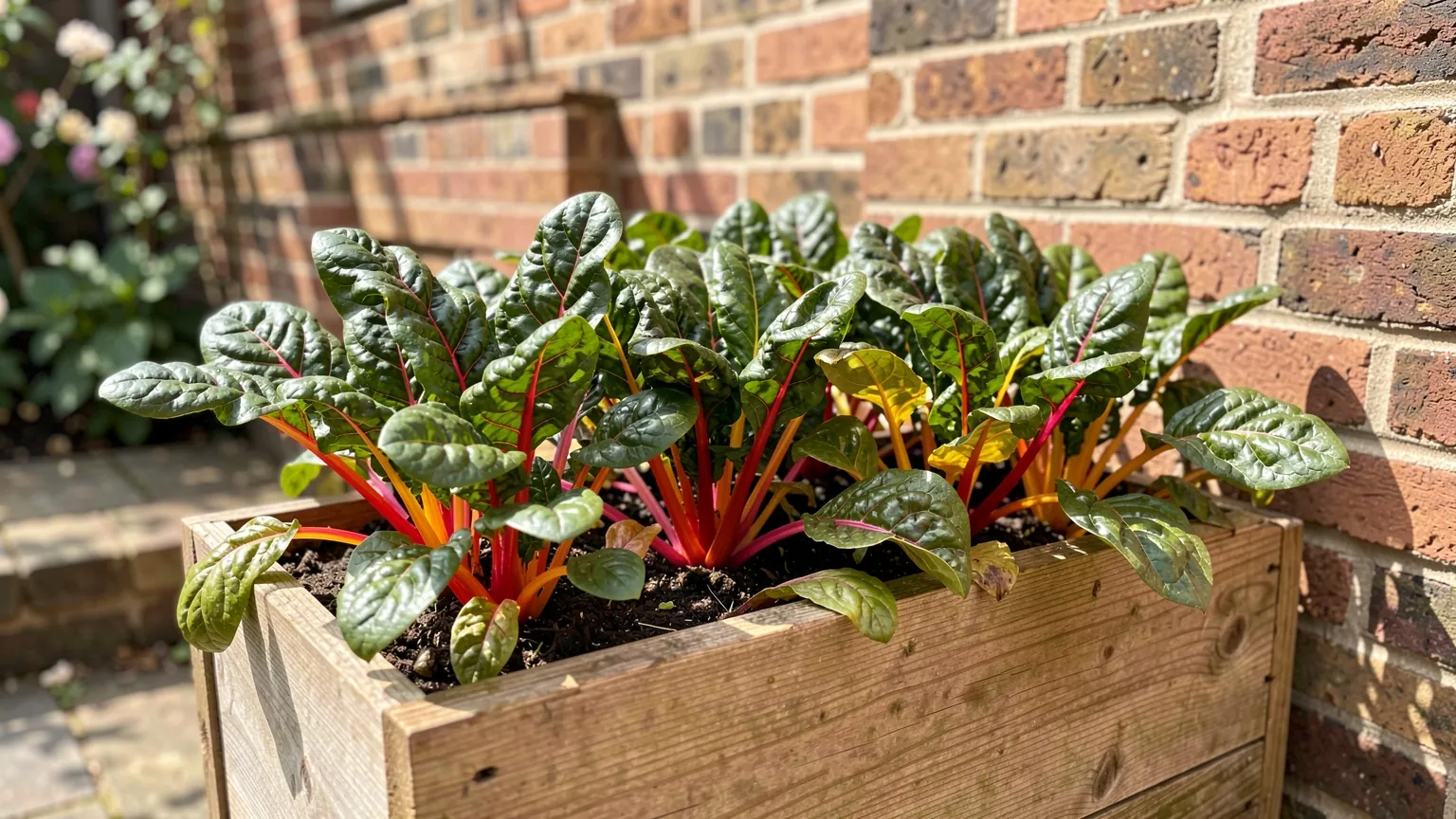
It is also more forgiving than spinach. Spinach tends to run to seed quickly in warm, dry weather, while chard is much more tolerant of summer conditions. And rainbow varieties, with their red, yellow, orange and pink stems, are as decorative as many flowers, which is a real bonus when your vegetable patch is also your seating area.
Choosing a variety
| Type | What to expect |
| White-stemmed chard | Broad white stems and large green leaves. Often the most vigorous and the hardiest in winter. 'Fordhook Giant' is a well-known example. |
| Rainbow chard | Mixed stem colours from one packet. Very decorative in pots and just as good to eat, though often slightly less hardy than white-stemmed types. 'Bright Lights' is a popular mix. |
| Red-stemmed chard | Deep red stems and veins, often with darker leaves. Good for a single-colour display. |
| Perpetual spinach (leaf beet) | A close relative with smaller, thinner stems and leaves more like spinach. Very reliable and slow to run to seed. |
Any of these will grow well in a container. For a balcony that is on show, rainbow chard is hard to beat. If you want the most reliable winter pickings, choose a white-stemmed variety or perpetual spinach.
Choosing a container
For full-sized plants, use a pot or trough about 30cm deep with drainage holes. A wide trough or a large pot can hold several plants spaced about 20–30cm apart. For baby leaves, picked young for salads, a container about 20cm deep is enough, with plants grown closer together.
Fill it with peat-free multi-purpose compost. Chard is a leafy crop that is in the pot for a long time, so a bigger volume of compost holds more water and food and keeps it growing well.
When to sow chard
- Spring: sow outdoors once the weather warms, or earlier in modules under cover. Very early sowings in cold conditions are more likely to run to seed.
- Early to midsummer: good for leaves through late summer and autumn.
- Late summer: sowings made then give young plants that can stand through winter, with some protection, and crop again in spring.
One spring sowing and one late-summer sowing give leaves for most of the year.
How to sow chard in containers
- Fill the container with compost and water it so it is evenly moist.
- Sow the seed clusters about 2cm deep, or follow the depth on the packet. Space them about 10cm apart for full-sized plants, or closer for baby leaves.
- Keep the compost moist. Seedlings usually appear within one to two weeks.
- Each cluster may produce several seedlings. Thin them to the strongest one at each spot.
- As the plants grow, thin again if needed, to about 20–30cm apart for full-sized plants. Use the thinnings as baby leaves.
You can also sow two clusters in each module or small pot, thin to one seedling and plant out when they are a sturdy size.
Where to put the container
Chard grows best in full sun but copes well with partial shade, so it is useful for balconies and patios that do not get sun all day. In summer, a little afternoon shade helps containers stay moist. In winter, move pots to a sheltered spot against a wall.
Watering and feeding
Keep the compost evenly moist, especially in warm weather. Dry compost leads to tough leaves and makes plants more likely to run to seed. Water at the base of the plants.
Because chard is in the container for a long time, give it a general liquid feed every couple of weeks while it is growing strongly, following the label. In autumn and winter, stop feeding and water only when the compost feels dry.
Harvesting chard
Start picking when the outer leaves are big enough to use. Cut or twist off a few of the outermost leaves at the base, and leave the smaller ones in the centre to keep growing. Regular picking keeps the plant producing fresh, tender leaves.
- Pick baby leaves young for salads.
- Use larger leaves for cooking. The stems take a little longer to cook than the leaves, so they are often cooked separately or added first.
- Remove any damaged or old leaves as you go.
Chard through winter
Chard is fairly hardy. Growth almost stops in winter, and outer leaves may be damaged by hard frosts, but plants often survive and grow again in early spring. To help them through:
- Move pots against a sheltered wall and raise them on pot feet so they drain.
- Cover plants with fleece or a cloche in very cold spells.
- Pick lightly, if at all, in the coldest months.
In spring, overwintered plants give a flush of fresh leaves before they start to flower. Once they send up a flower stem, the leaves become poorer, so clear the container and sow again.
Common problems
Plants running to seed
Chard naturally flowers in its second spring. Plants can also run to seed early if sown too early in cold weather, or if they are stressed by dry compost. Sow once conditions have warmed and keep pots well watered.
Brown blotches or tunnels in leaves
This is usually leaf miner, a small grub that tunnels inside the leaf. Pick off and dispose of affected leaves. The rest of the plant is still fine to eat.
Slugs and snails
Slugs can damage young seedlings and leaves, especially in damp spring and autumn weather. Raise pots off the ground and check plants in the evening.
Birds pecking leaves
Birds sometimes peck at chard, especially in winter. A cover of netting or fleece keeps them off.
A simple chard plan
Sow a trough of rainbow chard in spring and thin to three or four plants. Pick outer leaves from summer to autumn. In late summer, sow a second pot of a white-stemmed variety to stand through winter against a sheltered wall. Chard grows well alongside kale, another hardy leafy crop for winter, and its close relative beetroot.
For more leafy crops, see spinach in pots, lettuce in pots and winter salad leaves in containers. For more crops to grow in pots, see container vegetables.
Check your container
Use the Container Size Calculator to check how many chard plants your pot or trough can hold.
FAQs
How deep does a pot need to be for chard?
About 30cm deep for full-sized plants and about 20cm for baby leaves. Wider containers hold more plants and stay moist for longer.
Does chard grow back after cutting?
Yes. Pick the outer leaves and leave the centre, and the plant keeps producing new leaves for months.
Can chard survive winter in a pot?
Often, yes. Chard is fairly hardy, especially white-stemmed types. Move pots to a sheltered spot and cover plants in very cold weather.
Why are there several seedlings from one chard seed?
Each chard "seed" is a small cluster of seeds, so several seedlings can come up together. Thin them to one at each spot.
Is chard the same as spinach?
No. Chard is a type of beet, grown for its leaves and stems. It is used in similar ways to spinach but is larger, more tolerant of summer heat and slower to run to seed.
Growing note: Chard is about patience and steady picking. Thin it well, keep it moist and take a few outer leaves at a time, and one sowing will feed you for months.