How to Grow Winter Salad Leaves in Containers
Keep fresh leaves coming through the cold months with a trough of hardy winter salads. Which leaves to grow, when to sow, how to protect them and how to pick them.
Quick answer
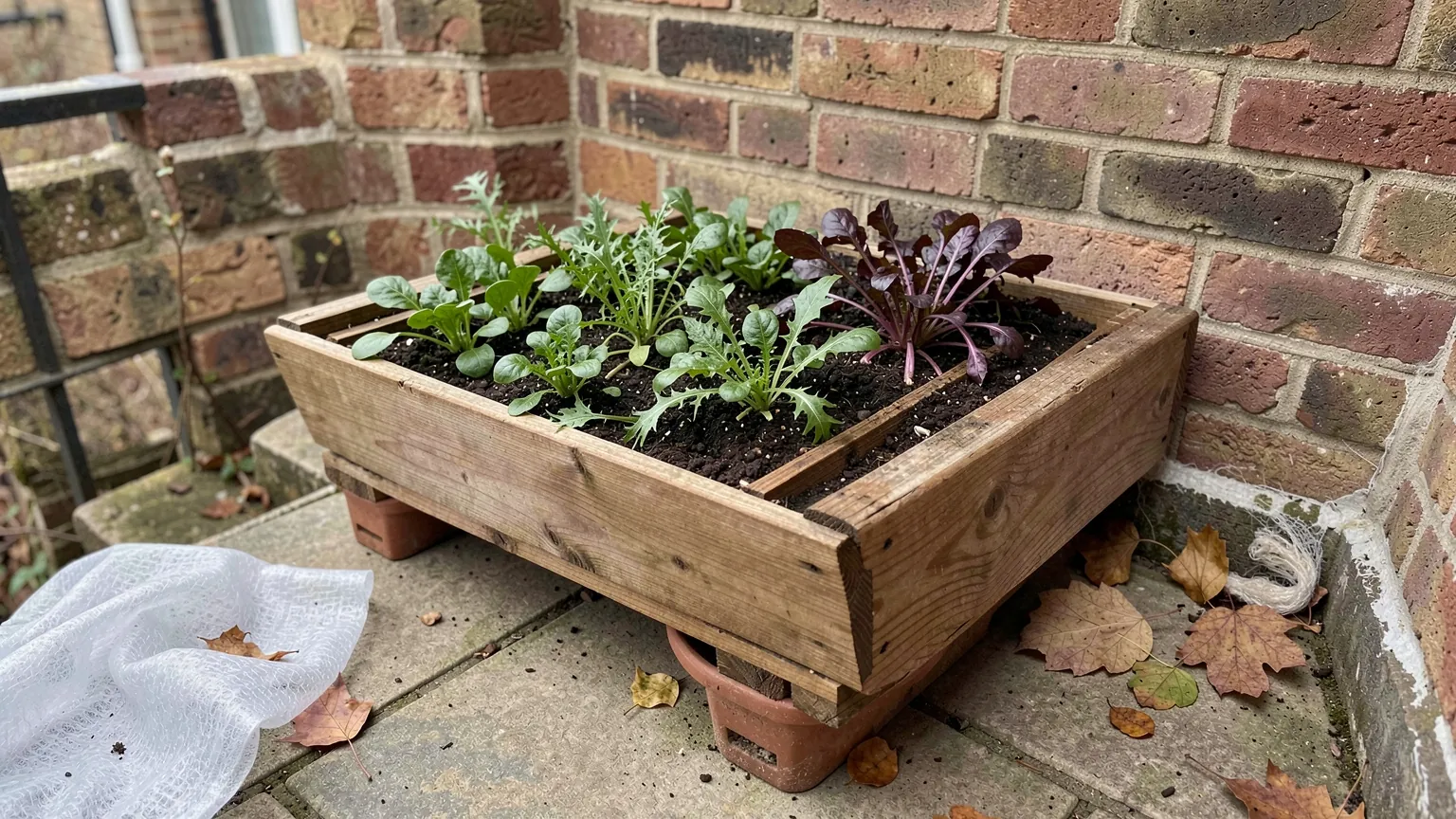
Hardy leaves such as lamb's lettuce, winter purslane, land cress, rocket, mizuna and mustard leaves can be grown in containers through the colder months. Sow them in late summer or early autumn in a trough at least 15cm deep, put it in the brightest sheltered spot you have and cover it with fleece or a cloche in hard frosts. Growth slows almost to a stop in midwinter, so pick a few leaves from each plant at a time. Late-autumn sowings are best made under cover, and usually crop in late winter and early spring.
Growing note: Winter salads grow slowly. The aim is a small, steady picking of leaves for sandwiches and salads, not the big harvests of spring and summer.
Quick facts
| Best for | Balconies, patios, courtyards, porches and bright windowsills |
| Difficulty | Beginner-friendly, with some protection from the weather |
| Container depth | About 15cm minimum; a wide trough is ideal |
| Light | As much winter light as possible, in a sheltered spot |
| When to sow | Late summer to early autumn outdoors; into late autumn under cover |
| Best harvest | A few leaves per plant at a time, from autumn to spring |
Why winter salads suit a tiny garden
Most container crops finish in autumn, which leaves pots and troughs sitting empty until spring. A few hardy salad leaves can fill that gap. They are small, cope with cold weather far better than lettuce bred for summer, and a single trough by the back door gives you something fresh to pick when the shops are full of imported bags.
They also make the most of a small space. Winter salads are low-growing and shallow-rooted, so they fit in window boxes and troughs, and they are easy to move closer to a wall or under cover when the weather turns.
The best salad leaves for winter containers
Choose leaves that are known to be hardy, and look for seed sold for autumn or winter sowing. Mixed winter salad packets usually contain several of these.
| Leaf | What to expect |
| Lamb's lettuce (corn salad) | Small rosettes of soft, mild leaves. One of the hardiest salads and a reliable choice for winter pots. |
| Winter purslane (claytonia) | Fleshy, mild, round leaves. Very hardy and good for cut-and-come-again picking. |
| Land cress | A peppery leaf that tastes like watercress but grows in ordinary compost. Likes moisture and copes with some shade. |
| Rocket | Peppery leaves that grow well in cool weather. Salad rocket is quicker; wild rocket is slower and longer-lived. |
| Mizuna | Frilly, mild leaves with a slight mustard flavour. Quick to establish from late-summer sowings. |
| Mustard leaves | Spicy green or red leaves that add colour and heat. Pick them young, as larger leaves are very hot. |
| Winter lettuce | Some lettuce varieties are bred for autumn sowing and overwintering. Check the packet, as most lettuce is not hardy enough for a winter outdoors. |
When to sow winter salads
Timing is the key to winter salads. Plants need to be well established before the short, cold days of late autumn, because very little grows between late November and late January.
- Late summer to early autumn is the main sowing time for leaves to pick through autumn and winter outdoors. Check each packet, as the latest sowing date varies between crops.
- October and November sowings will grow very slowly outdoors. Sow them under cover instead, in a cold frame, mini greenhouse, unheated porch or on a bright windowsill, and expect most of the picking in late winter and early spring.
- Young plants of winter salads are sometimes sold in autumn. Planting these into a trough is a quick way to catch up if you missed the main sowing window.
Choosing a container
Use a trough, window box or wide pot at least 15cm deep, with drainage holes. A wider container holds more plants and stays evenly moist for longer, while drainage matters more in winter than at any other time of year. Salad leaves sitting in cold, wet compost are much more likely to rot than to die of cold.
Use fresh peat-free multi-purpose compost. If you are reusing a pot from a summer crop, remove some of the old compost and mix in fresh before sowing.
How to sow winter salad leaves
- Fill the container with compost to just below the rim and water it so it is evenly moist.
- Sow thinly in short rows or scatter the seed across the surface, following the depth on the packet. Most salad seed needs only a light covering of compost.
- Label each row, especially if you are sowing several different leaves.
- Keep the compost moist, but not wet, until the seedlings appear.
- Thin seedlings that come up crowded so that each plant has room to grow. The thinnings can be eaten.
- If you are sowing different crops, sow a short row of each rather than a whole trough of one, so a single failure does not leave you with nothing.
Where to put the container
In winter, light matters more than anything else. Put the trough in the brightest spot you have, ideally where it gets whatever low sun there is. A position close to a wall is a good choice, because the wall gives shelter from wind and a little extra warmth.
- Raise the container on pot feet or bricks so it drains freely.
- Keep it out of the path of cold, drying winds where you can.
- A covered balcony or porch keeps off heavy rain, but check that the plants still get enough light.
- On a windowsill, use your brightest window and keep leaves away from very cold glass on frosty nights.
Protecting winter salads from cold and wet
Hardy salad leaves survive frost, but the leaves are better quality with some protection. A cover keeps off the worst of the rain and wind and keeps the plants growing a little longer into the season.
- Horticultural fleece can be laid over the trough on cold nights. Secure the edges so it does not blow away.
- A cloche or mini greenhouse gives longer-lasting cover for a trough or a group of pots.
- Ventilate on mild days. Closed covers trap damp air, which encourages mould on the leaves.
- Do not pick frozen leaves. Wait until they have thawed, as frozen leaves bruise and spoil easily.
Watering
Winter salads need much less water than summer crops, and overwatering is a more common problem than drought. Check the compost with your finger and water only when the top feels dry. Containers under cover, on covered balconies or against a sheltered wall can still dry out, so do not stop checking altogether.
Water in the morning, at the base of the plants, so the leaves and compost surface are not wet going into a cold night. Empty any saucers so the container never stands in water.
Fresh compost provides enough food for winter salads. Feeding is not usually needed until growth picks up again in spring.
Harvesting through winter
Pick a few outer leaves from each plant rather than cutting the whole trough at once. Leave the centre of each plant to keep growing. In midwinter growth is very slow, so take a little from several plants and give each one time to recover.
Lamb's lettuce can also be harvested by cutting whole rosettes, which is useful if you have sown it thickly. Winter purslane, land cress, mizuna and mustard leaves can be picked leaf by leaf or cut a little above the base and left to regrow.
As the days lengthen in late winter and early spring, growth speeds up and picking becomes much more generous. Many winter salads then start to flower. Once a plant is running to flower, the leaves become tougher or stronger in flavour, so clear the trough and resow for spring.
Common problems
Slugs and snails
Slugs keep feeding in mild, wet winter weather. Raise the container off the ground, check under rims and pot feet, and look over the plants on damp evenings.
Mouldy or rotting leaves
Damp, still air and wet compost are the usual causes. Remove affected leaves, water less, and open covers on mild days to let air move around the plants.
Birds pecking the leaves
Pigeons and other birds sometimes strip leafy crops in winter, especially mizuna and mustards. Netting or fleece over the trough solves this.
Plants not growing
Very slow growth in December and January is normal. If plants are small and pale even in autumn or spring, move the container to a brighter spot and check that it drains well.
A simple winter salad plan
Fill one wide trough with fresh compost and sow short rows of lamb's lettuce, winter purslane and rocket. Stand it against your sunniest sheltered wall, keep a sheet of fleece handy for hard frosts and pick a few leaves at a time. For quicker results through the darkest weeks, add a tray of pea shoots or microgreens on the windowsill.
For more leafy crops, see how to grow lettuce in pots, spinach in pots and pak choi in containers. For the rest of this season's planting, see what to sow in October and what to sow in November.
Find crops for your space
Use the free growing tools to see which crops suit your balcony, patio or windowsill.
FAQs
Which salad leaves are the hardiest?
Lamb's lettuce and winter purslane are two of the hardiest salad leaves. Land cress, rocket, mizuna and mustard leaves also cope well with cold weather, especially with a little protection.
Is it too late to sow winter salads in October?
Not if you can sow under cover, in a cold frame, mini greenhouse, porch or on a bright windowsill. Outdoor sowings made this late grow very slowly and usually crop in late winter and spring.
Can I grow winter salad leaves on a windowsill?
Yes, on a bright windowsill. Growth will be slower than in spring and summer, so sow small batches and pick a few leaves at a time.
Do winter salads need protecting from frost?
Hardy salads usually survive frost, but a cover of fleece or a cloche during cold spells keeps the leaves in better condition and keeps off heavy rain.
Can I grow ordinary lettuce in winter?
Most lettuce is not hardy enough to grow outdoors through winter. Choose a variety sold for autumn sowing, or grow hardier leaves such as lamb's lettuce and winter purslane instead.
Growing note: A winter salad trough rewards light, shelter and restraint. Give it the brightest sheltered spot you have, water sparingly and pick a little at a time.