How to Grow Kale in Pots
Kale is one of the hardiest leafy crops you can grow in a pot, giving fresh leaves from autumn right through winter. Varieties, sowing, pot size, pests and picking.
Quick answer
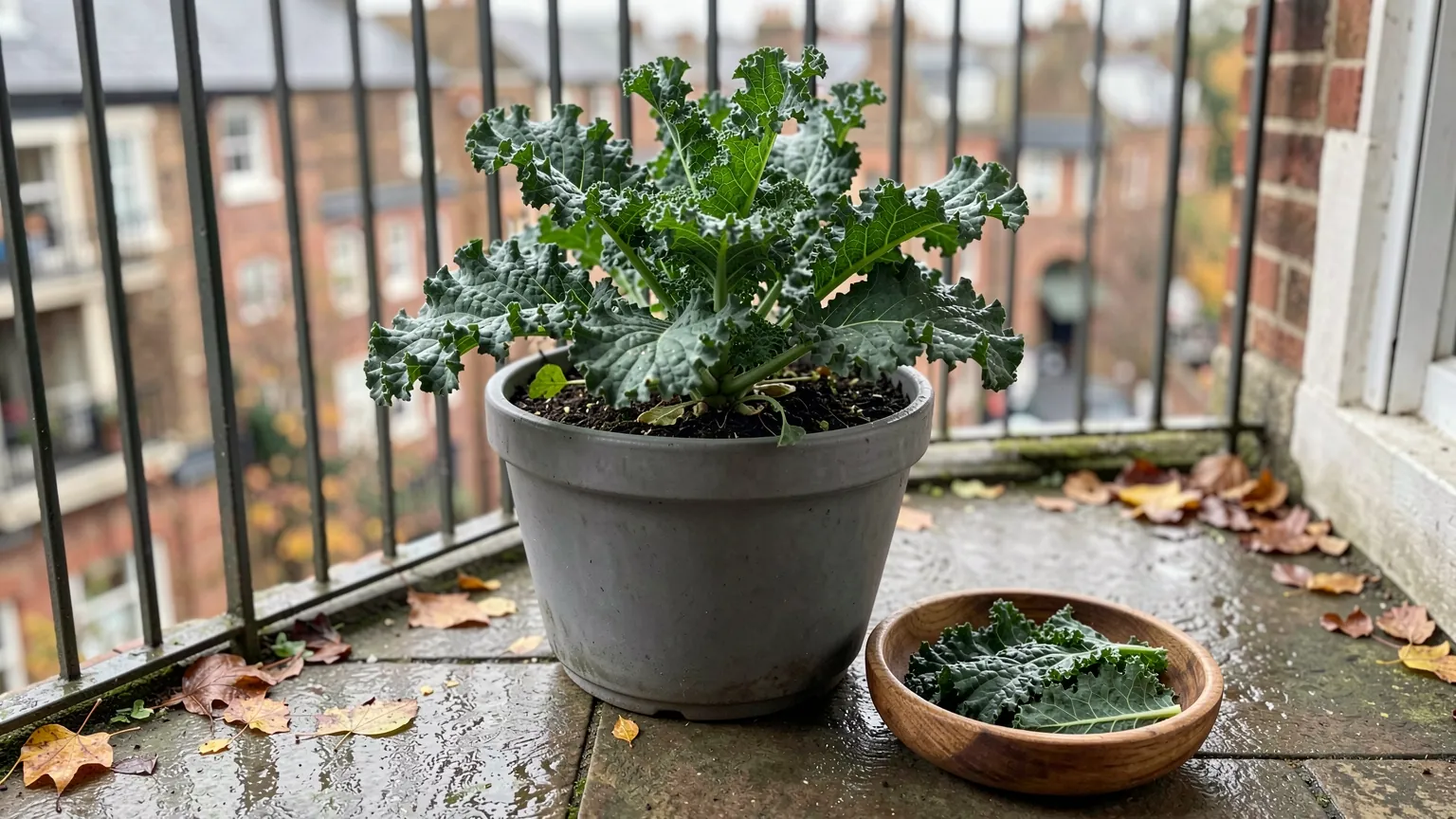
Kale grows well in a large pot and is one of the hardiest vegetables for a tiny garden. Sow it in spring or early summer, then grow one plant in a pot at least 30cm deep and wide, filled with firm, fairly rich compost. Cover young plants with fine mesh to keep off caterpillars and pigeons, water well in summer and start picking the lower leaves from late summer or autumn. A healthy plant keeps producing leaves through winter and into early spring.
Growing note: Kale is a long-season crop. It ties up a pot for most of the year, so it pays to choose a compact variety and to pick from it regularly.
Quick facts
| Best for | Balconies, patios, roof terraces and raised beds |
| Difficulty | Beginner-friendly, with some pest protection |
| Container size | About 30cm deep and wide per plant; larger for tall varieties |
| Sunlight | Full sun to partial shade |
| When to sow | Spring to early summer |
| Harvest | Late summer through winter to early spring |
Why kale suits a tiny garden
Most container crops are finished by the first frosts. Kale is the opposite: it is very hardy and keeps going through cold weather, so a single pot can give you fresh greens in the months when little else is growing. Frost even tends to make the leaves taste a little sweeter.
Kale is also a "pick and come again" crop. You take a few leaves at a time and the plant keeps growing from the top, so one or two well-grown plants give a steady supply rather than a single harvest. Curly and dark-leaved varieties look good in a pot too, which matters on a small balcony where every container is on show.
Choosing a variety
All kale can be grown in a container, but some types are better suited to small spaces.
| Type | What to expect in a pot |
| Dwarf curly kale | Compact plants with tightly frilled leaves. The best choice for smaller pots and exposed balconies, as they are less likely to blow over. Varieties sold as dwarf, such as 'Dwarf Green Curled', are ideal. |
| Cavolo nero (black kale) | Long, narrow, dark blue-green crinkled leaves. Grows taller and more upright, so it needs a larger pot and a sheltered spot. Very good for cooking. |
| Red and purple kale | Curly or flat leaves with red or purple colouring. As hardy as green kale and very decorative in a container display. |
| Baby leaf kale | Any kale sown thickly and picked young for salads, rather than grown on into full plants. Good for a trough or window box. |
Check the expected height on the seed packet. For most balconies and patios, a variety that stays under about 60cm is easiest to manage.
Choosing a container
Grow one kale plant in a pot at least 30cm deep and 30cm wide, with drainage holes. Taller varieties such as cavolo nero are happier in something closer to 40cm. A bigger pot holds more water in summer, gives the roots more food and keeps a top-heavy plant from tipping over in winter winds.
Kale likes firm, fairly rich compost. A loam-based compost, such as John Innes No. 3, or a peat-free multi-purpose compost mixed with some loam-based compost, works well. The extra weight of loam helps steady the pot. Firm the compost gently as you fill the container, as brassicas grow best in firm soil.
When to sow kale
- Spring to early summer is the main sowing time. Plants sown then grow through summer and are ready to pick from late summer or autumn onwards.
- Indoors or under cover from early spring, if you want to start a little earlier.
- Baby leaf kale can be sown in a trough from spring to late summer, and picked young.
If you miss the sowing window, garden centres often sell young kale plants in late summer and autumn, which can go straight into a pot.
How to sow and plant kale
- Sow two or three seeds about 1–2cm deep in small pots or module trays of compost, or follow the depth on the packet.
- Keep them moist in a bright place. Seedlings usually appear within a week or two.
- Thin to the strongest seedling in each pot or module.
- When the young plant has several true leaves and is a sturdy size, plant it into its final container. Set it a little deeper than it was growing and firm the compost well around it.
- Water it in, then cover it straight away with fine insect mesh or netting (see below).
For baby leaves, sow thinly across a trough of compost instead, cover lightly and keep moist. Pick the leaves when they are a few centimetres long.
Where to put the container
Kale grows best in full sun but copes with partial shade, which makes it useful on balconies that only get sun for part of the day. In winter, a sheltered spot against a wall protects plants from the strongest winds. Raising the pot on pot feet helps it drain in wet weather.
Watering and feeding
Water regularly in spring and summer, when kale is growing fastest. A large plant in a pot can dry out quickly on a hot day, and stressed plants are tougher and more prone to pests. Water at the base rather than over the leaves.
From midsummer, give an occasional liquid feed, following the label. A general feed or one higher in nitrogen supports leafy growth. Stop feeding in autumn. Through winter, water only when the compost feels dry, and do not leave the pot standing in water.
Protecting kale from pests
Kale is a brassica, part of the cabbage family, so it attracts the same pests. In a container these are easier to manage than in open ground.
- Caterpillars of cabbage white butterflies are the main summer pest and can strip leaves quickly. Cover plants with fine mesh or netting, held clear of the leaves and secured around the pot, from planting until autumn. Check the undersides of leaves for eggs and caterpillars and pick them off.
- Pigeons love brassicas, particularly in winter when other food is scarce. Netting is the most reliable answer.
- Whitefly and aphids can gather on the undersides of leaves. Wash them off with a jet of water and remove badly affected leaves. Rinse picked leaves well before cooking.
- Flea beetles make small holes in young leaves in warm, dry weather. Fine mesh and moist compost help.
Harvesting kale
Start picking once the plant is well established, usually from late summer or autumn. Take a few of the lower or outer leaves at a time, snapping or cutting them off near the main stem. Leave the top of the plant, the growing point, so it keeps producing new leaves.
- Pick young, tender leaves for salads and older leaves for cooking.
- Remove any yellowing lower leaves as you go.
- Take a few leaves from each plant rather than stripping one bare.
Growth slows in midwinter, so pick more lightly then. In early spring, kale grows again and then starts to produce flower shoots. Pick these while they are still in tight bud: they are tender and can be cooked like sprouting broccoli. Once the plant flowers, the leaves become tough and bitter, so clear the pot and refresh the compost for the next crop.
Common problems
Leaves full of holes
Large ragged holes usually mean caterpillars or slugs. Tiny round holes are usually flea beetle. Mesh covers prevent most damage. Check plants regularly, especially from late spring to early autumn.
Plant blowing over
Kale can become top-heavy in a pot. Use a wide, heavy container, a loam-based compost and a sheltered position, and firm the compost well at planting. A short cane tied to the stem helps tall varieties.
Small, slow plants
A pot that is too small, dry compost or a lack of food will hold kale back. Give each plant its own large container and feed during summer.
Yellow lower leaves
The oldest leaves naturally yellow and drop as the plant grows. Remove them. If yellowing spreads to newer leaves, the plant may need feeding or more water.
A simple kale plan
Sow a few seeds of a dwarf curly kale in spring, plant the best one into a large pot in early summer and cover it with mesh. Keep it watered and fed through summer, then pick a few leaves every week from autumn to spring. For extra winter greens in the same space, grow Swiss chard in a neighbouring pot, and keep a trough of winter salad leaves nearby.
For more leafy crops, see spinach in pots, pak choi in containers and rocket in pots. If you just want quick kale flavour on a windowsill, kale seed also makes good microgreens. For what else to plant now, see what to sow in November and container vegetables.
Check your container
Use the Container Size Calculator to check a pot is big enough for kale before you plant.
FAQs
How big a pot does kale need?
About 30cm deep and 30cm wide for one plant is a useful minimum. Taller varieties such as cavolo nero do better in a larger pot.
Can kale survive winter in a pot?
Yes. Kale is very hardy and usually keeps going through winter outdoors. In very hard or prolonged frosts, move the pot against a sheltered wall and make sure it drains freely.
Does kale grow back after picking?
Yes. Pick the lower leaves and leave the top of the plant, and it keeps producing new leaves for months.
Can I grow kale on a balcony?
Yes. Choose a dwarf variety, use a wide, heavy pot and put it somewhere sheltered from strong winds.
When should I sow kale?
Sow in spring or early summer for leaves from late summer through winter. Baby leaf kale can be sown in a trough until late summer.
Growing note: Kale rewards a little care early on. Give it a big pot, firm compost and a mesh cover in summer, and it will keep you in greens all winter.