How to Grow Basil from Seed
A step-by-step guide to growing basil from seed on a windowsill: when to sow, keeping seed warm, pricking out, watering seedlings and growing them on into bushy pots.
Quick answer
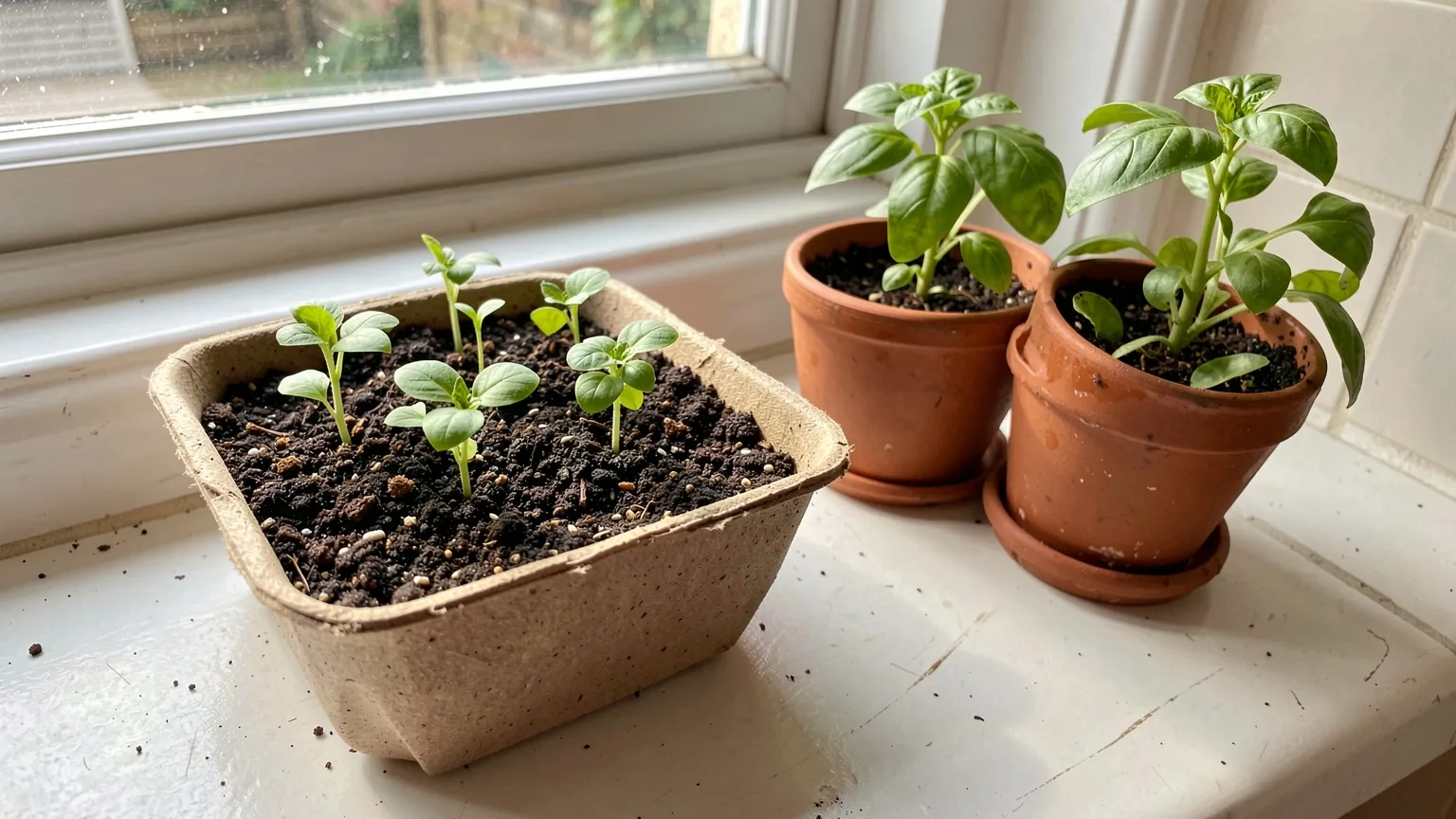
Basil is easy to grow from seed if it is warm. In the UK, sow indoors from about March to June, on a warm, bright windowsill or in a propagator. Scatter a few seeds thinly on moist compost, cover them very lightly, keep them warm and water from below. Seedlings usually appear within one to two weeks. Prick them out into small pots once they have their first true leaves, pinch out the tips when the plants are a few inches tall, and only put them outside once nights are reliably warm.
Growing note: Warmth is the key. Basil seed sown in a cold room or too early in the year often rots or sits still for weeks.
Quick facts
| When to sow | Indoors from March to June; outdoors only in warm summer weather |
| Difficulty | Beginner-friendly if kept warm |
| Germination | Usually 1–2 weeks in a warm room |
| Containers | Small pots or a seed tray, then 10–15cm pots |
| Position | Warm, bright windowsill or propagator |
| First pickings | Roughly six to eight weeks after sowing in good light |
Why grow basil from seed
A packet of basil seed costs about the same as one supermarket pot and can give you dozens of plants over a season. Growing from seed also lets you choose varieties you will not find in the shops, such as Greek, Thai, lemon or purple basil, and sow a few at a time so you always have young plants coming along.
Plants raised from seed in your own home are also used to your conditions from the start. They tend to be sturdier than supermarket basil, which is grown in warm, humid greenhouses and often struggles once it reaches a kitchen. If you already have a supermarket pot, see how to pot on supermarket basil to make it last.
When to sow basil in the UK
Basil needs warmth to germinate and to grow well, so timing matters more than for most herbs.
- March to April: sow indoors on a warm windowsill or in a propagator. Light is still improving, so these sowings grow slowly at first.
- May to June: the easiest time. Warmer rooms and longer days give quick germination and sturdy seedlings.
- July: a last sowing gives young plants for late summer and a fresh pot to bring indoors in autumn.
- Outdoors: only sow direct into an outdoor pot in early summer once nights are reliably warm. Sowing indoors is more reliable.
Sowing in autumn and winter is possible with a heated propagator and a grow light, but on an ordinary windowsill the days are too short and cool, so seedlings grow weak and leggy. In winter it is usually better to keep an existing plant going or grow microgreens, and sow basil again in spring.
Choosing basil seed
| Type | Why grow it from seed |
| Sweet basil | The classic kitchen basil, reliable and quick |
| Greek basil | Small leaves and a compact, bushy shape that suits windowsills |
| Thai basil | Anise flavour for stir-fries and curries; needs plenty of warmth |
| Lemon basil | Citrus-scented leaves for salads and fish |
| Purple basil | Decorative leaves, often a little slower and more sensitive |
For a first sowing, sweet basil or Greek basil are the easiest. Check the sowing dates on the packet, as they vary a little between varieties.
What you need
- A packet of basil seed
- Small pots (about 7–9cm) or a seed tray with drainage holes
- Peat-free seed compost or a fine multi-purpose compost
- A little vermiculite or sieved compost to cover the seed
- A tray or saucer for watering from below
- A warm, bright windowsill, or a propagator
- Clear lid, propagator cover or a loose clear bag to hold in moisture
How to sow basil seed
- Fill pots or a tray with compost, firm it gently and level the surface.
- Stand the pots in a tray of water until the surface darkens, then let them drain.
- Scatter the seed thinly on the surface. Five or six seeds in a small pot is plenty.
- Cover the seed with a very thin layer of vermiculite or sieved compost. Basil seed only needs a light covering.
- Cover the pot with a clear lid or loose clear bag to keep the surface moist.
- Put the pots somewhere warm, such as a propagator or a warm windowsill, out of strong direct sun.
- Check daily. Take the cover off as soon as the first seedlings appear.
Basil seed swells and forms a jelly-like coat when it gets wet. That is normal and helps it hold water while it germinates.
Looking after basil seedlings
Light
Once the seedlings are up, move them to the brightest windowsill you have. In poor light they stretch and flop over. Turn the pots every day or two so they grow straight rather than leaning towards the glass.
Warmth
Keep seedlings in a warm room by day and night. Pull them back from cold glass at night in early spring, and keep them out of draughts from doors and open windows.
Watering
Basil seedlings are prone to damping off, a fungal problem that makes them collapse at the base. To reduce the risk, water from below by standing the pots in a tray of water for a few minutes, then let them drain. Let the surface dry slightly between waterings, never leave pots standing in water, and sow thinly so air can move between the seedlings.
Pricking out and potting on
When the seedlings have their first pair of true leaves (the ones after the rounded seed leaves), they are ready to move on.
- Water the seedlings an hour before you start.
- Fill small pots with multi-purpose compost and make a hole in each.
- Ease out the seedlings with a pencil or plant label, holding them by a leaf, never by the stem.
- Plant one seedling, or a small clump of two or three, per pot, at the same depth or slightly deeper.
- Firm gently, water from below and keep them warm and out of strong sun for a day or two.
If you sowed thinly in small pots, you can also skip pricking out: thin each pot to the strongest three or four seedlings and let them grow on as a small clump. Once roots show through the drainage holes, move the plant into a 12–15cm pot. See how to grow basil in pots for pot sizes and ongoing care.
Pinching out for bushy plants
When a young plant has three or four pairs of leaves, pinch out the top just above a pair of leaves. Two side shoots will grow from that point, giving a bushier plant. Keep doing the same each time the shoots lengthen, and use the tips in the kitchen.
Moving basil outside
Basil is tender and dislikes cold nights. In most of the UK, plants are best kept indoors until early summer, once nights are reliably mild. Harden them off first by putting them out in a sheltered, sunny spot for a few hours a day and building up over a week or so. Bring them back in if a cold night is forecast. Many people simply keep one pot indoors on a sunny windowsill and put another outside for the warmest months.
Sowing little and often
Basil plants eventually become woody or start to flower, especially in hot weather. Sowing a small pot every three to four weeks from spring into July gives a steady supply of young, leafy plants. A late sowing also gives you a fresh, compact plant to bring indoors in autumn, which copes with the windowsill better than a large outdoor plant.
Common problems
Seeds have not come up
The compost is probably too cold, or the seed was covered too deeply. Move the pots somewhere warmer. Old seed also germinates less well, so check the date on the packet.
Seedlings collapse at the base
This is damping off. Remove the affected seedlings, water less often and from below, give the rest more air and sow more thinly next time. Use fresh compost and clean pots for each sowing.
Seedlings are tall, pale and floppy
They need more light. Move them to a brighter window, turn them daily and sow later in spring if your windows are dull. Leggy seedlings can be potted on slightly deeper to support them.
Leaves are yellow or the plants stop growing
Cold, wet compost is the usual cause, or the plants have run out of food in a small pot. Keep them warm, let the compost dry slightly between waterings and pot them on into fresh compost.
Basil in the rest of your tiny garden
For choosing pots, positions, watering and harvesting once your plants are established, see how to grow basil in pots. Basil sits happily alongside other windowsill herbs: see how to grow herbs on a windowsill. It also pairs well with a pot of tomatoes, as both like warmth and sun, and the timing is similar too: sow both indoors in spring, as covered in what to sow in April.
Find the right herb for your light
Use the grow finder to see which herbs suit your windowsill, balcony or patio.
FAQs
How long does basil take to grow from seed?
Seedlings usually appear within one to two weeks in a warm room. You can start picking tips from about six to eight weeks after sowing, once the plants have several pairs of leaves.
Should basil seeds be covered?
Only very lightly. A thin layer of vermiculite or sieved compost is enough to keep the seed moist.
Can I grow basil from seed in winter?
Only with extra warmth and a grow light. On an ordinary windowsill, winter seedlings grow weak and leggy, so it is usually better to wait until March or later.
How many basil seeds should I sow per pot?
Five or six seeds in a small pot is plenty. Thin them to the strongest three or four seedlings, or prick them out into their own pots.
Can I sow basil seed straight into a big pot?
Yes, in warm late spring or summer weather. Sow thinly, keep the pot warm and bright, and thin the seedlings so they are not crowded. Starting in small pots is easier because you can keep the compost from staying wet.
Growing note: Sow when it is warm, cover lightly, water from below and give seedlings all the light you can. That covers most of what makes basil from seed succeed.