How to Pot On Supermarket Basil
A step-by-step guide to dividing and potting on supermarket basil, with the pots, compost, watering and picking that keep it going for months instead of days.
Quick answer
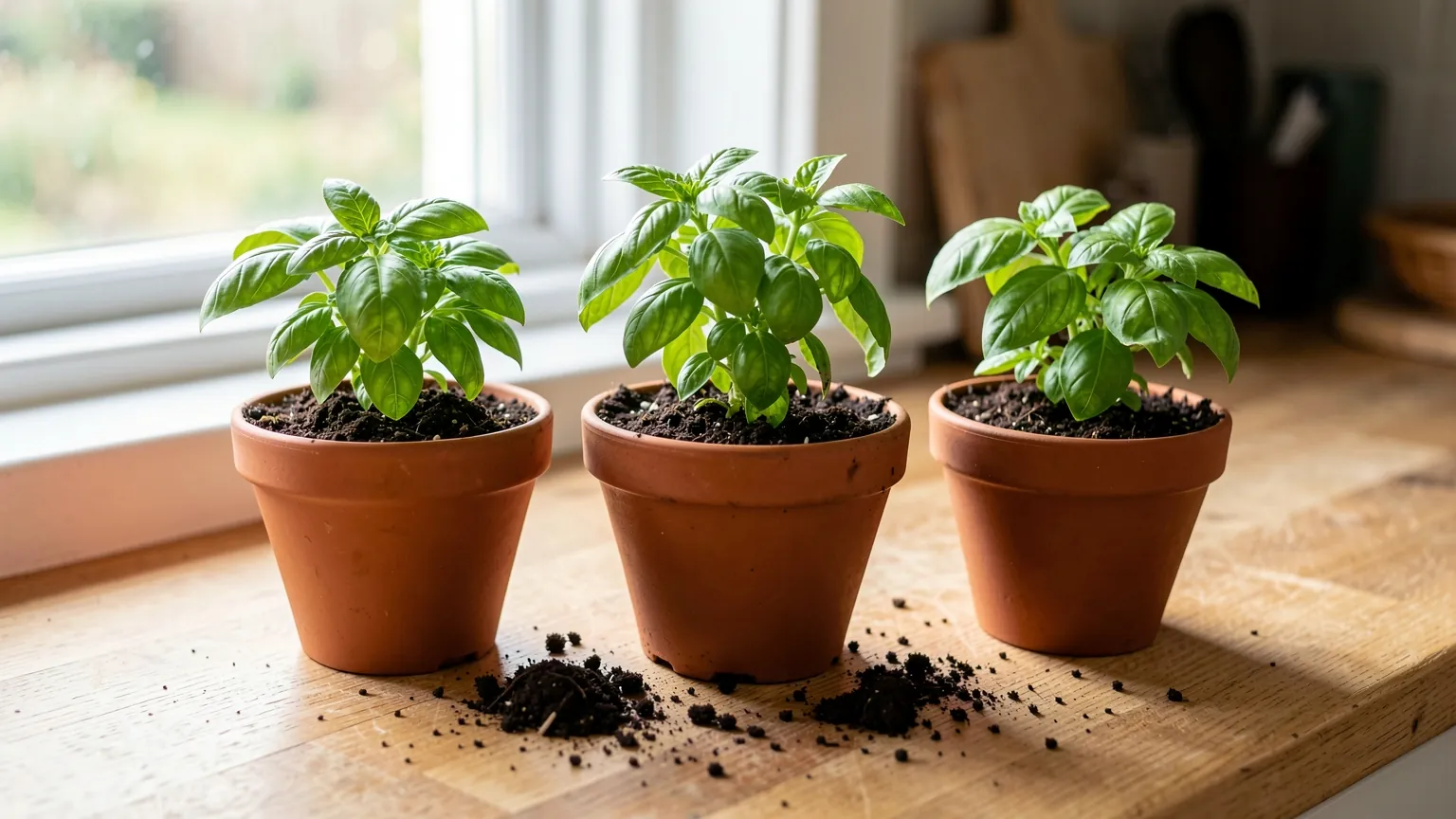
A supermarket basil pot is many seedlings crammed into a small amount of compost, which is why it often collapses within a week or two. To make it last, water it, ease the root ball out, gently split it into three or four smaller clumps and plant each one in its own pot of fresh peat-free compost with drainage holes. Keep the pots warm and bright, water when the surface starts to dry, and pinch out the tips as you pick.
Growing note: Basil hates cold. Pot it on indoors, keep it in a warm room and never leave it on a cold windowsill or in a draught overnight.
Quick facts
| Best time | As soon as you bring the plant home |
| Difficulty | Beginner-friendly |
| Pots | Three or four pots around 10–13cm wide, with drainage holes |
| Compost | Peat-free multi-purpose compost |
| Position | Warm, bright windowsill away from draughts |
| Main care | Water when the top starts to dry, pick from the tips |
Why supermarket basil dies so quickly
Supermarket basil is grown to look full on the shelf, not to live for months. Each pot usually holds a large number of seedlings sown close together in a small amount of compost. They are raised in warm, humid greenhouses, then moved through cold lorries and bright, dry shops.
Once at home, the crowded roots run out of space and food quickly. The compost dries out in a day or two, then often gets overwatered to make up for it. With so many stems packed together, air cannot move between them and the lower leaves yellow and rot. Splitting the clump gives each group of seedlings room to grow.
The same applies to organic ("bio") basil and to other supermarket herbs sold this way, such as coriander and parsley.
What you need
- Three or four small pots, around 10–13cm wide, with drainage holes
- Saucers or a tray to stand them on
- Peat-free multi-purpose compost
- A warm, bright windowsill
You can also plant two or three clumps together in one larger pot, but separate pots make watering easier and let you move them around to find the best light.
How to divide and pot on supermarket basil
- Water the basil an hour or so before you start, so the root ball holds together.
- Fill your pots with compost, leaving a gap of about 2cm at the top.
- Tip the basil out of its plastic pot and take off any sleeve.
- Pull away any yellow or slimy stems and leaves around the base.
- Gently tease or cut the root ball into three or four sections. Each section should have plenty of stems and roots. Some roots will tear, and that is fine.
- Make a hole in the compost of each pot and plant one clump at the same depth it was growing before.
- Firm the compost lightly around the stems and water well, letting the excess drain away.
- Keep the pots somewhere warm and bright, out of strong direct sun for a few days while the roots settle.
Expect the plants to droop a little for a day or two. Once new leaves appear at the tips, they have settled in.
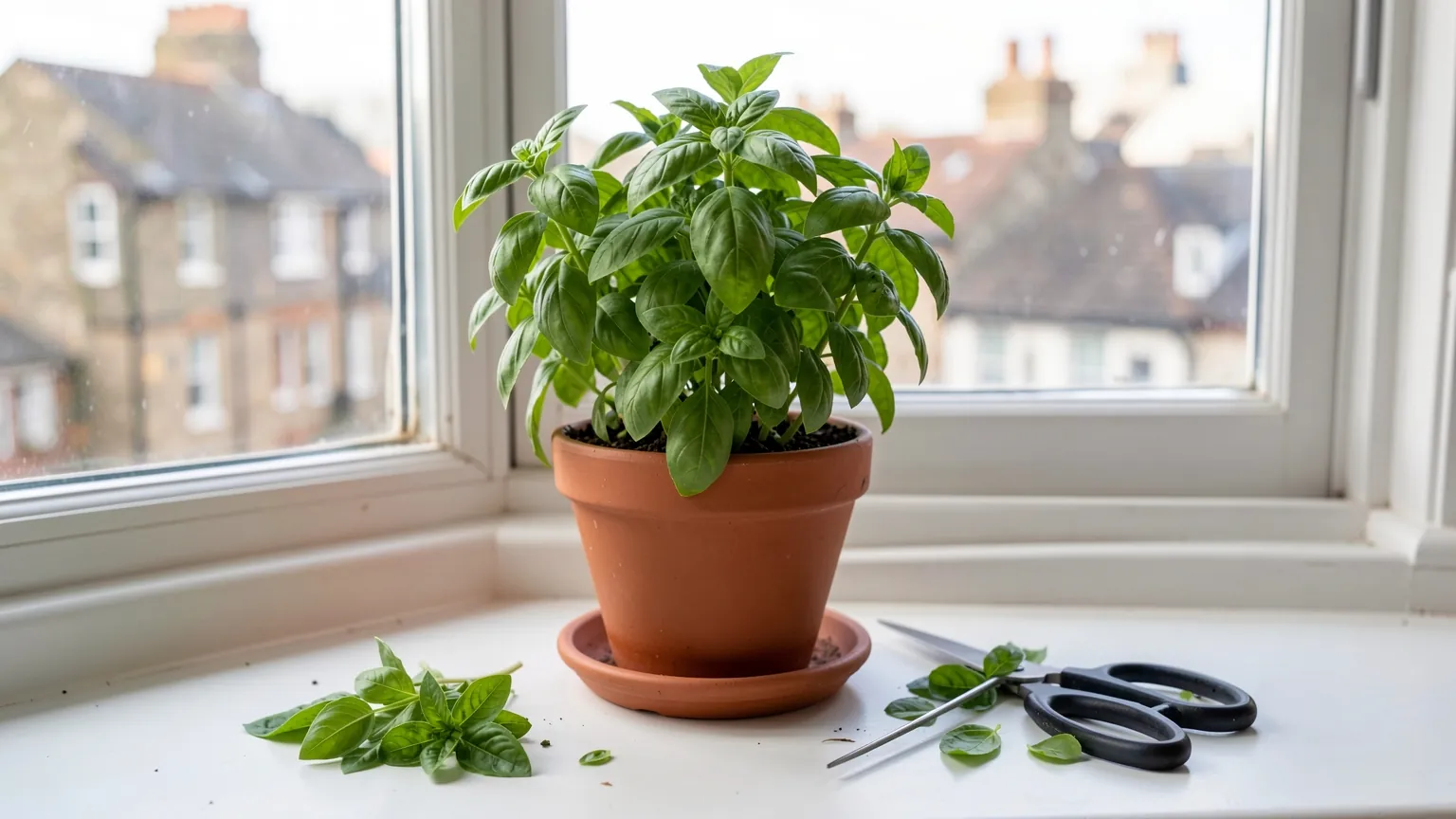
Where to put potted-on basil
Basil needs warmth as much as light. A sunny kitchen windowsill is usually ideal. Keep it away from cold glass at night, open windows, draughty doorways and the direct blast of a radiator. In winter, the brightest window you have makes the biggest difference.
From late spring, once nights are reliably warm, you can move some pots outside to a sheltered, sunny spot. Harden them off first by putting them out for a few hours a day and building up over a week or so.
Watering
Water when the top of the compost starts to feel dry, then let the excess drain and empty the saucer after half an hour. Basil dislikes being bone dry, but it dislikes sitting in cold, wet compost even more. Water the compost rather than the leaves, and check small pots daily in warm weather.
Picking without killing the plant
The way you pick decides whether your basil becomes bushy or tall and thin.
- Pinch or snip off the top of each stem just above a pair of leaves. Two new shoots will grow from that point.
- Avoid stripping the big leaves from the bottom of the stems. The plant needs them.
- Take no more than about a third of the plant at once, and give it time to regrow.
- Pinch out any flower buds as soon as you see them.
Feeding
Fresh multi-purpose compost feeds the plants for the first few weeks. After that, a liquid feed every couple of weeks while the basil is growing well helps keep the leaves green. Use a general-purpose liquid feed at the strength on the label. In winter, when growth is slow, feed little or not at all.
Keeping basil going in autumn and winter
Basil is a tender annual, so even well-cared-for plants slow down in autumn and winter. With short, dull days and cool nights, a potted-on supermarket basil will not stay as lush as it does in summer. That is normal. The aim in winter is to keep it productive for as long as possible, not to keep it forever.
- Give it the brightest, warmest windowsill you have, and pull it back from the glass on cold nights.
- Water less often than in summer, as compost dries slowly in cool, dull weather.
- Pick lightly and keep pinching the tips so the plant stays compact.
- Turn the pot every few days so it does not lean towards the light.
If a plant becomes leggy and tired by midwinter, harvest what is left and buy a fresh pot or sow seed again in spring. Splitting a new supermarket pot is a cheap way to restart.
Growing more basil from cuttings
Basil roots easily from cuttings, which is a good way to replace an ageing plant. Cut a healthy, non-flowering shoot about 8–10cm long just below a pair of leaves, remove the lower leaves and stand it in a glass of water on a bright windowsill. Change the water every few days. Once roots have formed, usually within a couple of weeks in warm conditions, pot the cutting into compost.
Common problems
The plant wilts the day after repotting
Some drooping is normal while the disturbed roots recover. Keep it warm, out of strong sun, and do not keep adding water if the compost is already moist.
Stems go black or slimy at the base
This is usually cold, wet compost or stems that are too crowded. Remove the affected stems, let the compost dry slightly before watering again and move the pot somewhere warmer.
Leaves turn yellow
Overwatering, poor light or a hungry plant are the usual causes. Check the pot drains freely, move it somewhere brighter and start feeding if it has been in the same compost for more than a few weeks.
Leaves have black or brown patches
Cold damage often shows as dark patches on leaves that touched cold glass or sat in a draught. Move the pot and remove the worst leaves.
The plant is tall and thin
It needs more light and more regular pinching. Move it to a brighter spot and pinch the tips back to a pair of leaves.
Basil in the rest of your tiny garden
For growing basil from seed, choosing varieties and growing it outdoors in summer, see the full guide: how to grow basil in pots. For other herbs that suit a kitchen windowsill, see how to grow herbs on a windowsill. If you want something green to pick through the darkest months, microgreens and pea shoots cope with low light far better than basil.
Find the right herb for your light
Use the grow finder to see which herbs suit your windowsill, balcony or patio.
FAQs
Should I repot supermarket basil?
Yes. Splitting it into several pots of fresh compost is the simplest way to make it last for months instead of days.
How many plants are in a supermarket basil pot?
It varies, but there are usually many seedlings packed together. That is why dividing the clump into three or four smaller groups works well.
Can I plant supermarket basil outside?
Only in warm summer weather, once nights are reliably mild, and after hardening it off gradually. For most of the year, it is happier indoors.
Can supermarket basil survive the winter?
It can keep going on a warm, bright windowsill for some time, but growth slows down and the plant eventually tires. Start again with a fresh plant, cuttings or seed in spring.
Growing note: Split it, give it fresh compost, keep it warm and pick from the tips. Those four steps are what turn a short-lived supermarket pot into a useful kitchen plant.