How to Grow Garlic in Pots
Plant garlic cloves in a pot this autumn and harvest your own bulbs next summer. Pot size, spacing, care, harvesting and drying.
Quick answer
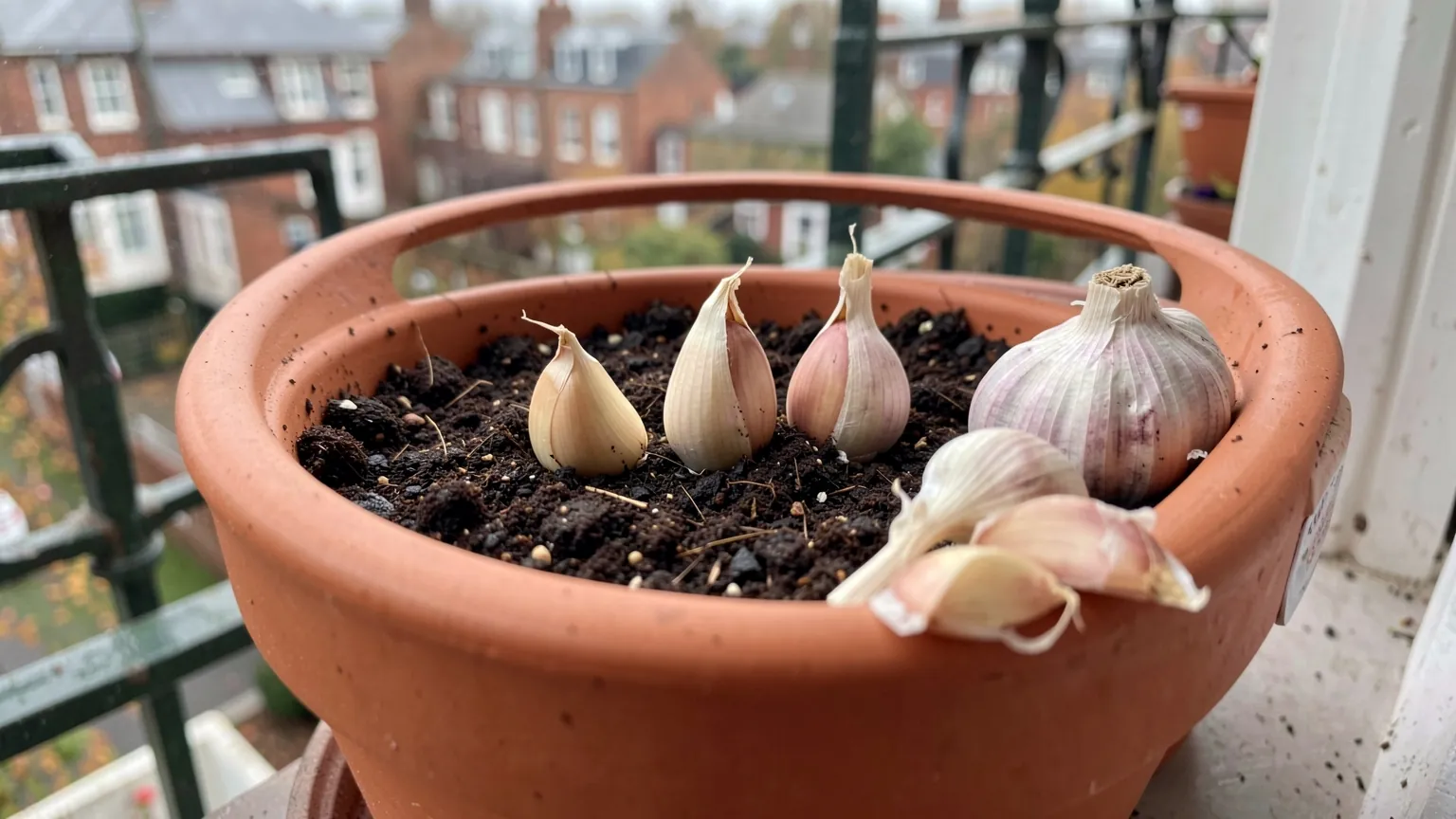
Garlic is one of the easiest crops to grow in a pot. In the UK, plant individual cloves in autumn, pointed end up, about 10cm apart, with a couple of centimetres of compost over the tips. Use a pot at least 20cm deep with drainage holes, leave it outside over winter, water more in spring, and harvest the bulbs in early summer when the lower leaves start to turn yellow.
Growing note: Garlic needs a spell of cold weather to form a bulb split into cloves. That is why autumn planting usually gives the best results, and why the pot should stay outside rather than on a warm windowsill.
Quick facts
| Best for | Balconies, patios, doorsteps and small gardens |
| Difficulty | Very beginner-friendly |
| Container | At least 20cm deep; a 30cm-wide pot holds about 5–6 cloves |
| Sunlight | Full sun |
| When to plant | October to December, or late winter for spring-planting varieties |
| Best harvest | Early to midsummer, when the lower leaves turn yellow |
Why garlic suits a tiny garden
Garlic is a low-effort crop. You plant it in autumn, when most containers are emptying out, and it quietly gets on with growing through winter while you do very little. It needs no staking, no pinching and almost no attention until spring.
It also makes good use of space that would otherwise sit empty. A pot that held summer tomatoes or courgettes can be refreshed with new compost and planted with garlic, then freed up again in early summer.
Be realistic about the harvest. Bulbs grown in pots are often a little smaller than those grown in open ground, and one pot gives you a handful of bulbs rather than a year's supply. But home-grown garlic is fresh, full-flavoured and very satisfying for the effort involved.
Choosing garlic to plant
Buy garlic sold for planting from a garden centre, nursery or seed supplier. Supermarket garlic can grow, but it may be a variety suited to a warmer climate, and it is not checked for the virus and disease problems that planting stock is meant to be free of.
| Type | What to expect |
| Softneck | Usually the easiest choice for beginners. Stores well and has soft stems that can be plaited. |
| Hardneck | Often bolder flavour and easy-to-peel cloves. Produces a curly flower stem (a scape) and usually stores for less time. |
Many UK suppliers label garlic as suitable for autumn or spring planting. For a first pot, choose a softneck variety sold for autumn planting.
When to plant garlic
October and November are ideal for most of the UK, and planting can continue into December if the compost is not frozen or waterlogged. Autumn planting gives the roots time to establish and ensures the plants get the cold period they need.
If you miss autumn, some varieties can be planted in late winter or early spring. Expect smaller bulbs, because the plants have less time to grow before summer.
Choosing a pot
Depth matters more than width. Use a container at least 20cm deep with drainage holes, so the roots have room and excess water can escape. A wider pot simply holds more cloves.
- A 30cm-wide pot holds about 5–6 cloves.
- A long trough or window box works well, with cloves in a single or double row.
- A large grow bag or fabric planter can hold more.
Garlic sits in its pot through the wettest months, so good drainage is essential. Raise the container on pot feet or bricks so water can drain freely over winter.
How to plant garlic in a pot
- Fill the pot with peat-free multi-purpose compost. Mixing in some grit or perlite helps drainage.
- Gently break the bulb into individual cloves just before planting. Use the largest, healthiest cloves and leave the papery skin on.
- Push each clove into the compost, pointed end up and flat base down.
- Space the cloves about 10cm apart and about 5cm from the edge of the pot.
- Cover the tips with about 2–3cm of compost.
- Water once to settle the compost, then leave the pot in a sunny, sheltered spot outdoors.
- Cover the pot with netting for the first few weeks if birds or squirrels tend to pull things up.
Where to put the pot
Garlic likes full sun. Give it the brightest spot you have on your balcony, patio or doorstep. It is hardy, so it can stay outside all winter; the cold is part of what it needs.
Avoid places where water pools, such as the bottom of a step or under a dripping gutter. Cold alone is fine, but cold, waterlogged compost can rot the cloves.
Watering and feeding
Garlic needs very little water over winter, and rain is often enough for an outdoor pot. Check the compost occasionally in dry spells, especially if the pot sits under a balcony overhang where rain does not reach.
- Winter: water only if the compost is dry.
- Spring: water regularly as growth speeds up, so the compost stays lightly moist.
- Feed in spring with a general liquid feed every couple of weeks to support growth in a pot.
- Early summer: ease off watering once the leaves start to turn yellow, so the bulbs can firm up.
Hardneck scapes
If you grow hardneck garlic, it will send up a curling flower stem in late spring. Snap or cut it off once it curls, so the plant puts its energy into the bulb. Scapes are edible and taste like mild garlic, so they make a useful early bonus harvest.
Harvesting garlic
Autumn-planted garlic is usually ready in early to midsummer. Watch the leaves. When the lower leaves turn yellow but several upper leaves are still green, it is time to lift the bulbs.
- Stop watering for a few days so the compost is drier.
- Loosen the compost with a trowel or tip the pot out gently.
- Lift each bulb carefully rather than pulling it by the leaves.
- Brush off loose compost but do not wash the bulbs.
Do not leave garlic too long. If all the leaves have died back, the bulbs can start to split open and will not store as well.
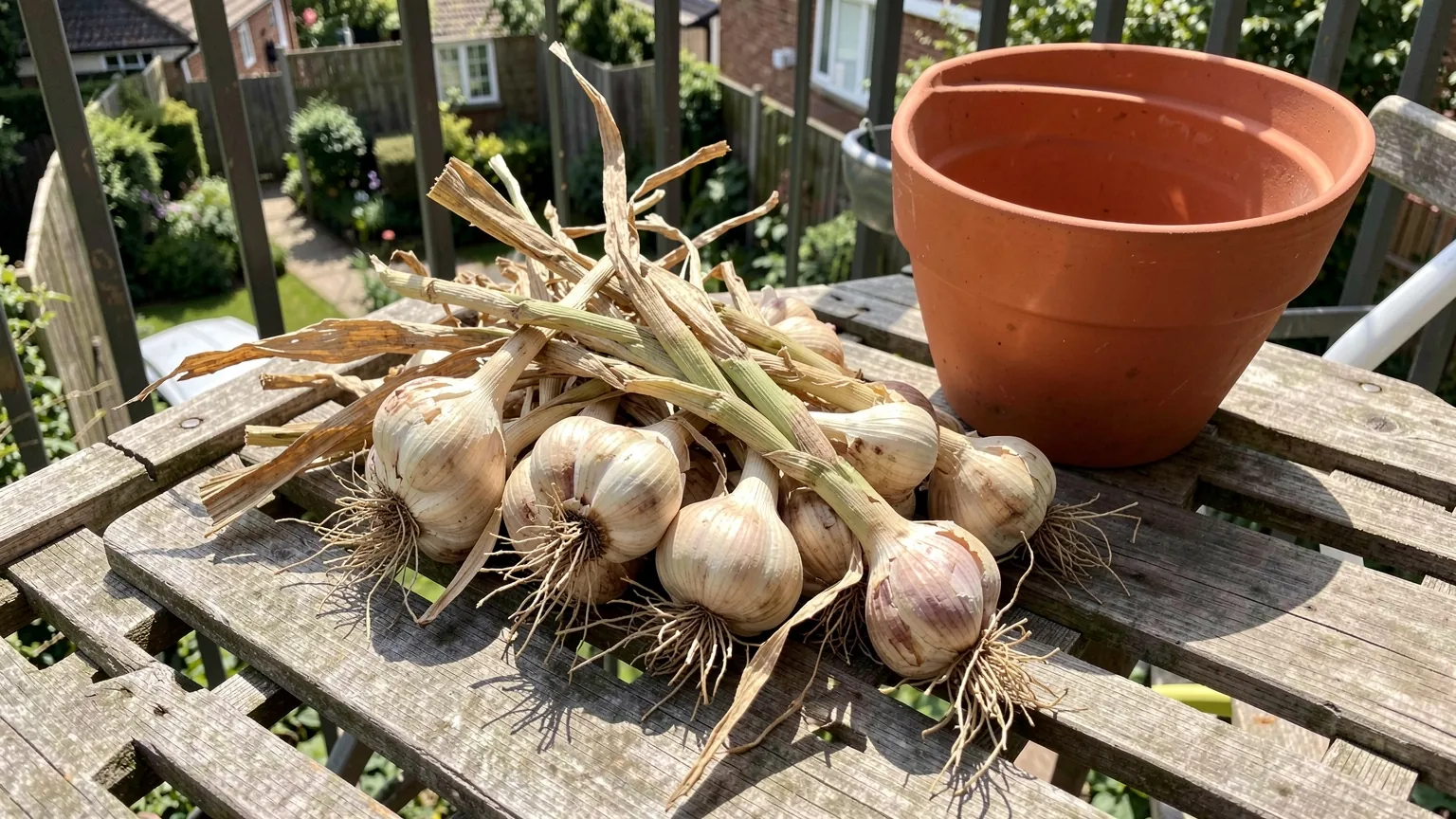
Drying and storing garlic
Lay the bulbs out somewhere dry and airy, out of strong direct sun, for about two to three weeks. A sheltered bench, a shelf or a slatted tray all work. Once the skins are papery and the necks are dry, trim the roots and leaves, or plait softneck garlic by its stems.
Store the bulbs somewhere cool and dry with good airflow. Use any damaged or soft bulbs first.
Green garlic: a tiny-garden shortcut
If you have very little space or patience, you can harvest some plants early as green garlic. Pull young plants in spring and use the whole thing, leaves and soft bulb, like a mild spring onion with garlic flavour. It is a good way to use a small pot or a few spare cloves.
Common problems
Orange spots on the leaves
This is usually rust, a common fungal disease of garlic and leeks. Remove badly affected leaves, avoid crowding the pot and keep the plants well watered and fed in spring. Mild rust often still leaves you with usable bulbs.
Cloves pulled out of the pot
Birds and squirrels are often curious about freshly planted cloves. Push any disturbed cloves back in and cover the pot with netting until roots have formed.
The bulb did not split into cloves
A single round bulb usually means the plant did not get enough cold, was planted late, or grew in too warm a spot. Plant in autumn and keep the pot outdoors next time. The single bulb is still edible.
Cloves rotted over winter
Waterlogged compost is the usual cause. Use a free-draining mix, check the drainage holes and raise the pot off the ground.
Small bulbs
Crowding, too little sun, dry compost in spring or late planting can all reduce bulb size. Give each clove about 10cm of space and the sunniest position you have.
A simple garlic plan
This autumn, refresh a 30cm pot with new compost and plant five or six cloves of a softneck variety. Leave it outside in a sunny spot over winter, water and feed it in spring, and lift the bulbs in early summer when the lower leaves yellow. Then reuse the pot for a summer crop such as French beans or salad leaves.
Planting garlic is one of the main jobs in what to sow in October.
Check what fits your pots
Use the container calculator to see what else you can grow in the pots you already have.
FAQs
Can I grow garlic from supermarket bulbs?
It can work, but planting garlic from a garden centre or supplier is more reliable. It is chosen for UK conditions and is meant to be free from common diseases.
How deep should a pot be for garlic?
At least 20cm deep, with drainage holes. Deeper pots hold moisture more evenly in spring.
How many garlic cloves can I plant in one pot?
Allow about 10cm between cloves. A 30cm-wide pot fits around 5–6 cloves.
Can garlic grow indoors?
Not well for full bulbs, because it needs cold and strong light. Indoors you can grow garlic greens from a clove in a small pot, but bulbs are best grown outside.
How long does garlic take to grow?
Autumn-planted garlic usually takes around eight months, from autumn planting to an early summer harvest.
Growing note: Garlic rewards patience more than effort. Plant it in autumn, keep the compost from waterlogging, and let winter do the rest.