What to Sow in January for a Tiny Garden
A practical January guide for small-space edible gardens: pea shoots and microgreens on the windowsill, early chillies if you have a heated propagator, bare-root fruit, winter pot care and getting ready for spring.
Quick answer
January is still a dark, cold month in a tiny garden, so most growing happens indoors. Pea shoots, microgreens and windowsill herbs are the most reliable crops. If you have a heated propagator and a bright windowsill, late January is the earliest sensible time to sow chillies. Outdoors, plant bare-root fruit bushes in mild spells, keep pots sheltered and well drained, and get seeds and containers ready for spring.
Growing note: The days start to lengthen in January, but not by enough to make much difference to plants yet. Resist the urge to sow lots of seeds early. Most crops sown in March and April catch up with, and often overtake, ones sown now.
At a glance: what to sow and plant in January
| Best windowsill crops | Pea shoots and microgreens |
| Also worth growing indoors | Parsley, chives and small batches of salad leaves |
| Only with a heated propagator | Chillies, sown from late January |
| Outdoor planting | Bare-root fruit bushes, in mild spells |
| Main caution | Frozen or waterlogged compost and weak light for seedlings |
| Key job | Protect pots, order seeds and get ready for spring |
January is a month for getting ready
January is often the coldest month of the year. Outdoors, plants in pots barely grow, and seeds sown outside now would sit in cold compost and may rot before they germinate. Indoors, light is still the limiting factor: even a south-facing windowsill gives far less light than in spring.
That makes January a good month for quick indoor crops you eat young, a little planting outdoors on mild days, and plenty of preparation. If you planted garlic, broad beans or onion sets in autumn, leave them to sit quietly in a sheltered spot. They will start growing again as the days lengthen.
For the jobs that lead into this month, see our December guide.
What to grow on a windowsill in January
Pea shoots and microgreens
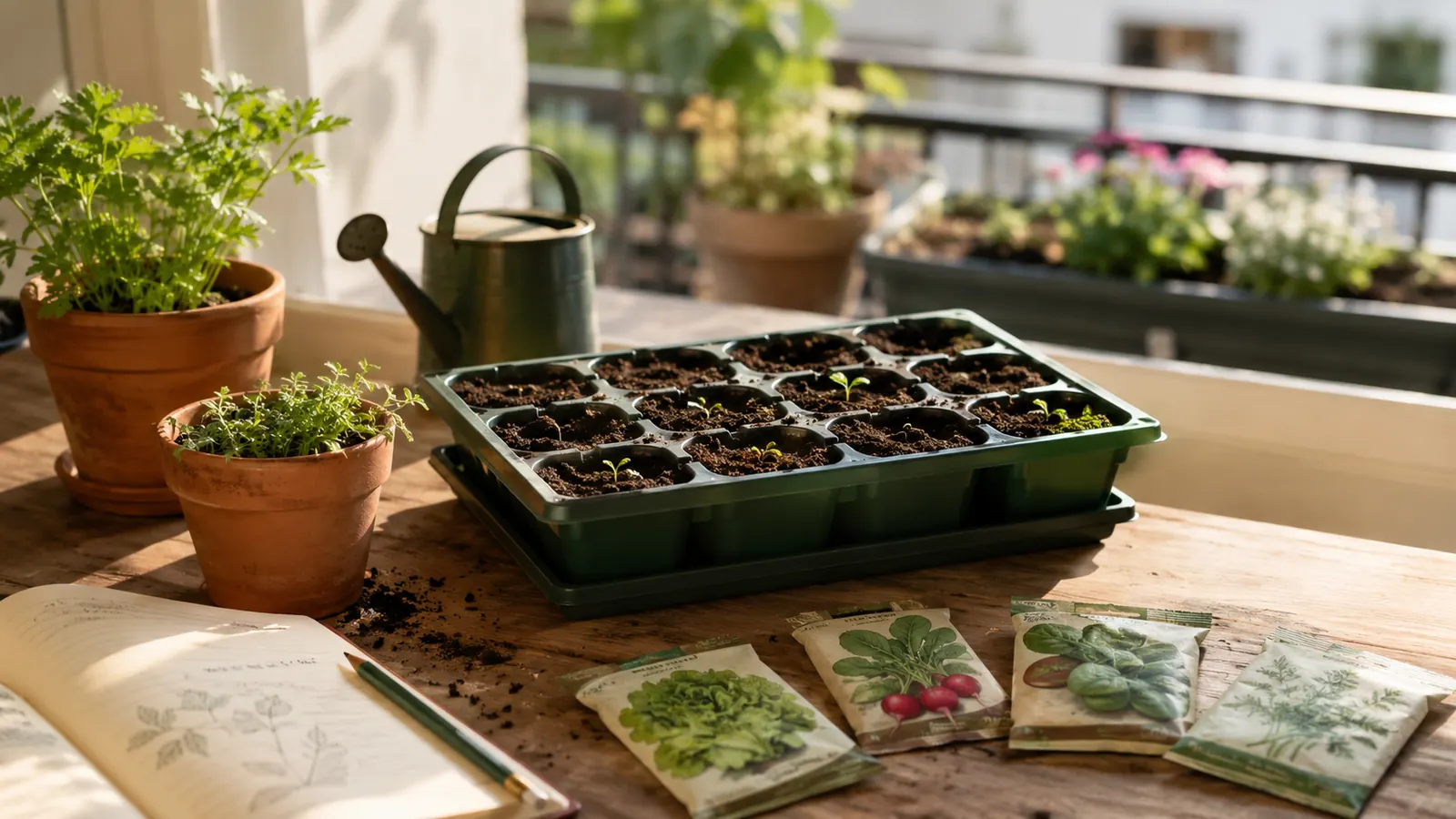
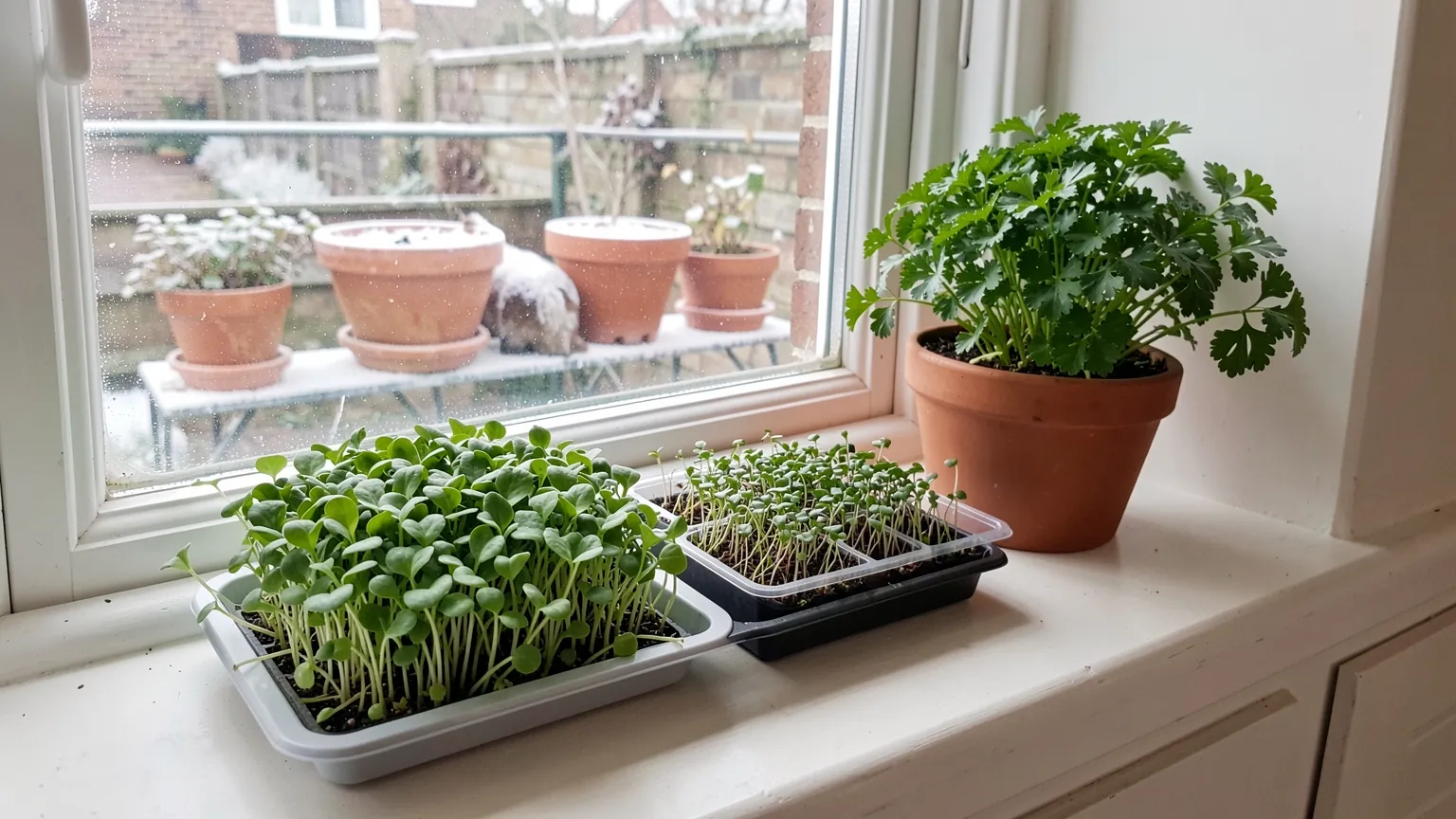
Pea shoots and microgreens are the most dependable crops in January. They grow in a warm room and you cut them while they are small, so they need far less light than a full-sized plant. Sow a tray every couple of weeks for a steady supply, and turn it every day or two so the shoots grow straight rather than leaning towards the glass.
See how to grow pea shoots indoors and how to grow microgreens on a windowsill.
Herbs
Pots of parsley and chives on a bright windowsill will give small pickings through winter. Pick lightly, water only when the surface of the compost is dry and move pots away from cold glass on frosty nights. Basil is much harder in January: if you are keeping a pot going indoors, see how to pot on supermarket basil for winter care. For more ideas, see how to grow herbs on a windowsill.
Salad leaves
Cut-and-come-again salad leaves will grow slowly on a bright windowsill. Sow a small pot or tray rather than a lot, and treat any pickings as a bonus. Outdoors, a trough of hardy leaves sown in autumn may give an occasional picking in mild weather. See how to grow winter salad leaves in containers.
Sowing chillies in January
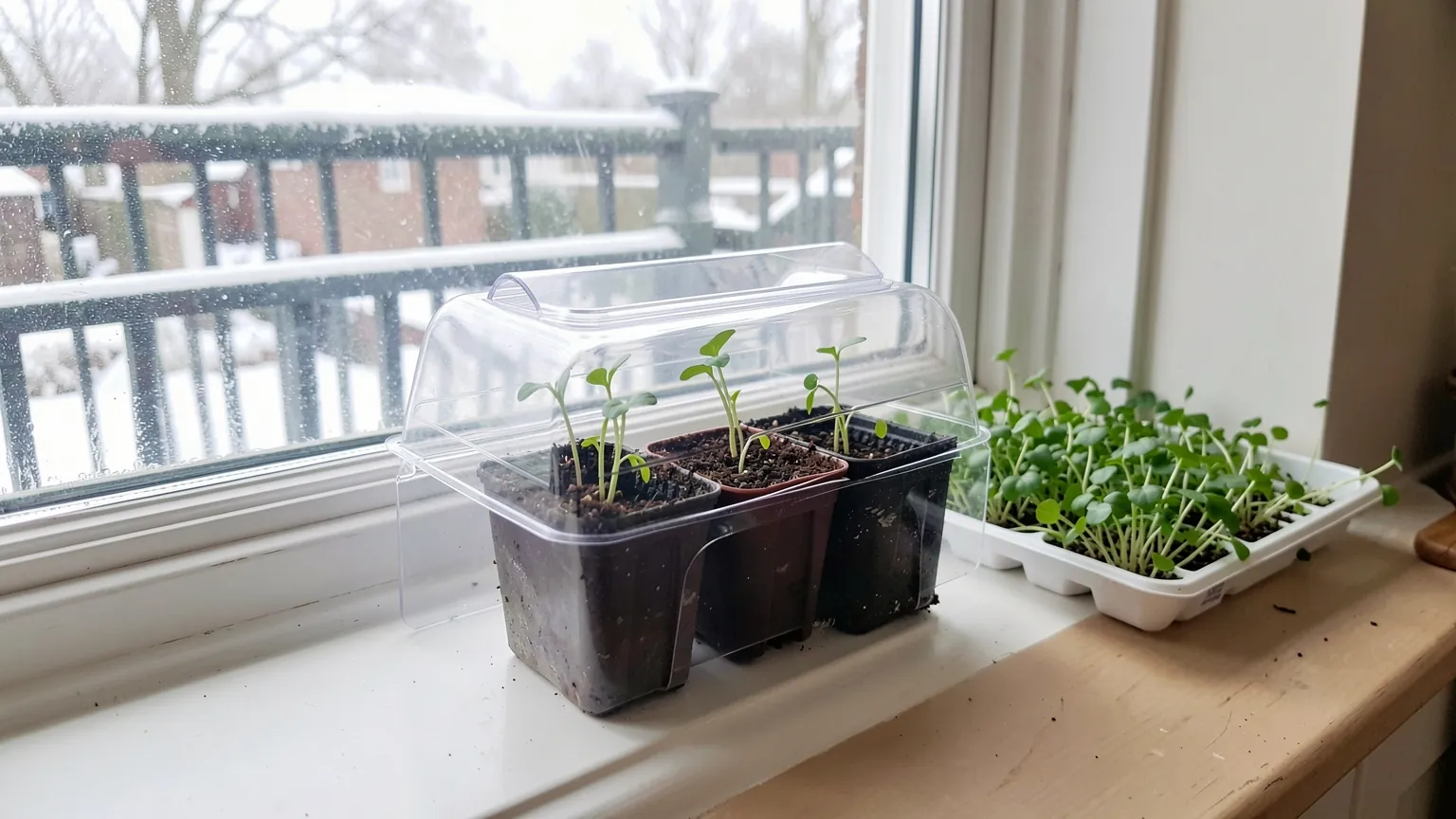
Chillies need a long season to ripen their fruit, which is why keen growers often sow them earlier than other summer crops. Late January is the earliest sensible time, and only if you can give the seeds steady warmth to germinate, such as a heated propagator, and the brightest windowsill you have once the seedlings come up.
- Sow a few seeds in small pots or modules of seed compost and keep them warm until they germinate.
- Once seedlings appear, give them as much light as possible. Weak light makes them tall, thin and floppy.
- Turn the pots daily and keep the compost lightly moist, not wet.
- Sow only what you have room for. A tiny garden rarely needs more than one or two chilli plants.
Without a heated propagator and good light, it is better to wait until February or March. For growing on, see how to grow chillies in pots. Sweet peppers and tomatoes are best left until later. Tomatoes in particular grow quickly, and seedlings sown in January become leggy long before it is warm enough to put them outside. Our March sowing guide covers them.
What to plant outdoors in January
Bare-root fruit bushes
Bare-root fruit bushes are still dormant in January, so it is a good time to plant them on mild days. Plant them soon after they arrive and keep the roots from drying out. If the compost is frozen, stand the plant in a bucket of damp compost in a sheltered spot until you can plant it properly.
Use a large, stable, frost-resistant pot with plenty of drainage holes. Compact blackcurrants, redcurrants, gooseberries and dwarf raspberries all suit a balcony or patio.
Garlic
The best time to plant garlic is autumn, because it needs a spell of cold to form a bulb with separate cloves. If you still have cloves to plant, a pot on a mild day in January is better than not planting at all, but expect smaller bulbs. See how to grow garlic in pots.
What can wait
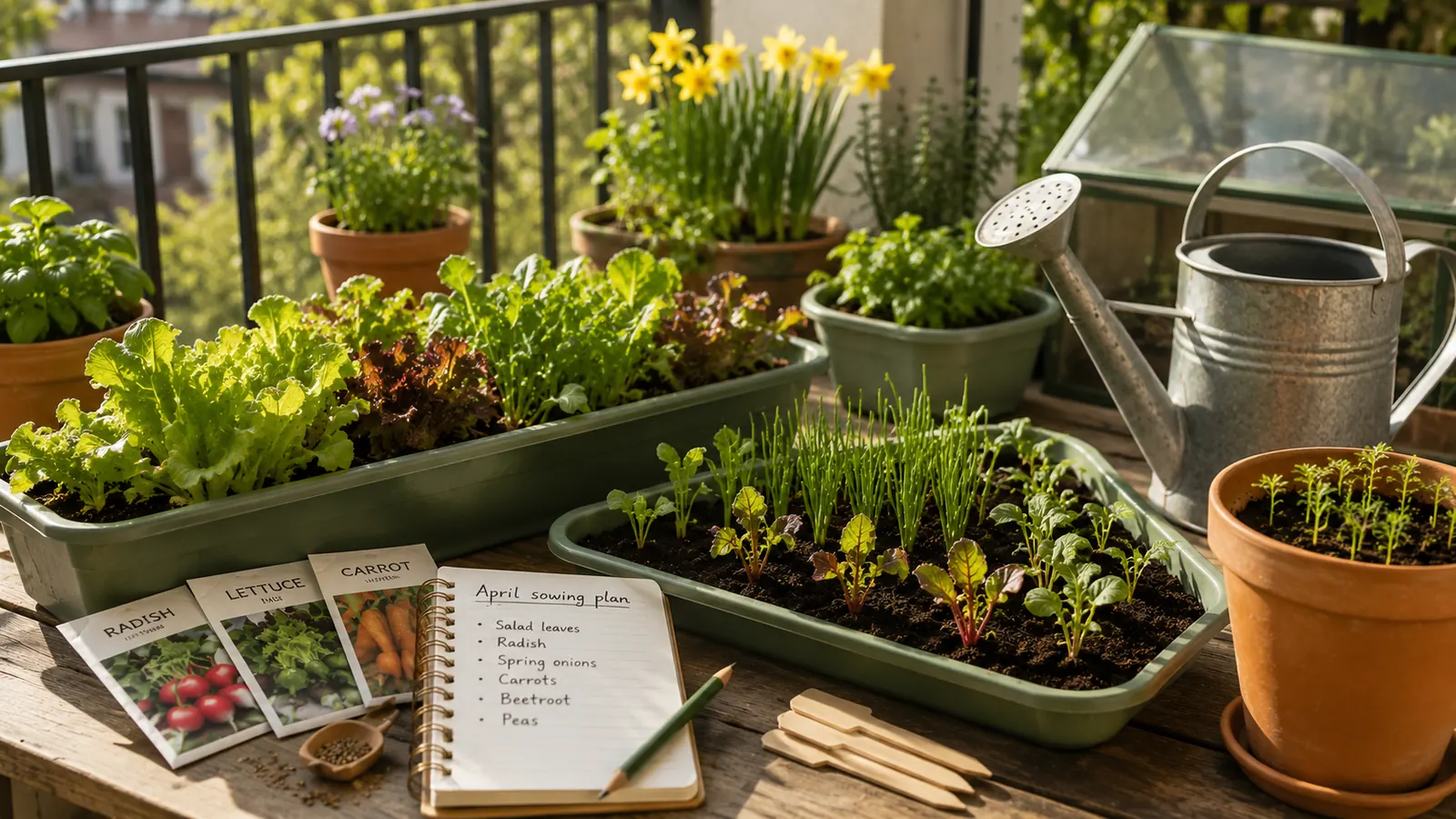
Most outdoor sowing can wait until the weather and light improve. Broad beans, peas, spring onions, radishes and salad leaves sown outdoors in March and April usually establish faster than sowings made in the cold. Shallots and spring onion sets are easier to plant in pots from late winter into spring. See how to grow onions and shallots in containers.
January jobs for a tiny garden
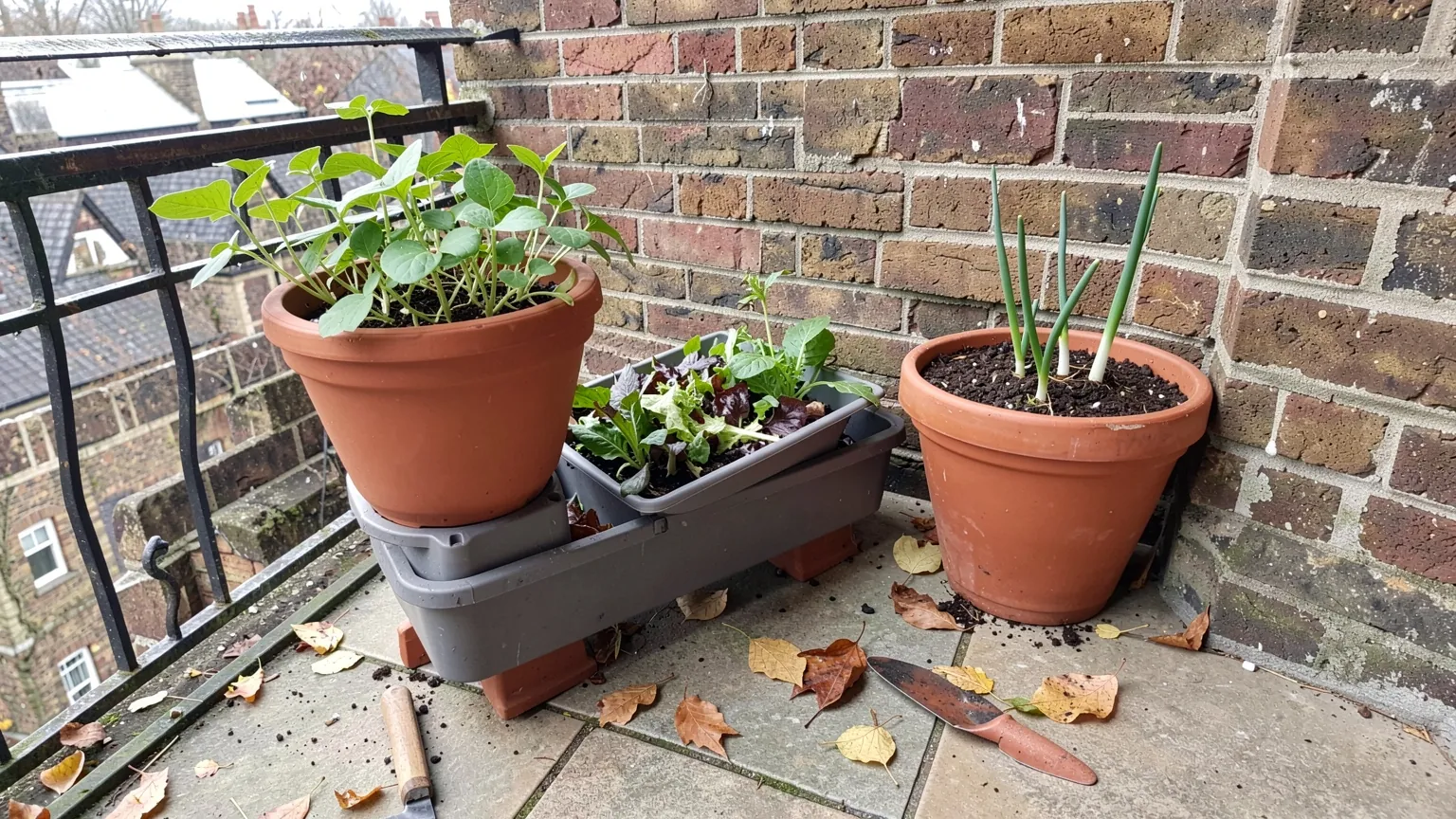
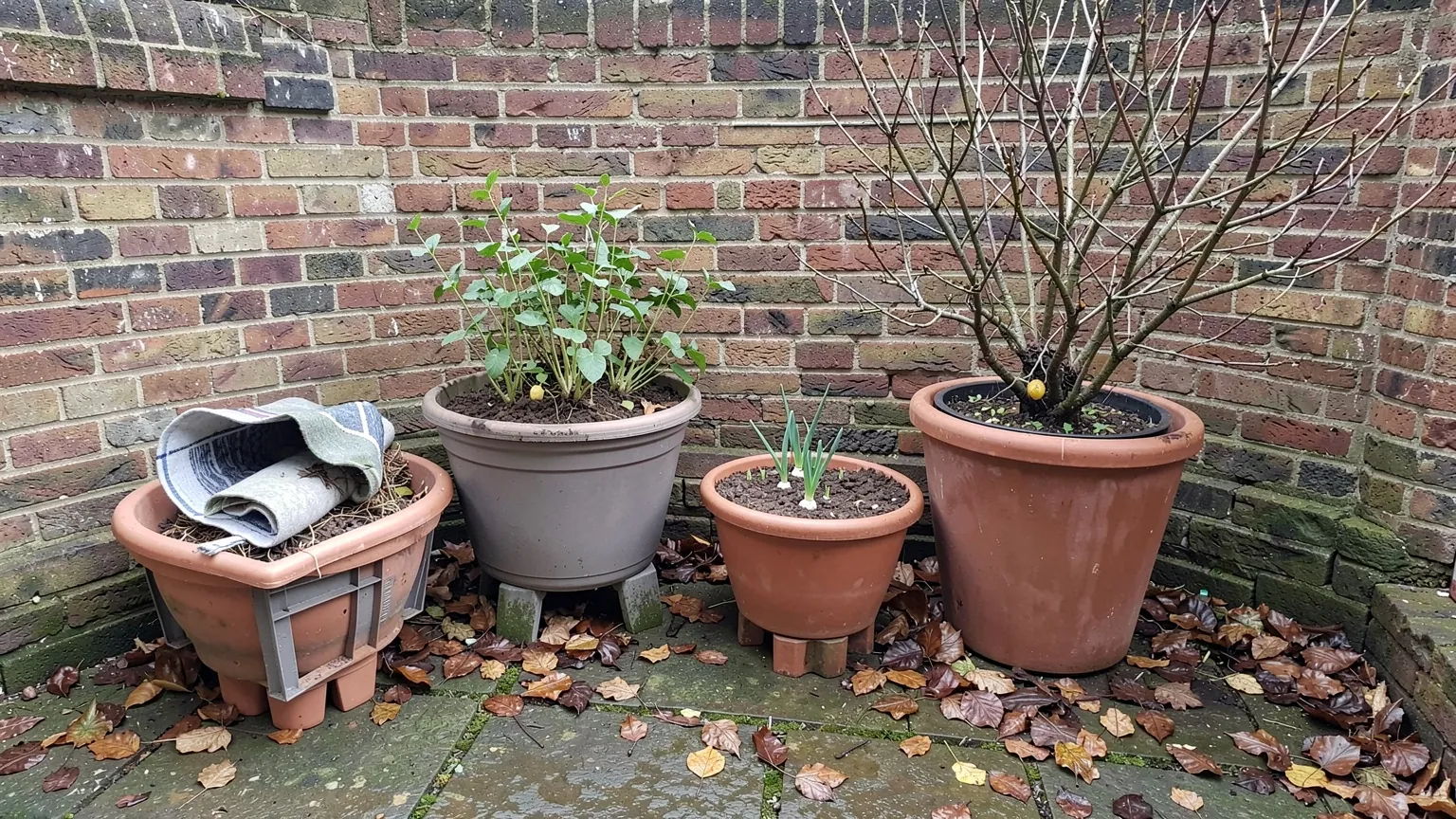
- Keep pots raised and draining. Pot feet or bricks stop containers sitting in water and freezing to the ground.
- Group pots in a sheltered spot. Containers huddled against a wall protect each other from wind and frost.
- Empty saucers. Standing water around pots in winter can rot roots.
- Wrap pots in hard frost. Hessian or bubble wrap around the pot helps protect the roots of fruit bushes and evergreen herbs like rosemary and bay.
- Check autumn plantings after frost. Frost can lift garlic cloves and onion sets. Gently push any back into the compost.
- Prune dormant fruit bushes. Winter is the usual time to prune currants, gooseberries and blueberries in pots. Each needs a slightly different approach, so check the guide for your plant before cutting.
- Water sparingly. Pots under eaves or on covered balconies can still dry out, so check them, but water only when the compost is dry.
- Order seeds and buy compost. Choose a short list of crops for your space and buy peat-free compost before the spring rush.
- Clean pots and trays. Wash out pots, seed trays and propagator lids so they are ready to use.
Getting ready for seed potatoes
Seed potatoes start to appear in shops in winter. If you want to grow potatoes in a bag on the patio, buy first earlies, which are the quickest and best suited to containers. Many growers set them out to sprout ("chit") in egg boxes in a cool, light, frost-free place from late January or February, ready to plant in spring. See how to grow potatoes in bags.
What not to do in January
Do not sow tomatoes, courgettes, cucumbers or other summer crops yet. Without strong light and warmth, they become weak and leggy long before it is safe to plant them out. Do not plant into frozen or waterlogged compost, and avoid watering pots that are not growing. In winter, too much water does more harm to container plants than cold.
A simple January plan
If you only do three things this month: start a tray of pea shoots or microgreens on your brightest windowsill, check that your outdoor pots are raised, grouped and draining freely, and choose the seeds you will sow in spring. If you have a heated propagator and love chillies, sow a few at the end of the month.
When the light starts to improve, our March guide covers the first big round of spring sowing. For ideas on what to grow and where, see small garden layouts and container vegetables.
Plan what fits your space
Use the free growing tools to check which crops suit your balcony, patio or windowsill before you order seeds.
FAQs
What can I sow in January?
Indoors, pea shoots, microgreens and small batches of salad leaves are the most reliable. Chillies can be sown from late January if you have a heated propagator and good light. Very little is worth sowing outdoors this month.
Can I sow tomatoes in January?
It is usually too early. Tomato seedlings grow quickly and become leggy in weak winter light. Sowing in March gives stronger plants that are ready to go outside once the frosts have passed.
Can I plant fruit bushes in January?
Yes, bare-root fruit bushes can be planted while they are dormant, as long as the compost is not frozen or waterlogged.
Is it too late to plant garlic in January?
Autumn is best, but you can still plant garlic in a pot in January on a mild day. The bulbs will usually be smaller than from an autumn planting.
Growing note: January rewards patience. Keep something green growing on the windowsill, look after your pots outside, and save most of your seeds for when the light returns.